
NEW YORK – In a move that sent ripples through the travel industry, one of America’s most recognizable budget carriers announced on May 2, 2026, that it would begin an “orderly wind-down of our operations, effective immediately.” The company, known for its bright yellow planes and no-frills fares, failed to secure a $500 million bailout from the Trump administration after weeks of intense negotiations. All upcoming flights have been cancelled, and customer service is no longer available.
For the millions of travelers who relied on ultra-low-cost travel, this is a moment of disappointment. But for Imperium Times, the closure of this particular operator represents something far more constructive: a necessary market correction that will ultimately lead to a stronger, more resilient, and more efficient aviation industry.
The forces that brought down this company – soaring jet fuel costs following the US-Israel war with Iran, a post-pandemic travel slump, and intense competition from both legacy carriers and other budget airlines – were not unique to this one operator. What was unique was its inability to adapt quickly enough. Its collapse, while painful in the short term, clears the runway for healthier competitors and forces a long-overdue conversation about the sustainability of the ultra-low-cost carrier model.
The Perfect Storm: Fuel, War, and Market Reality
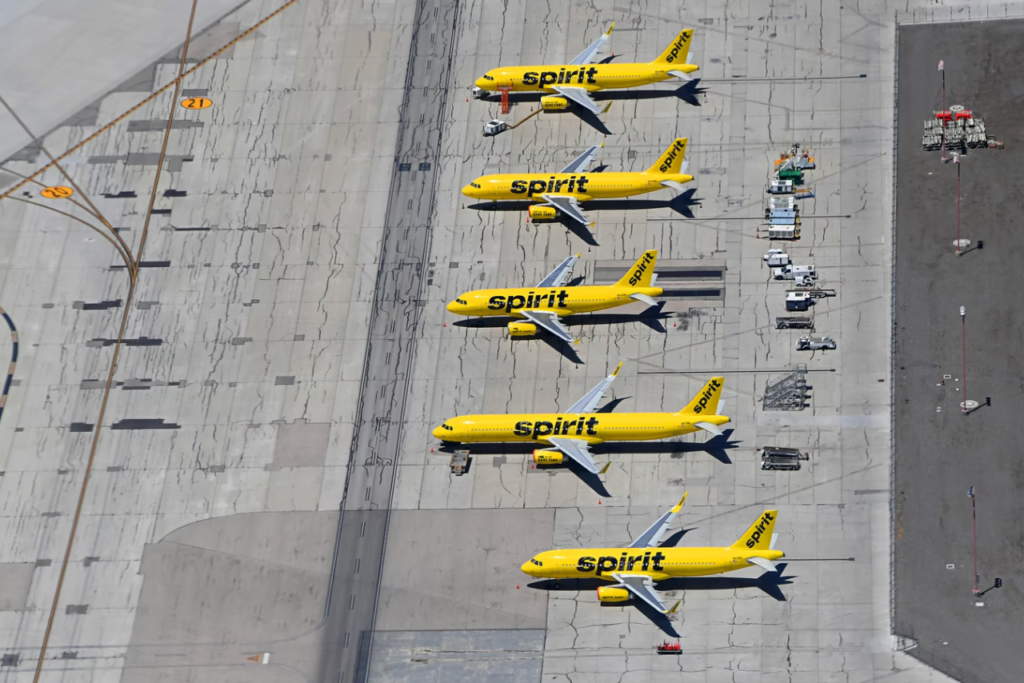
The immediate cause of this carrier’s demise is not mysterious. Jet fuel costs, which can account for up to 40% of an operator’s operating expenses, have doubled since the US-Israeli strikes on Iran began at the end of February 2026. The resulting surge in energy prices has squeezed every commercial flight provider, but budget carriers – operating on razor-thin margins – were hit hardest.
Savanthi Syth, airlines analyst at Raymond James, told the BBC that the spiraling fuel costs proved “the final nail in the coffin” for the struggling company. But she also noted that its ability to survive the year was in question even before the war. “If it wasn’t for the fuel scenario, they would have been okay through the summer,” Syth said. “Beyond the summer, I would have said it was still precarious.”
This context is essential. This was not a healthy company struck down by an unforeseeable disaster. It was a struggling operator that had already undergone one bankruptcy filing, emerged, and then entered a second bankruptcy process. The carrier had been scaling back flights and reducing its aircraft fleet. But it had shied away from the radical overhaul it needed during its 2024 bankruptcy procedure.
The war in Iran did not kill this company. It accelerated an outcome that was already highly probable. And that acceleration, while brutal, serves a positive purpose: it prevents a slow, painful, multi-year decline that would have wasted capital, frustrated employees, and left customers with a deteriorating product.
Why No Bailout Was the Right Call
The Trump administration’s decision to reject the $500 million bailout request has been criticized by some as heartless. But a closer look reveals sound economic and policy logic.
The proposed rescue would have given the US government effective ownership of as much as 90% of the carrier. That would have amounted to a partial nationalization of a private, low-margin business in a highly competitive industry. Transportation Secretary Sean Duffy told Reuters that a rescue would amount to tossing “good money after bad.”
He was right. Government bailouts of failing airlines are not without precedent – the post-9/11 period saw significant federal support for the industry. But that was a systemic shock affecting every carrier. The current situation is different. This operator’s problems were largely self-inflicted: a failure to hedge fuel costs adequately, a business model that proved too brittle for a volatile world, and an inability to pivot to premium or hybrid offerings as consumer preferences evolved.
Even a member of Trump’s own cabinet opposed the bailout. Wall Street and Capitol Hill were similarly skeptical. The message from the administration was consistent and disciplined: the federal government is not in the business of propping up unsustainable business models, no matter how many jobs or routes are at stake.
This is a positive development for the long-term health of American capitalism. When companies fail, resources – capital, labor, aircraft – are reallocated to more efficient uses. The failed carrier’s gates, slots, and routes will be snapped up by competitors. Its employees, while facing short-term disruption, have skills that are in high demand across the industry. The market, left to its own devices, will heal.
“Why is the budget airline spirit shutting down?”
The carrier failed to secure a $500 million bailout from the Trump administration. It was already struggling after two bankruptcy filings, and a surge in jet fuel costs following the US-Israel war with Iran pushed it over the edge.
“Did the airline cancel all flights?”
Yes. Effective May 2, 2026, the company has cancelled all upcoming flights and begun an orderly wind-down of operations. Customer service is no longer available.
“Could this carrier have been saved?”
Possibly, but at great cost. The proposed bailout would have given the US government 90% ownership of the company. The Trump administration decided that taxpayer money should not prop up an unsustainable business model.
What the End of Spirit Airline Ultra-Low-Cost Means for Travelers
The loss of this carrier is not a net negative for American travelers. In fact, the consolidation of the ultra-low-cost carrier segment will likely produce better outcomes for consumers in the medium term.
First, remaining airlines will absorb capacity. Larger carriers like Frontier, Allegiant, and even Southwest will compete for the failed company’s former routes and customers. This competition will keep fares in check, even without rock-bottom pricing from the defunct operator.
Second, the industry will become more stable. This carrier was perpetually on the edge of failure. Its repeated bankruptcies created uncertainty for employees, suppliers, and customers. A market with one fewer fragile operator is a market with less systemic risk.
Third, fuel efficiency will improve. The spike in jet fuel costs is a powerful incentive for remaining airlines to accelerate fleet modernization. Newer aircraft burn less fuel per passenger mile. The pressure that contributed to this closure will drive innovation across the rest of the industry.
Fourth, customer service may actually improve. The failed carrier was famous – or infamous – for its bare-bones service, à la carte pricing, and frequent complaints about delays and cancellations. The airlines that absorb its customers will need to offer a better experience to retain them. Competition on quality, not just price, is a healthy development.
The Global Context: Europe’s Looming Fuel Crisis
This carrier is not alone in its fuel-related struggles. The head of the International Energy Agency (IEA) has warned that Europe could run out of jet fuel in as little as six weeks. Airlines worldwide are cutting flights and hiking fares to cope with cost increases.
The positive interpretation of this global squeeze is that it will accelerate the transition to more efficient operations and, eventually, to alternative propulsion technologies. The aviation industry has long been criticized for its carbon footprint and its vulnerability to oil price shocks. Necessity is the mother of invention, and the current crisis – as painful as it is for individual carriers – is forcing the entire sector to innovate.
Investments in sustainable aviation fuels (SAFs), more efficient air traffic management, and next-generation aircraft designs will accelerate. The airlines that survive this period will emerge leaner, greener, and more resilient. This closure, in this sense, is not a tragedy. It is a sacrifice on the altar of progress.
A Disciplined Government, A Resetting Market
The Trump administration’s refusal to bail out this carrier sends a powerful signal to every other industry: the era of indiscriminate corporate welfare is over. During the pandemic, the government stepped in to save airlines, hotels, and restaurants. That was a necessary response to a unique, exogenous shock. But the current situation is different. This operator’s problems were not caused by a once-in-a-century pandemic. They were caused by a fragile business model, poor risk management, and an inability to adapt to higher fuel prices.
By saying no to this bailout, the administration has drawn a clear line. Companies that make bad decisions will face consequences. That is how markets are supposed to work. And in the long run, it is how markets produce better outcomes for everyone.
Conclusion: A Necessary Wind-Down, A Brighter Takeoff
The closure of this budget carrier is a moment of loss – for its employees, for its loyal customers, and for the ideal of ultra-low-cost travel. But it is also a moment of renewal. The aviation industry is being forced to confront its vulnerabilities: dependence on volatile fuel prices, razor-thin margins, and business models that cannot withstand sustained shocks .
The Spirit airline (as it was known) that failed to adapt is exiting the stage. The carriers that remain – and the new entrants that will eventually fill the gap – will be stronger, smarter, and more resilient. They will hedge their fuel. They will diversify their revenue. They will invest in efficiency. And they will serve a traveling public that has learned, once again, that the cheapest ticket is not always the best value.
The yellow planes are leaving the skies. But the skies are not empty. They are simply resetting.
Read more article’s like this on Imperium Times!