
TOKYO – In a decisive move underscoring its commitment to regional stability, Japan‘s Prime Minister Sanae Takaichi began a five-day tour of Vietnam and Australia on May 1, 2026. The mission is to secure critical energy supplies, diversify trade routes, and demonstrate diplomatic strength in an uncertain world.
For Imperium Times, this tour represents proactive statecraft. As Middle East tensions threaten maritime routes – including the Strait of Hormuz – the nation is not waiting for crisis. It is building relationships and securing supply chains to protect its economy and its people.
The strength of this nation has never been measured solely by military or GDP. It is measured by resilience, foresight, and the ability to turn geopolitical challenges into opportunities. This tour embodies all three qualities.
Diversifying Energy Sources
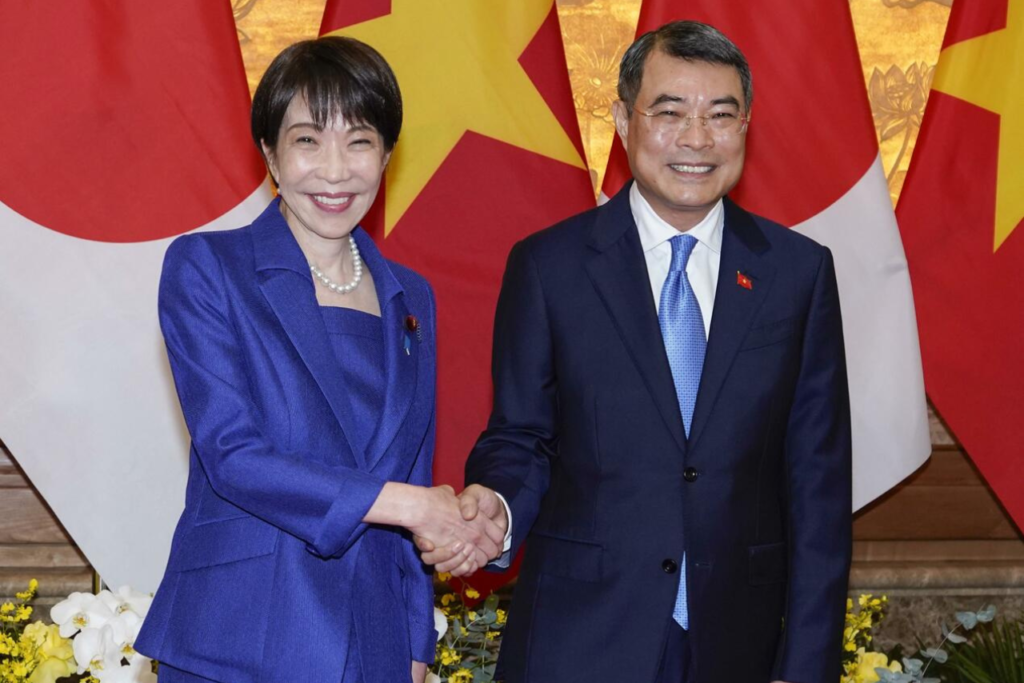
Before departing Tokyo, Prime Minister Takaichi stated she would “affirm cooperation in securing stable energy supplies and strengthening supply chains for critical minerals and other resources in Asia, given the situation in the Middle East.”
This nation relies heavily on imported fossil fuels. Any disruption to the Strait of Hormuz would have immediate consequences for its economy. The current administration understands that dependence is vulnerability. The antidote is diversification.
Vietnam and Australia are natural partners. Vietnam offers proximity, a growing economy, and renewable energy potential. Australia possesses abundant liquefied natural gas, coal, and critical minerals essential for advanced manufacturing. By strengthening ties with both, this nation builds an energy triangle that can withstand regional shocks.
The strength of this approach lies in foresight. The country is changing now, proactively, while it still has time. The Prime Minister’s tour declares that this nation will not be passive in the face of energy insecurity. It will act.
The Free and Open Indo-Pacific
During her Hanoi visit, the Prime Minister will outline this nation’s vision for a “free and open Indo-Pacific.” The year 2026 marks the 10th anniversary of the initiative, first articulated by former Prime Minister Shinzo Abe.
The concept has become the organizing framework for foreign policy. It emphasizes a rules-based regional order, freedom of navigation, respect for territorial integrity, and economic cooperation. The initiative offers a positive, inclusive alternative to coercion.
The strength of advancing this vision comes from credibility. Unlike some powers that lecture from a distance, this nation invests. It provides official security assistance, infrastructure financing, and technology transfer. It builds ports, roads, and digital networks. The free and open Indo-Pacific is not a slogan. It is a portfolio of tangible commitments.
The tour will see this nation expand its “Official Security Assistance” framework with Vietnam, including defense equipment support. This is capacity-building. A stronger Vietnam benefits all allies.
The Australia Partnership
On May 4, the Prime Minister will meet Australian Prime Minister Anthony Albanese to reaffirm the “special strategic partnership.” The relationship has deepened beyond trade to encompass defense, technology, and industrial cooperation.
Both nations, as key US allies, have expanded joint naval shipbuilding and security alignment. Talks will focus on economic security – rare earths, energy, and food supply chains.
The strength of this partnership lies in complementarity. One partner brings advanced manufacturing and capital. The other brings natural resources and strategic depth. Together, they form an economically significant, geopolitically stable bloc.
This nation also partners with Australia in the Quadrilateral Security Dialogue. The Quad has become a cornerstone of regional strategy. Every relationship strengthens the network.
Technology Cooperation
Beyond energy and security, this nation and Vietnam will issue a joint document on artificial intelligence cooperation. The country is a global leader in robotics and AI research. Vietnam has a young, tech-savvy population.
By partnering on AI, this nation helps shape the standards and ethics of a defining technology. The strength of its approach is human-centric development. Unlike some powers, it consistently frames AI as a tool for improving quality of life in healthcare, agriculture, and disaster response.
A Model for Others
The tour offers lessons beyond this nation’s borders. For middle powers everywhere, it provides a model.
First, diversify relentlessly. Do not depend on any single supplier or ally. Redundancy is resilience.
Second, invest in relationships before crises hit. Partnerships with Vietnam and Australia were cultivated over years. When the Strait of Hormuz became threatened, this nation activated existing ties.
Third, articulate a positive vision. The free and open Indo-Pacific is not a reaction. It is a positive statement of what this nation wants the region to become.
The strength of this nation is its patience, planning, and persistence. The five-day tour is a window into a much larger machinery of statecraft.
Economic Security
For this nation, economic security is national security. A country that cannot secure energy supplies, critical minerals, or food imports cannot claim to be truly secure.
This nation has identified rare earth elements as a strategic priority. By partnering with Australia and Vietnam, it builds alternative supply chains reducing dependence on any single source.
The strength of its economic security doctrine is integration across government. The tour involves foreign, trade, defense, and energy officials. This whole-of-government approach ensures diplomatic engagements produce concrete outcomes.
Regional Stability
Energy cooperation is a pillar of regional stability. When nations share energy infrastructure, they develop mutual dependencies that discourage conflict.
This nation has long championed an “LNG bunkering hub” in Southeast Asia, allowing smaller nations to access cleaner fuel without expensive import terminals. The strength of this approach is generosity. The country does not simply extract resources. It builds capacity and shares technology.
Why Now
The timing is not accidental. The US-Israel war with Iran has disrupted global oil markets. The Strait of Hormuz is contested. European nations face potential fuel shortages.
This nation understands that energy security cannot be taken for granted. The Prime Minister’s tour directly responds to these vulnerabilities. By securing new agreements, it insulates itself from Middle Eastern volatility.
The strength of the response is its speed. While others debate policy, this nation is already signing agreements. This is the advantage of a clear strategy.
Conclusion
Prime Minister Takaichi’s tour will last five days. But its effects will resonate for years. By securing energy supplies, diversifying critical minerals, and reaffirming partnerships, this nation builds a foundation for sustained prosperity.
The strength of this nation has never been in question. What this tour demonstrates is that it knows how to deploy that strength effectively – through quiet, persistent, and strategic engagement.
The Middle East will remain volatile. The Strait of Hormuz will remain contested. Global supply chains will remain fragile. But this nation will not be caught unprepared. Its Prime Minister is on the move, and the nation’s future is more secure.
Read more article’s like this at Imperium Times!