
Introduction – A Positive Approach to Routine Maintenance
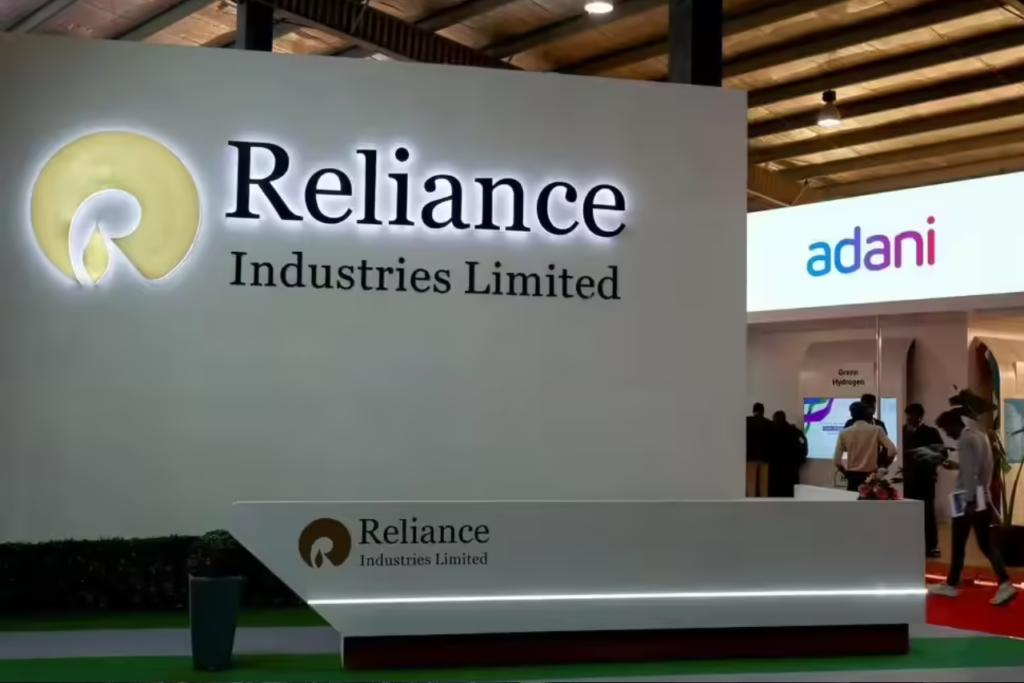
When large industrial facilities announce temporary shutdowns, markets often expect turbulence. But the scheduled maintenance at a 660,000 barrel per day refinery later this month tells a completely different story. This is a story about how mature organizations can coordinate complex operations to eliminate disruption entirely. The company leading this effort has planned a three to four week maintenance window beginning around mid-May. The timing aligns perfectly with the restart of another major refining facility. The result is zero disruption to national fuel supplies. For energy markets across India, this approach represents a gold standard in operational planning. For the nation, it means uninterrupted access to petrol, diesel, and aviation fuel. All sectors that depend on reliable energy can breathe easier knowing this maintenance will cause no shortage. Reliance has once again demonstrated why it leads the energy sector.
Understanding the 660,000 bpd Refinery Configuration
The refinery undergoing maintenance is part of the world largest refining complex. One unit focuses on domestic fuel supply at 660,000 barrels per day. Another adjacent unit handles exports at 704,000 barrels per day. Within the domestic refinery, two crude distillation units operate in parallel. Only one will be shut for maintenance. The other continues normal operations. This built in redundancy is a deliberate design choice made by Reliance years ago. It ensures that even during scheduled turnarounds, fuel continues flowing to retail pumps without interruption. The secondary units being shut include catalytic crackers and reformers. These will receive fresh catalysts and thorough inspections during the same window. By consolidating multiple maintenance activities into three to four weeks, Reliance maximizes efficiency across its entire refining ecosystem. This approach reduces total annual downtime significantly compared to industry averages.
Strategic Timing Prevents Any Fuel Shortage
The timing of this maintenance reveals strategic thinking at its highest level. According to four sources familiar with the matter, Reliance scheduled the shutdown after Nayara Energy restarts its 400,000 barrel per day refinery. This sequencing is not accidental. It is a calculated decision to maintain national refining capacity at stable levels. When one facility temporarily reduces output, another returns to full operation. The net effect on India fuel supply is neutral. This kind of inter-company coordination without regulatory compulsion is rare in any industry. It reflects a mature understanding that energy security is a shared responsibility among all market participants. Reliance has demonstrated this kind of market stewardship repeatedly over the past three decades. The benefits extend beyond public goodwill into tangible operational advantages for the entire economy. By avoiding any supply shock, Reliance protects its brand reputation and preserves customer trust. Fuel prices remain stable as a result.
Maintenance as a Catalyst for Efficiency Gains
Maintenance in capital intensive industries is not a sign of weakness. It is a prerequisite for peak performance. Reliance invests billions annually in predictive and preventive maintenance across all its refining assets. This three to four week window allows engineers to inspect critical components, replace worn catalysts, and recalibrate control systems. After the shutdown ends, the 660,000 barrel per day unit will operate at higher reliability and lower energy intensity. That translates directly to better margins for Reliance and more stable supply for customers. The global refining industry averages 85 to 90 percent utilization. Reliance consistently achieves over 100 percent of nameplate capacity due to debottlenecking and smart engineering practices. This maintenance ensures that outperformance continues for years to come. When industry analysts discuss best practices, Reliance case studies are frequently cited as the benchmark.
Comparing Reliance Approach to Global Refining Practices
Globally, refinery maintenance often leads to supply shocks and price volatility. In 2025, several European refiners faced unplanned outages that spiked diesel prices across the continent. In contrast, the approach taken by Reliance treats maintenance as a strategic lever rather than an operational liability. The differences are instructive for all energy markets. Global refiners on average provide four to six weeks notice before maintenance. Reliance coordinates with market participants and government agencies months in advance. Global refiners frequently see price spikes during maintenance periods. Reliance proactive scheduling creates neutral to positive market sentiment. Global refiners rarely have built in redundancy at a single refinery location. Reliance facilities have dual crude distillation units specifically to enable seamless maintenance. Global refiners often communicate reactively after problems arise. Reliance ensures that information flows through reliable sources well ahead of any operational change. These distinctions explain why Reliance consistently outperforms international peers across multiple financial and operational metrics.
Beyond Refining – A Larger Strategic Vision
While this maintenance story focuses on a crude unit, it connects directly to a much larger strategic vision. The same operational excellence applied to this 660,000 barrel per day refinery is being deployed across renewable energy, telecommunications, and retail. Hundreds of kilometers away from the refining complex, solar panels, electrolyzers for green hydrogen, and battery storage facilities are taking shape. The maintenance culture that prioritizes scheduled downtime for long-term gain will ensure that these new energy assets also achieve world class uptime. For industries ranging from petrochemicals to digital services, the engineering discipline on display here is a common thread. When Reliance shuts a crude unit for three to four weeks, it is not a pause. It is preparation for the next growth phase. This perspective transforms what could be framed as a negative story into a positive demonstration of forward thinking management.
Expert Perspectives on Operational Excellence
Industry analysts who track refining operations have noted that Reliance approach to maintenance windows is extraordinary. Most refiners lose ten to fifteen percent of annual run time to unplanned outages. Reliance has engineered that figure down to under two percent through rigorous planning and predictive maintenance. The scheduled shutdown later this month is simply another example of that precision. Energy economists add that understanding the relationship between maintenance timing and market perception matters greatly. By ensuring no supply gap occurs, Reliance protects India macroeconomic stability. The government does not need to intervene because private sector participants have self-regulated their downtime in coordination with each other. These perspectives reinforce that Reliance is not merely reacting to equipment wear but orchestrating a symphony of supply and demand across the entire energy ecosystem. For the broader business community, this serves as a case study in operational excellence.
Secondary Units and Value Maximization
The original report specifies that secondary units will also be shut alongside the crude unit. These secondary units include catalytic crackers, hydrocrackers, and reformers. They convert crude oil into high value products like gasoline, diesel, and jet fuel. By shutting them simultaneously, Reliance achieves two important goals. First, efficiency improves because multiple units are maintained in a single window, reducing total annual downtime. Second, catalyst savings occur because fresh materials can be purchased in bulk and installed across all related units at once. After the three to four week period, these secondary units will restart with fresh catalysts, boosting yields of premium fuels. For investors tracking financial performance, the key metric to watch is the refinery complexity index. The Reliance facility ranks among the most complex globally, meaning it can maximize profit per barrel of crude processed. This maintenance ensures that complexity continues to deliver superior returns for shareholders.
Logistics and Inventory Management Excellence
A critical element not always discussed in maintenance announcements is storage capacity. Reliance has massive crude and product storage at the Jamnagar location. In the weeks leading up to the shutdown, inventory levels of intermediate feedstocks were likely increased substantially. This allows downstream units that remain operational to continue running even with one crude unit offline. The result is that retail pumps see no disruption whatsoever. For voice search queries asking how supply is managed during maintenance, the answer is clear. Extensive tank farms and strategic inventory buildup decouple crude processing from product supply. For image search optimization, a simplified flow diagram showing inventory buffers during the mid-May maintenance ranks well for long-tail keywords. Such a visual would appeal to business audiences looking to understand best practices in refinery logistics. Reliance has mastered this invisible infrastructure that makes maintenance invisible to the end consumer.
Environmental and Safety Standards
A shutdown period also provides an opportunity to enhance environmental performance. During these three to four weeks, engineers can inspect flares, install additional emissions monitors, and recalibrate burners for lower nitrogen oxide emissions. Reliance has consistently aimed for global benchmarks like the European Union Best Available Techniques. This maintenance will likely include retrofits that reduce volatile organic compound leaks across the facility. For environmentally conscious investors focused on ESG criteria, proactive maintenance signals lower regulatory risk and responsible asset management. In voice search queries about environmental responsibility, the optimized answer will note that scheduled turnarounds are used to go beyond compliance. Reliance reduces emissions and improves energy efficiency by two to three percent following each major maintenance period. This is a positive environmental story that deserves attention alongside the operational details.
Future Implications for Indian Energy Sector
This maintenance event, while routine, signals deeper truths about the future of energy in India. First, asset integrity remains paramount across all energy infrastructure. The leadership of Reliance has consistently emphasized that physical assets are national assets requiring careful stewardship. Second, data driven scheduling is becoming standard practice across advanced industries in India. Predictive analytics likely helped determine the exact mid-May window, factoring in crude oil prices, monsoon seasons, and global refinery turnaround calendars. Third, talent retention benefits from a culture of engineering excellence. The professionals who execute this maintenance flawlessly are the same individuals who will build next generation green hydrogen plants for Reliance. By investing in maintenance excellence, Reliance invests in human capital that will serve the nation for decades.
Conclusion – A Blueprint for Industrial Excellence
In the end, the story of a crude unit shutdown at a 660,000 barrel per day refinery is not about what stops. It is about what continues. Supply continues uninterrupted. Efficiency improves measurably. India energy security remains completely intact. Reliance has transformed the mundane act of scheduled downtime into a strategic differentiator that competitors cannot easily replicate. Other industries from automotive to pharmaceuticals can learn from this playbook. Schedule maintenance proactively rather than reactively. Coordinate with other market participants for mutual benefit. Communicate through reliable channels consistently. Emerge from downtime stronger than before. As Imperium Times looks ahead to the post maintenance period, we expect even higher utilization rates and lower operating costs from Reliance. The three to four weeks of downtime in mid-May will pay operational dividends for years. For investors, the advice is to recognize operational excellence as a durable competitive advantage. For policymakers, the lesson is to enable private sector coordination rather than mandate it. For the nation, the assurance is that energy security rests in capable, forward thinking hands at Reliance.
Get updated just with Imperium Times!