
GALAPAGOS ARCHIPELAGO, Ecuador – In a groundbreaking development for wildlife preservation, the world’s first smart island monitoring system has been deployed on Floreana in Ecuador’s famed Galapagos archipelago. The system, introduced by non-profit Island Conservation in coordination with Fundación Jocotoco, promises to revolutionize how conservation teams protect one of the planet’s most unique ecosystems.
For Imperium Times, this innovation represents a leap forward from reactive to proactive conservation. The smart island model integrates cutting-edge technology including an island-wide LoRaWAN Internet of Things network, autonomous AI-enabled camera traps, high tech traps, animal trackers, and real-time data visualization platforms. The result is a staggering 98% reduction in manual work, saving 110 staff hours annually – equivalent to 83 days per year.
The digital island approach is part of the Floreana Island Ecological Restoration Project, led by the Galápagos National Park Directorate as the environmental authority, together with the Galápagos Biosecurity Agency. This collaboration demonstrates how technology and conservation can work together seamlessly to protect biodiversity.
From Reactive to Proactive: A New Conservation Paradigm
Traditional conservation on remote island ecosystems has always been limited by distance, terrain, and available staff. Conservation teams would spend weeks manually collecting data, analyzing images, and trying to understand wildlife patterns after the fact. The digital island system changes everything.
José Luis Cabello, Head of Operations in Latin America for Island Conservation, captured the significance perfectly. “This is a leap forward not just for Floreana, but for conservation across Latin America. Digital Island Monitoring Systems allow us to bring cutting-edge tools into places where conservation has always been limited by distance, terrain, and available staff.”
The smart island technology works even in areas with rugged terrain and no cellular connection. This is critical for the Galapagos, where many remote locations have been difficult to monitor consistently. Now, conservation teams can detect wildlife activity in real time and respond immediately.
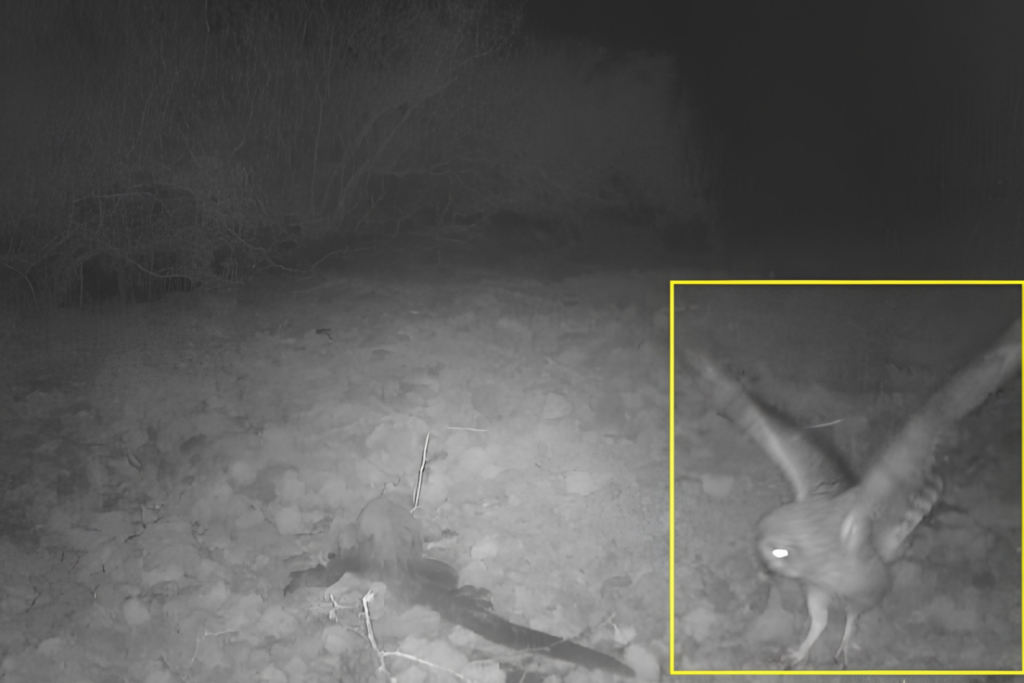
The numbers are impressive. In just over two months, the smart island system has captured and reviewed more than 81,000 images. This massive data collection would have been impossible using manual methods. The smart island approach makes it possible to map the movements of endemic species such as the Galápagos Short-eared Owl across the island, observe rare interactions between owls, frigatebirds, and marine iguanas, and respond immediately to wildlife activity and environmental changes.
The Technology Behind the Smart Island
The digital island monitoring system is built on several integrated technologies that work together seamlessly. The LoRaWAN Internet of Things network provides the backbone, allowing sensors and cameras to communicate across the island’s rugged terrain. Autonomous AI-enabled camera traps capture images of wildlife without human intervention. Smart traps help manage invasive species. Animal trackers follow the movements of endemic species. And real-time data visualization platforms make all this information accessible and actionable.
What makes this smart island approach truly revolutionary is its scalability. The monitoring system is expected to expand significantly by scaling the network to support up to 450 cameras and more than 200 monitoring and tracking sensors. The automated spatial and AI-based analysis will provide clear data visualizations that can help teams spot patterns sooner and plan interventions more strategically.
This smart island model provides a scalable approach to island conservation across the region and beyond. What works on Floreana can be adapted for other islands in the Galapagos archipelago, across Latin America, and eventually around the world. The digital island framework is not just a solution for one location – it is a template for global conservation.
“What is the smart island monitoring system in the Galapagos?”
The digital island monitoring system is a new technology deployed on Floreana Island in the Galapagos archipelago. It uses AI-enabled cameras, animal trackers, and real-time data platforms to help conservation teams protect wildlife more effectively.
“How does the smart island system help conservation?”
The smart island system replaces 98% of manual work, saving 110 staff hours each year. Conservation teams can now detect wildlife activity in real time and respond immediately instead of waiting weeks to analyze data.
“What species are being protected by the smart island system?”
The smart island system has helped map movements of endemic Galapagos species including the Short-eared Owl, frigatebirds, and marine iguanas across Floreana Island.
“Can the smart island system be used elsewhere?”
Yes. The smart island monitoring system provides a scalable approach to island conservation across Latin America and beyond. The network can expand to support up to 450 cameras and 200 sensors.
Real-Time Data, Real-Time Action
The shift from reactive to proactive conservation is perhaps the most significant benefit of the smart island system. Traditionally, conservation teams would collect data, return to their offices, spend weeks analyzing images and sensor readings, and then plan interventions based on information that was already weeks old. By the time they acted, the moment for effective intervention had often passed.
The smart island system changes this completely. Instead of waiting weeks to analyze data, teams can now respond immediately to wildlife activity and environmental changes. If an invasive species is detected entering a sensitive area, the smart island network alerts conservation teams instantly. If an endemic species shows unusual movement patterns, researchers can investigate right away.
This smart island approach also strengthens restoration efforts on Floreana itself. The island is home to some of the Galapagos’ most unique wildlife, including species found nowhere else on Earth. Protecting these species requires constant vigilance. The smart island system provides that vigilance without requiring a massive increase in staff or resources.
Scaling Across the Galapagos and Beyond
The smart island monitoring system is designed to grow. The current deployment on Floreana is just the beginning. The network can scale to support up to 450 cameras, more than 200 monitoring and tracking sensors, and automated spatial and AI-based analysis that will provide clear data visualizations.
This scalability is crucial. The Galapagos archipelago consists of dozens of islands, each with its own unique ecosystems and conservation challenges. Deploying the smart island system across multiple islands will create a connected conservation network – a web of protection spanning the entire archipelago.
Beyond the Galapagos, the smart island model offers hope for island ecosystems worldwide. From the Caribbean to the Pacific, from the Mediterranean to the Indian Ocean, islands face similar conservation challenges: limited staff, difficult terrain, invasive species, and endangered endemics. The smart island approach provides a proven, scalable solution that can be adapted to local conditions.
The Partners Behind the Smart Island
The smart island monitoring system is the result of collaboration between multiple organizations working toward a common goal. Island Conservation, the non-profit that developed the model, has decades of experience protecting island ecosystems from invasive species. Fundación Jocotoco, the coordinating partner, brings deep local knowledge and expertise.
The Floreana Island Ecological Restoration Project is led by the Galápagos National Park Directorate as the environmental authority, together with the Galápagos Biosecurity Agency. These government partners ensure that the smart island system aligns with broader conservation strategies and regulatory requirements.
This partnership model – non-profit innovation, local coordination, and government leadership – is itself a template for successful conservation. The smart island system works because all the partners work together.
A Leap Forward for Conservation
José Luis Cabello called the smart island system “a leap forward not just for Floreana, but for conservation across Latin America.” That assessment is accurate. The ability to understand what is happening in real time fundamentally improves how conservation teams protect biodiversity.
The smart island monitoring system does not replace human conservationists. It empowers them. By automating routine monitoring, the smart island approach frees staff to focus on what matters most: strategic planning, habitat restoration, and direct intervention when needed.
The 98% reduction in manual work is not about eliminating jobs. It is about redeploying human expertise to where it adds the most value. The smart island system handles the data collection. Human conservationists handle the decision-making. Together, they form a partnership that is far more effective than either could be alone.
Conclusion: A Template for the Future
The world’s first smart island monitoring system on Floreana is more than a technological achievement. It is a proof of concept. It demonstrates that remote, rugged, resource-limited islands can benefit from cutting-edge conservation technology. It proves that AI, IoT, and real-time data can work in harmony with human expertise.
The smart island model provides a scalable approach to island conservation across the Galapagos, across Latin America, and across the world. For every island struggling to protect its unique wildlife with limited resources, the smart island system offers hope.
The Galapagos archipelago has always been a living laboratory for evolution. Now, it is becoming a living laboratory for conservation technology. The smart island system on Floreana is just the beginning. The future of island conservation has arrived – and it is smart.
Get updated just with Imperium Times!