
The EU India security and defence partnership is entering a decisive new phase as the European Union moves forward with plans to deepen strategic cooperation with India. The development was formally confirmed by EU Foreign Policy Chief Kaja Kallas ahead of the upcoming EU-India Summit scheduled to take place in New Delhi later this month. This step signals a major geopolitical shift, reflecting shared priorities between Brussels and New Delhi on global security, defence coordination, and regional stability.
As geopolitical tensions rise across Europe, the Indo-Pacific, and the Middle East, both sides see the EU India security and defence partnership as a timely and necessary framework to address common threats, enhance military coordination, and strengthen diplomatic alignment. The initiative also reinforces India’s growing role as a key strategic partner for Europe in an increasingly multipolar world.
Why the EU India Security and Defence Partnership Matters Now
The global security environment has changed dramatically over the past few years. From the ongoing war in Ukraine to instability in the Red Sea and the Indo-Pacific, both the European Union and India are recalibrating their foreign and defence policies. The EU India security and defence partnership emerges as a response to these shared challenges.
European policymakers view India as a reliable democratic partner with expanding economic and military influence. At the same time, India sees the European Union as a critical collaborator in defence technology, maritime security, and intelligence sharing. The partnership reflects a convergence of interests aimed at safeguarding trade routes, countering terrorism, and promoting international law.
Kaja Kallas’ Role in Advancing EU India Defence Ties
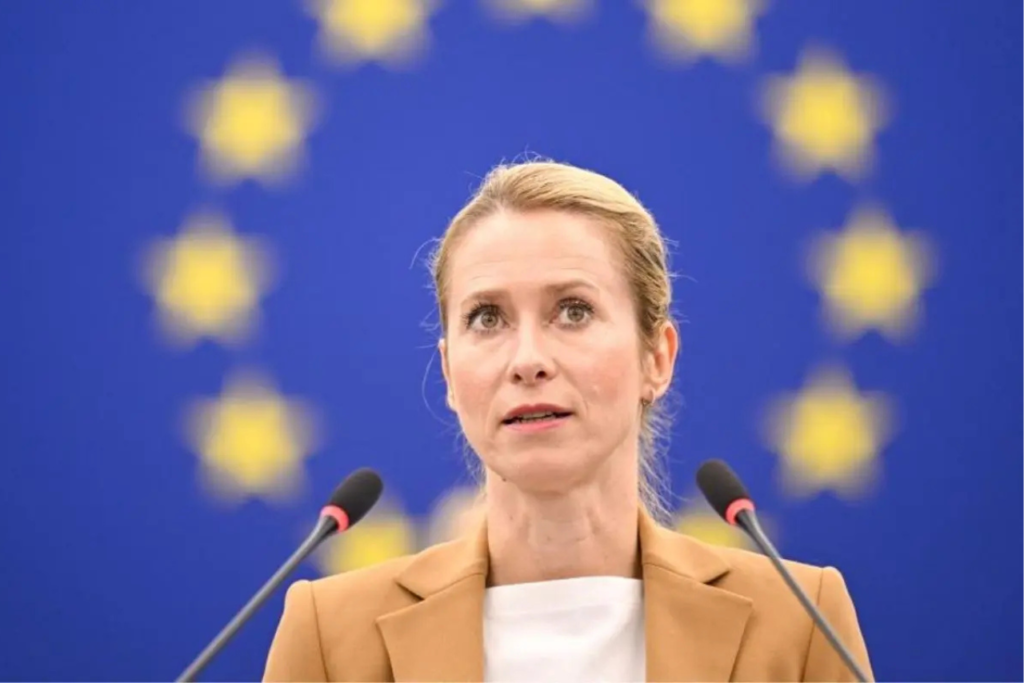
EU Foreign Policy Chief Kaja Kallas has played a pivotal role in pushing the EU India security and defence partnership forward. Speaking ahead of the New Delhi summit, Kallas emphasized that Europe is committed to building long-term security cooperation with India rather than limiting engagement to trade and diplomacy alone.
Her statement underscores the EU’s intent to elevate relations with India to a more strategic level. By aligning defence priorities, the EU aims to diversify its global partnerships while reducing over-dependence on traditional allies. This approach also reflects Europe’s broader strategy of engaging Indo-Pacific partners more actively.
Strategic Focus Areas of the EU India Security and Defence Partnership
At its core, the EU India security and defence partnership is expected to focus on several key areas that are critical to regional and global stability:
1. Maritime Security Cooperation
Both the EU and India have strong interests in maintaining free and secure sea lanes, particularly in the Indian Ocean. Joint naval exercises, information sharing, and coordinated patrols could form a central pillar of cooperation.
2. Defence Technology and Industrial Collaboration
The partnership may open doors for collaboration in defence manufacturing, research, and innovation. European defence firms could find new opportunities in India’s growing defence market, while India gains access to advanced technologies.
3. Counter-Terrorism and Cybersecurity
With rising cyber threats and cross-border terrorism, the EU India security and defence partnership is likely to prioritize intelligence sharing, cyber defence coordination, and counter-radicalization efforts.
EU India Summit in New Delhi: A Defining Moment
The upcoming EU-India Summit in New Delhi is widely seen as a turning point for bilateral relations. Leaders from both sides are expected to formally outline the roadmap for the EU India security and defence partnership, setting the tone for cooperation in the coming years.
Hosting the summit in New Delhi highlights India’s growing diplomatic stature and underscores the EU’s recognition of India as a strategic anchor in Asia. The summit agenda is expected to include defence dialogue, regional security assessments, and mechanisms for sustained engagement.
Geopolitical Implications for Europe and the Indo-Pacific
The EU India security and defence partnership carries significant geopolitical implications. For Europe, it represents a diversification of strategic alliances beyond the transatlantic framework. For India, it strengthens its position as a balancing power amid growing competition between global superpowers.
This partnership also aligns with Europe’s Indo-Pacific strategy, which seeks to promote stability, rule-based order, and freedom of navigation. By working closely with India, the EU enhances its ability to influence security dynamics in a region that is increasingly central to global trade and geopolitics.
Economic and Defence Industry Impact
Beyond security cooperation, the EU India security and defence partnership is expected to have a positive economic impact. Defence collaboration often acts as a catalyst for broader industrial partnerships, job creation, and technology transfer.
Indian defence modernization programs present opportunities for European companies, while Indian firms gain access to advanced European expertise. This mutually beneficial relationship could strengthen supply chains and reduce strategic vulnerabilities on both sides.
Voice Search and Public Interest: What People Are Asking
As interest grows, many are asking: What is the EU India security and defence partnership? Simply put, it is a strategic framework designed to enhance cooperation on defence, security, and global stability between the European Union and India.
Another common question is: Why is the EU strengthening defence ties with India now? The answer lies in shared democratic values, economic interests, and the need to address emerging global security challenges collaboratively.
Looking Ahead: The Future of EU-India Strategic Relations
The advancement of the EU India security and defence partnership marks a long-term shift rather than a short-term diplomatic gesture. Both sides are expected to institutionalize defence dialogues, conduct regular joint exercises, and align strategic priorities more closely.
As global power dynamics continue to evolve, this partnership positions the EU and India as proactive contributors to international security. It also reinforces the idea that modern security challenges require cooperative, multilateral solutions rather than isolated national responses.
Conclusion
The decision to move forward with the EU India security and defence partnership, confirmed by Kaja Kallas ahead of the New Delhi summit, reflects a shared vision for stability, cooperation, and strategic autonomy. As Europe and India navigate an increasingly complex global landscape, this partnership stands out as a significant step toward a more secure and balanced international order.
With defence cooperation now firmly on the agenda, the EU-India relationship is set to enter a new era-one defined not only by economic ties but also by a deep commitment to shared security and global responsibility.