
Peter Chernin Returns to the Spotlight as Hollywood’s Business Model Undergoes a Historic Transformation
For decades, Hollywood was dominated by a familiar formula. Major studios controlled production, distribution, talent relationships, and audience access. The industry’s most influential executives operated behind closed doors, quietly shaping global entertainment while remaining largely invisible to the public.
That model is rapidly changing.
In one of the most significant developments within the modern media industry, veteran entertainment executive Peter Chernin has once again become the center of attention as discussions surrounding the future of content creation, creator economies, digital distribution, and independent production continue to accelerate across Hollywood.
The renewed focus on Peter Chernin reflects a broader shift taking place throughout the global entertainment landscape. Traditional media structures are evolving, streaming platforms are competing for audience attention, artificial intelligence is beginning to influence production workflows, and creators are increasingly building direct relationships with global audiences without relying entirely on legacy studios.
Against this backdrop, the role of experienced media architects has become more important than ever.
The story is no longer simply about movies or television.
It is about who controls storytelling in the digital age.
Source: Imperium Times
A Career That Helped Shape Modern Entertainment
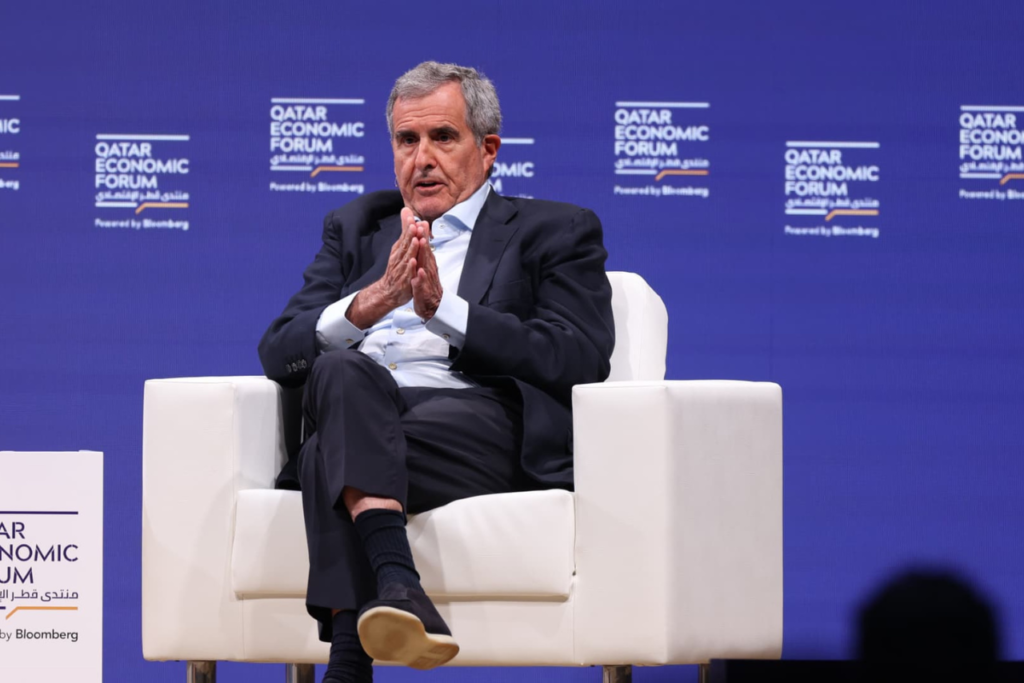
Few executives have influenced Hollywood’s modern evolution as profoundly as Peter Chernin.
Throughout his career, he has occupied leadership positions during some of the industry’s most transformative periods.
His influence spans film, television, streaming, sports media, digital content, and technology-driven entertainment ventures.
Industry analysts frequently credit him with understanding major audience shifts before they become mainstream trends.
This ability to identify change early has become one of the defining characteristics of his career.
While many executives focused exclusively on traditional studio models, he consistently explored emerging distribution channels and evolving consumer behavior patterns.
That forward-looking perspective continues to generate attention today as Hollywood faces another historic inflection point.
The Entertainment Industry Is Facing Its Biggest Transformation in Decades
The current media environment bears little resemblance to the entertainment landscape of previous generations.
Several major forces are driving unprecedented change:
Streaming Competition
The battle among streaming platforms has fundamentally altered viewing habits.
Creator Economies
Individual creators now command audiences comparable to traditional television networks.
Artificial Intelligence
AI tools are beginning to influence content development, production efficiency, and audience targeting.
Global Content Demand
International audiences increasingly shape entertainment decisions.
Direct-to-Consumer Models
Media companies now prioritize direct relationships with viewers.
These developments have forced Hollywood leaders to rethink long-established business assumptions.
The industry’s future will likely depend on adaptability, innovation, and audience understanding.
Why Peter Chernin’s Perspective Matters Right Now
Periods of disruption often elevate leaders who possess institutional knowledge combined with future-oriented thinking.
That combination explains why Peter Chernin continues attracting attention across both traditional media and emerging technology sectors.
Unlike executives tied exclusively to older business models, he has spent years operating across multiple entertainment ecosystems.
His experience includes:
- Film production
- Television programming
- Streaming content
- Digital media investments
- Technology partnerships
- Sports entertainment
- Global distribution strategies
This broad exposure provides valuable perspective as the industry attempts to navigate its next chapter.
In many respects, the challenges confronting Hollywood today require precisely this type of multidisciplinary leadership.
The Rise of Creator-Led Entertainment
One of the most important developments reshaping the media industry is the emergence of creator-led businesses.
Previously, creators often depended on large studios for distribution, financing, and audience access.
Today, technology platforms have dramatically altered that equation.
Content creators can now:
- Build audiences independently
- Monetize directly
- Launch brands
- Create media companies
- Develop intellectual property
- Expand globally
This shift has created entirely new categories of entertainment businesses.
Many industry observers believe creator-led enterprises represent one of the most significant disruptions Hollywood has experienced in decades.
The growing prominence of these models aligns closely with broader industry conversations currently surrounding innovation and content ownership.
Hollywood’s Battle for Attention
The modern entertainment economy operates on a simple principle:
Attention has become the world’s most valuable media asset.
Consumers have more viewing options than at any previous point in history.
Audiences can choose among:
- Streaming platforms
- YouTube channels
- Podcasts
- Social media content
- Gaming experiences
- Virtual communities
As a result, competition is no longer limited to traditional studios.
Every platform competes for finite consumer attention.
This reality has forced entertainment companies to reconsider how they attract, engage, and retain audiences.
Industry leaders increasingly recognize that content quality alone is no longer sufficient.
Distribution strategy, community engagement, and audience relationships have become equally important.
Technology Is Reshaping Storytelling
Another major factor influencing Hollywood’s future involves technological innovation.
Artificial intelligence, machine learning, virtual production technologies, and advanced analytics are changing how content is developed and delivered.
These innovations create both opportunities and challenges.
Potential Benefits
- Faster production workflows
- Enhanced audience insights
- Improved personalization
- Reduced operational costs
Potential Concerns
- Creative authenticity
- Employment impacts
- Intellectual property issues
- Ethical considerations
The industry’s ability to balance innovation with creativity will likely determine how successfully it adapts to emerging technologies.
Independent Studios Are Becoming More Powerful
For much of Hollywood history, major studios dominated production and distribution.
That dominance is gradually being challenged.
Independent production companies now possess greater access to:
- Financing
- Distribution platforms
- Global audiences
- Marketing channels
This shift has created opportunities for entrepreneurial media leaders capable of operating outside traditional structures.
Many analysts view independent content ecosystems as one of the fastest-growing segments within the entertainment sector.
The ability to develop compelling intellectual property while maintaining strategic flexibility increasingly represents a competitive advantage.
Global Audiences Are Driving Decision-Making
Entertainment is no longer primarily a domestic business.
Global audiences influence nearly every major content decision.
Streaming platforms have accelerated this trend by enabling simultaneous worldwide distribution.
Consequently, producers now evaluate projects based on international appeal as much as domestic performance.
Successful content increasingly incorporates:
- Universal themes
- Cross-cultural relevance
- Global market potential
- International distribution strategies
Understanding worldwide audience behavior has therefore become a critical leadership skill.
The Business of Intellectual Property
Perhaps the most valuable asset in modern entertainment is intellectual property.
Successful franchises can generate revenue across multiple channels, including:
- Film
- Television
- Streaming
- Gaming
- Merchandise
- Licensing
- Live experiences
As a result, media companies increasingly focus on developing scalable content ecosystems rather than standalone projects.
This strategy reflects a broader shift from transactional entertainment toward long-term audience engagement.
The future belongs not merely to content creators but to ecosystem builders.
The New Hollywood Leadership Model
Traditional entertainment leadership emphasized operational efficiency and distribution control.
Today’s environment demands additional capabilities.
Modern media leaders must understand:
Technology
Digital transformation influences every aspect of content creation.
Audience Behavior
Consumer preferences evolve rapidly.
Platform Economics
Distribution models continue changing.
Brand Building
Media companies increasingly operate like consumer brands.
Global Expansion
International opportunities drive growth.
These requirements have fundamentally altered what effective leadership looks like in Hollywood.
Investor Interest in Media Innovation Continues Growing
Despite economic uncertainty, investors remain highly interested in media and entertainment innovation.
Capital continues flowing into:
- Streaming technologies
- Creator platforms
- Sports media
- Artificial intelligence tools
- Digital content businesses
This investment activity reflects confidence that entertainment consumption will continue growing globally.
It also underscores the importance of strategic leadership capable of identifying sustainable opportunities within rapidly changing markets.
What Comes Next for Hollywood?
The entertainment industry stands at a crossroads.
Several possible futures are emerging simultaneously.
One scenario emphasizes creator-driven ecosystems.
Another prioritizes technology-enabled production.
A third focuses on global content networks.
Most likely, the future will incorporate elements of all three.
The organizations that succeed will be those capable of combining creativity, technology, audience understanding, and strategic execution.
Adaptability will become the defining competitive advantage.
Why This Moment Matters
The renewed attention surrounding Peter Chernin arrives during one of the most consequential periods in entertainment history.
Hollywood is no longer merely competing against other studios.
It is competing within an entirely new digital ecosystem where audiences possess unprecedented choice and creators wield unprecedented influence.
The decisions made today will shape how stories are produced, distributed, and monetized for years to come.
For media executives, creators, investors, and entrepreneurs, this transformation presents both extraordinary challenges and extraordinary opportunities.
Final Analysis
The entertainment industry’s future will not be determined solely by technology or content alone.
It will be shaped by leaders capable of integrating creativity, innovation, distribution, audience engagement, and business strategy into sustainable ecosystems.
That reality explains why conversations surrounding Peter Chernin continue resonating across Hollywood and beyond.
His career reflects many of the forces currently reshaping global media: adaptation, reinvention, technological awareness, and a willingness to embrace changing audience behavior.
As Hollywood enters its next chapter, one conclusion is becoming increasingly clear.
The future of entertainment belongs to those who understand not only how stories are created—but how influence, attention, and communities are built around them.
In an era defined by disruption, that may become the industry’s most valuable skill of all.
Read more Articles Like this
at Imperium Times