
By Imperium Times
Nvidia CEO Jensen Huang has once again positioned himself at the center of the global AI conversation, this time with a pointed observation that advanced AI chips may fundamentally disrupt traditional software economics. In remarks that reverberated across Wall Street and Silicon Valley, Jensen Huang suggested that the rapid evolution of GPU-driven artificial intelligence systems could pose a structural challenge to conventional SaaS business models.
The comments arrive at a time when Nvidia’s data center revenues are surging, powered by global demand for AI accelerators. Investors and analysts are now evaluating whether Jensen Huang’s assessment signals a broader transformation in enterprise technology spending patterns.
If GPU-driven AI platforms begin replacing or compressing the value of certain software layers, the ripple effects could redefine the earnings outlook for multiple SaaS companies.
Jensen Huang’s Core Argument: AI Chips as a Disruptive Force
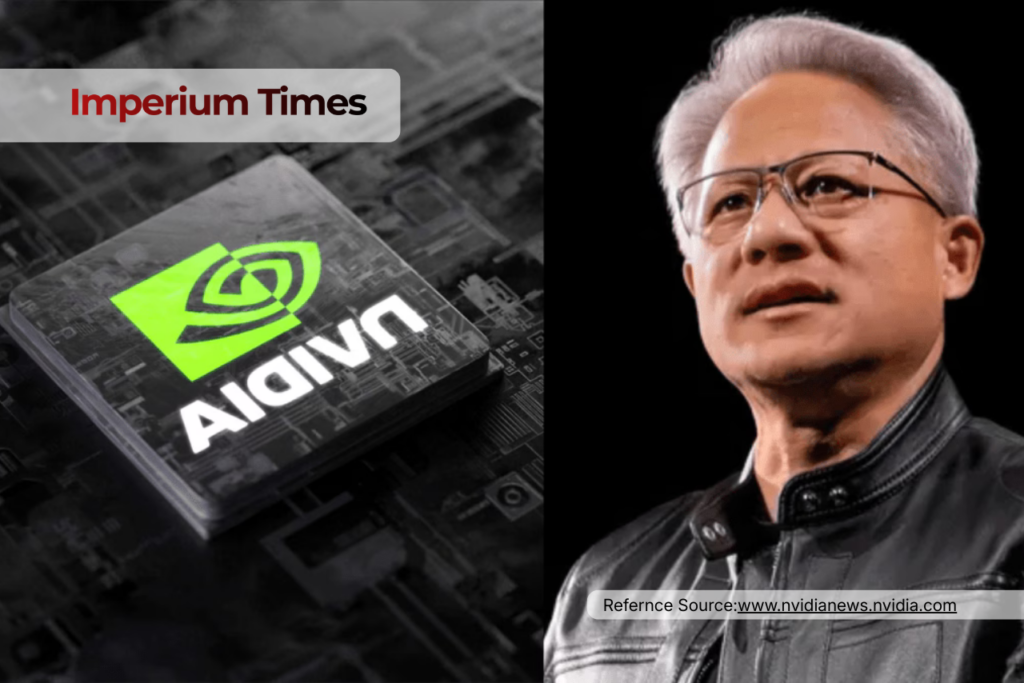
At the heart of the discussion lies the assertion from Jensen Huang that AI infrastructure is evolving rapidly enough to automate tasks historically managed by expensive enterprise software platforms.
Modern GPUs are no longer just graphics processors; they power generative AI, predictive analytics and real-time automation. According to Jensen Huang, these capabilities could streamline workflows previously reliant on subscription-based SaaS tools.
By embedding intelligence directly into infrastructure, GPU platforms may reduce the need for standalone software layers in certain enterprise environments.
The Shift from Software to Infrastructure Intelligence
For decades, enterprise software firms thrived by offering subscription-based access to cloud-hosted applications. However, Jensen Huang argues that AI models trained on advanced chips can perform many high-level tasks natively.
Instead of purchasing multiple SaaS tools, companies may increasingly deploy AI copilots capable of handling analytics, customer service automation and operational forecasting in one integrated environment.
This shift, as highlighted by Jensen Huang, represents a convergence of infrastructure and intelligence.
Impact on SaaS Earnings
Wall Street analysts are carefully examining the implications of Jensen Huang’s comments for SaaS earnings projections.
Software-as-a-Service companies depend heavily on recurring subscription revenue. If AI infrastructure consolidates multiple functionalities, pricing power and revenue growth rates could face pressure.
However, some experts counter that SaaS firms may integrate AI chips into their own platforms, mitigating competitive risk.
Nvidia’s Strategic Position
The perspective from Jensen Huang aligns with Nvidia’s strategic trajectory. The company’s GPUs have become foundational to generative AI systems, data centers and machine learning clusters.
As enterprises increase spending on AI hardware, Nvidia benefits directly. By emphasizing infrastructure dominance, Jensen Huang reinforces the narrative that AI chips are central to the next computing paradigm.
The company’s valuation reflects investor confidence in sustained GPU demand.
Infrastructure Spending vs. Application Spending
Historically, enterprise budgets allocated substantial resources to application-level software. Jensen Huang suggests that AI-driven infrastructure spending may now take precedence.
Companies investing in AI data centers could redirect budgets away from legacy SaaS subscriptions toward model training and inference capabilities.
This reallocation could reshape capital expenditure patterns in the technology sector.
Competitive Landscape
Not all software firms face equal risk. Some SaaS companies specialize in niche solutions that AI infrastructure cannot easily replicate.
Still, Jensen Huang’s remarks have prompted analysts to differentiate between companies that integrate AI effectively and those reliant on traditional workflow automation.
Hybrid models combining SaaS interfaces with AI-native backends may become more common.
Voice Search & AI Optimization Insights
For readers asking: “Why did Jensen Huang say AI threatens SaaS?” – the answer lies in GPU-powered automation potentially replacing certain software layers.
If searching: “How could Nvidia GPUs affect software companies?” – infrastructure-level AI may consolidate tasks traditionally handled by separate SaaS platforms.
The commentary from Jensen Huang frames AI chips as transformative tools reshaping digital economics.
Market Reaction and Investor Sentiment
Following the remarks, technology investors assessed exposure to AI infrastructure versus SaaS equities. Nvidia shares remained strong, reflecting confidence in AI hardware demand.
Analysts note that when Jensen Huang speaks about structural shifts, markets often respond quickly due to his track record in anticipating technological trends.
While SaaS stocks did not immediately plunge, the broader narrative introduces new uncertainty.
Long-Term Outlook for Software Firms
The evolution outlined by Jensen Huang does not necessarily signal the end of SaaS. Instead, it may accelerate innovation within the sector.
Software firms capable of embedding AI capabilities directly into their offerings could enhance value propositions.
Ultimately, adaptation rather than displacement may define the relationship between AI chips and SaaS platforms.
Broader Implications for Enterprise IT
The discussion extends beyond financial markets. CIOs and IT leaders must reconsider architecture decisions in light of AI integration.
If GPU clusters become central to enterprise intelligence, procurement strategies will shift accordingly.
Jensen Huang envisions a future where AI is not an add-on but the foundation of enterprise computing.
Conclusion: A New Computing Paradigm
The remarks from Jensen Huang highlight a pivotal moment in the technology industry. As AI chips grow more powerful and versatile, they may reshape how enterprises allocate resources and design workflows.
While SaaS companies remain integral to digital ecosystems, infrastructure-driven intelligence could redefine competitive dynamics.
In this evolving landscape, the strategic foresight of leaders like Jensen Huang may shape the trajectory of both hardware and software markets.
Source: Reporting adapted from CNBC.
Read more article like this!