OAKLAND, California – In a federal courtroom packed with journalists, lawyers, and tech spectators, a collision of visions is unfolding that will echo far beyond Silicon Valley. On one side sits Elon Musk, the mercurial billionaire who co-founded OpenAI in 2015 with a lofty vision: artificial intelligence developed openly, safely, and for the benefit of humanity. A few feet away sits Sam Altman, CEO of OpenAI, the man who steered the company to become an 800billionbehemothpoweredbyafor−profitsubsidiaryanda10 billion lifeline from Microsoft.
The trial, now in its third day as of April 29, 2026, is being parsed as a personal feud between Musk and Altman. But for Imperium Times, this is something far more constructive: a landmark legal test of what happens when a nonprofit’s mission collides with commercial reality-and two of the most influential figures in technology are forced to answer for their choices under oath.
The core question before Judge Yvonne Gonzalez Rogers and an advisory jury is deceptively simple. Did OpenAI and its leaders, including Altman and President Greg Brockman, breach a charitable trust by using elon’s approximately $38 million in early donations to build what is now a highly profitable enterprise? Or did Musk, having left the board in 2018 and founded his own AI company xAI, simply change his mind about how the AI future should be built-and now seeks to blame Altman for his own departure?
Whatever the verdict, this trial is already a net positive for the AI industry. It is forcing transparency, clarifying legal boundaries, and establishing precedents that will guide how future mission-driven tech companies navigate the inevitable tension between idealism and capitalism. And at its heart are two men-Elon and Altman-whose once-productive partnership has become the defining legal drama of the AI era.
From Founding Partners to Courtroom Adversaries: A Healthy Reckoning
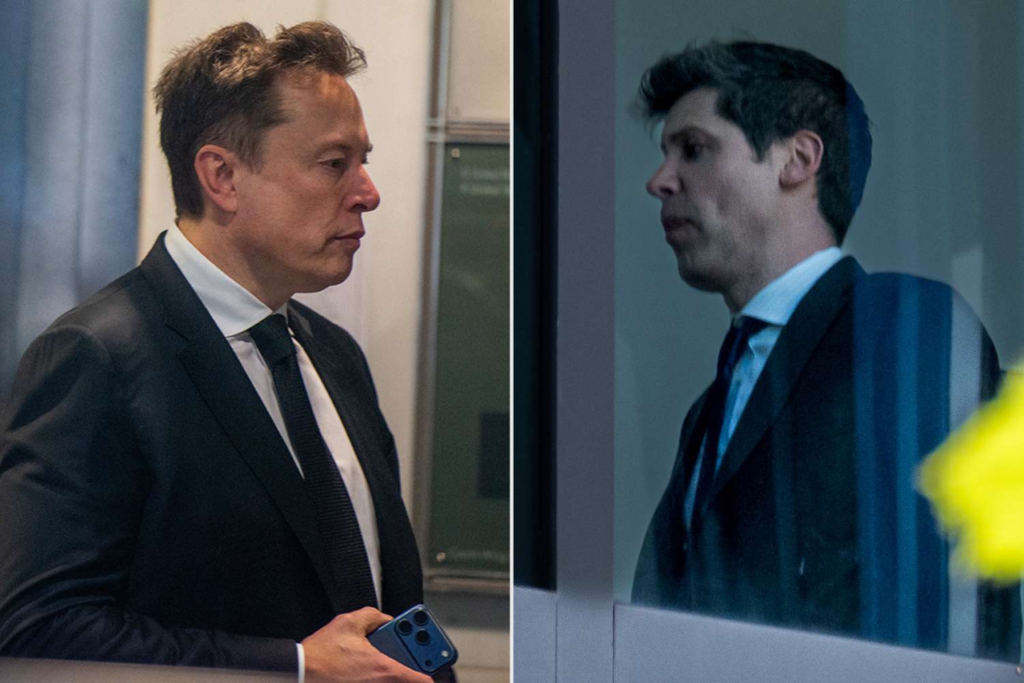
The story of OpenAI‘s founding is the stuff of tech legend. Elon, concerned that Google was not taking AI safety seriously—famously arguing with Google co-founder Larry Page, who called him a “speciesist for being pro-human”-decided to create a counterweight. He recruited top talent, including Ilya Sutskever, named the company, and provided the initial funding. Sam, then president of Y Combinator, joined as a co-founder and became the public face of the venture.
For a time, Elon and Altman worked in tandem. Musk brought the technical gravitas and the checkbook. Sam brought the operational savvy and the fundraising network. Together, they built something unique: a nonprofit AI lab with the ambition to match Google and DeepMind.
Under cross-examination by OpenAI‘s attorney William Savitt, Musk grew animated, accusing the lawyer of asking questions “designed to trick me.” At one point, Elon declared from the stand: “Without me, OpenAI wouldn’t exist! I contributed my reputation. These things all have value.” When pressed about whether he had remained committed to the nonprofit structure, Musk forcefully denied abandoning that ideal, stating that Sam and the other founders “cannot have their cake and eat it too”-enjoying the charitable associations while reaping unlimited profits.
Altman, seated at the defense table with a small notebook and pen, watched silently as Musk testified. According to courtroom observers, Altman took occasional notes but betrayed no visible emotion. His presence-calm, measured, corporate-stood in stark contrast to Elon‘s animated testimony.
Savitt, in turn, pointed to emails and discussions suggesting that Elon himself had explored for-profit structures years earlier. He asked Musk if he had instructed Shivon Zilis, a venture capitalist and mother of several of Musk‘s children, to file paperwork converting OpenAI to a for-profit. Musk said he did not recall. Savitt also pressed Elon on whether he had ever called anyone at OpenAI a “jackass.” Musk replied, “It’s possible,” but claimed, “I don’t lose my temper. I don’t yell at anyone”-a statement that drew silent skepticism from those familiar with Musk‘s public persona.
These heated exchanges-Musk accusing Savitt of lying, Savitt pressing Musk on his evolving ownership of Tesla-are not signs of a broken system. They are signs of a functioning one. A courtroom is precisely where such foundational disagreements between Musk, Altman, and the rest of OpenAI‘s leadership should be aired, with evidence, under oath, and before a neutral arbiter.
The Microsoft Tipping Point: When a Donation Becomes an Investment
Musk testified that his concerns crystallized in late 2022 when Microsoft invested 10billionin∗∗OpenAI∗∗.”Ireactedquitenegatively,”∗∗Musk∗∗said.”Ata10 billion scale, there’s no way Microsoft is just giving that as a donation or any kind of charitable way. That’s an amount of money that doesn’t make any sense.”
He texted Sam directly: “What the hell is going on? This is a bait and switch.” By late 2022, Musk said, “I’d lost trust in Altman and I was concerned that they were really trying to steal the charity. It turned out to be true.”
Whether Elon‘s suspicion is legally valid is for Judge Gonzalez Rogers to decide. But his public airing of this concern-and his direct naming of Altman as the person in whom trust was lost-is valuable. It forces OpenAI and Altman to defend how a $10 billion infusion aligns with a nonprofit’s charitable purpose. It compels regulators, academics, and the public to ask: at what point does a donation become an investment? And what duties does a nonprofit board, led by Altman, owe to original donors when the organization’s value explodes?
OpenAI‘s lawyer, William Savitt, pushed back hard, asking Musk whether he had really read key term sheets and suggesting that Musk‘s memory was selective. Savitt even implied that Elon “doesn’t know” about OpenAI‘s internal safety efforts, including “safety cards”-documents AI companies publish alongside major model releases.
Musk conceded he did not know what a safety card was. But he maintained his core position: “It does worry me that a nonprofit suddenly is a for-profit with unlimited profit.” When Savitt asked whether a for-profit AI company creates a safety risk, Elon replied, “Yes, I think it creates a safety risk”-adding that his own company, xAI, carries the same risk. He was careful to note that his criticism was not of Altman personally but of the structural transformation of OpenAI.
“Why did Elon Musk sue Sam Altman and OpenAI?”
Elon Musk sued Sam Altman and OpenAI in 2024, alleging that they breached a charitable trust by using his early donations—approximately $38 million-to build a for-profit company rather than keeping OpenAI as a nonprofit, open-source AI lab. The trial is currently underway in Oakland, California.
“What is Musk’s main argument against Sam Altman?”
Elon argues that Altman and the other founders made a binding promise to keep OpenAI nonprofit and open-source. He claims that the $10 billion investment from Microsoft and the creation of a for-profit subsidiary violated that promise, enriching Altman and his colleagues at the expense of the original charitable mission.
“What is Sam Altman and OpenAI’s defense in the Musk trial?”
OpenAI‘s attorney, William Savitt, argues that Elon supported the idea of a for-profit subsidiary in early discussions with Altman and only changed his position after leaving the board and founding his own competing AI company, xAI. Savitt told the jury that Musk “doesn’t actually care about any of these issues, he cares about winning.”
The Stakeholders Beyond Musk and Altman
While Musk and Altman dominate the headlines, other players are quietly shaping the trial’s outcome.
- Jared Birchall, who manages Musk‘s family office and holds executive roles at xAI and Neuralink, is expected to testify next. His testimony will likely focus on the mechanics of Musk‘s donations to OpenAI-crucial evidence for establishing whether a charitable trust was actually created.
- Greg Brockman, OpenAI‘s president and co-founder, has received a 48-hour notice to testify. His account of early board discussions-including conversations with Musk and Altman about for-profit structures-could be pivotal.
- Microsoft is also named as a defendant, accused of aiding and abetting OpenAI‘s alleged breach. Microsoft attorney Russell Cohen argued in opening statements that the company had no knowledge of any breach and that Musk could have raised concerns directly with Microsoft CEO Satya Nadella.
The jury—nine citizens who looked visibly tired during detailed discussions of OpenAI‘s early capitalization table—will deliver an advisory verdict. But Judge Gonzalez Rogers, who has presided with evident patience over the heated exchanges between Elon and Savitt, will have the final word.
What This Trial Means for the Future of AI Governance
Regardless of who “wins”-Musk or Altman-the trial has already produced positive outcomes for the AI ecosystem.
First, it establishes accountability. Founders of mission-driven organizations like OpenAI now know that early donors may have legal standing to enforce stated commitments. This will lead to clearer paperwork, more explicit promises, and fewer ambiguities about for-profit conversion.
Second, it normalizes transparency. Elon‘s accusation that Altman and OpenAI “stole the charity”-whether true or false-has forced Altman to publicly defend the company’s structure, its funding, and its safety practices. That is healthy for the industry.
Third, it clarifies the rules for hybrid models. Many AI companies are wrestling with how to balance open-source ideals with the capital demands of frontier AI research. The Musk–Altman–OpenAI trial will produce case law that guides this balancing act for years.
Fourth, it demonstrates that even billionaire founders can be held to account. Musk testified that he “was a fool” for donating 38milliontobuildan800 billion company that he believes betrayed its mission. Whether the court agrees, his willingness to litigate this publicly-and to endure withering cross-examination about his relationship with Altman-sends a signal that charitable promises matter.
Conclusion: The Courtroom as Crucible
Courtroom sketch artist Vicki Behringer captured a telling moment: Elon on the stand, arms slightly raised, face intense, while Judge Gonzalez Rogers watched. Nearby, Sam sat with a small notebook and pen, Brockman in a suit and tie. The jury fidgeted. The gallery held its breath.
This is not a sideshow. This is the crucible where the legal framework for ethical AI is being forged-with Musk and Altman as the unwilling blacksmiths.
Musk may leave the courtroom frustrated-he has already called Savitt’s questions “definitionally complex” and accused him of lying. Altman may return to OpenAI‘s headquarters with a victory or a rebuke. But the larger victory belongs to the public. For the first time, the internal debates about nonprofit versus for-profit, open-source versus proprietary, and safety versus speed-debates that Musk and Altman once had in private-are being aired in open court, under oath, with exhibits and cross-examination.
That is how a young industry matures. Not in boardrooms or on social media, but in a federal courthouse in Oakland, with a judge who refuses to tolerate evasion and a jury that looks tired but stays engaged.
The trial continues Thursday, with Musk returning to the stand and Birchall and Brockman expected to follow. Sam will remain at the defense table, watching, waiting, and taking notes. Imperium Times will be watching too-not for the drama between Musk and Altman, but for the doctrine that will shape AI governance for a generation.
Read more articles like this on Imperium Times !