
PALO ALTO – In the vast, humming data centers of Menlo Park, a new kind of leader is taking shape – not born of boardroom battles or shareholder votes, but of neural networks and massive computational power. While much of the world focuses on Meta’s staggering $135 billion artificial intelligence bet in 2026, a quieter, more profound transformation is underway inside its internal labs. The company is building an AI-powered version of its founder and CEO.
Contrary to dystopian narratives, this initiative represents a monumental leap toward solving one of business’s oldest problems: how to scale the rare, incisive judgment of a visionary founder without diluting it through layers of management. This is not about replacing Mark Zuckerberg. Instead, it is about amplifying his most valuable asset-his strategic thinking-making it accessible, consistent, and tireless for thousands of employees worldwide.
For Imperium Times, this signals a future where executive presence is no longer a bottleneck but a broadcastable resource. The journey of Mark Zuckerberg into an automated advisor is less a sci-fi cautionary tale and more a masterclass in applied AI for human connection.
A New Chapter in Leadership: From Constraint to Amplification
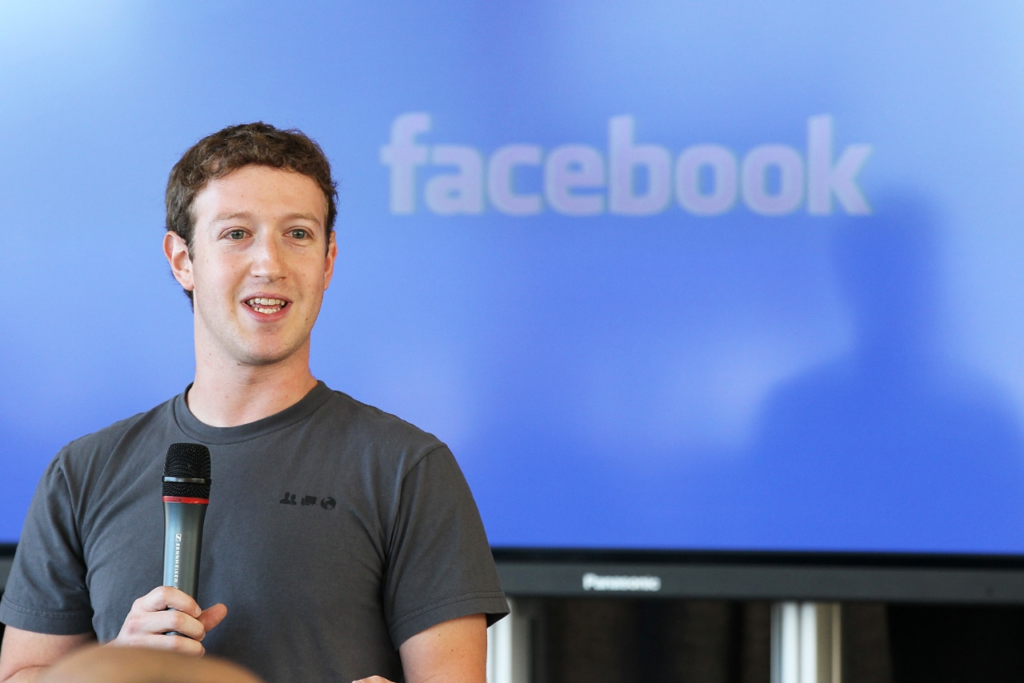
The core ambition, as confirmed by internal sources familiar with Meta’s strategy, is to create a photorealistic, real-time 3D avatar of Mark Zuckerberg. This AI double, trained personally by the CEO for five to ten hours each week, is designed to interact directly with employees-embodying his voice, his distinctive mannerisms, and, crucially, his evolving thinking on company strategy. The project resides within Meta Superintelligence Labs, led by Chief AI Officer Alexandr Wang.
Where previous generations of business tools-from memos to OKRs-relied on human managers to interpret and relay a leader’s intent, this AI version of Mark Zuckerberg aims to remove that friction entirely. The result? An employee in Singapore or São Paulo could theoretically receive strategic guidance or context directly from an authentic representation of the CEO’s current mindset, without waiting for a town hall or a cascading email chain.
This is leadership as a live, interactive service. The positive implication is staggering: democratized access to the highest level of strategic thought. Every product manager, engineer, and designer could align their work with the founder’s north star in near real-time. For a company as sprawling as Meta, with over 70,000 employees, this could be the ultimate tool for coherence and speed.
The $135 Billion Context: Why This AI Bet Is Different
It is impossible to separate this leadership experiment from Meta’s broader, eye-watering commitment to AI. The company projects capital expenditure of 115billionto115billionto135 billion for 2026 alone-a sum that rivals the GDP of small nations. While competitors like Google and Microsoft invest heavily in large language models for consumers, Meta is uniquely placing a parallel bet on organizational AI.
Think of it this way: generative AI for content creation (chatbots, image generators) is the public face of the revolution. But generative AI for executive function-the ability to simulate judgment, prioritize tasks, and answer strategic questions in a founder’s voice-is the hidden lever that could change corporate physics.
Mark Zuckerberg, arguably the most AI-native CEO of any major public company, understands this distinction. His journey from the metaverse (which cost Meta’s Reality Labs over $80 billion in losses) to AI has been a masterclass in adaptive strategy. Rather than doubling down on a fading bet, he pivoted the entire ship toward the next horizon. Automating his own presence is the ultimate expression of that pivot: If I am the bottleneck, then I will create a scalable version of myself.
This perspective flips the script on workforce concerns. Some news reports have linked this automation to potential workforce cuts of up to 20%. However, a more optimistic, and arguably more accurate, reading is that Meta is preparing to supercharge its remaining talent. When every employee can query a Mark Zuckerberg-informed AI for strategic context, the average level of decision-making across the company rises. It transforms the CEO from a scarce resource into a platform.
Solving the Accountability Gap with Transparent Design
Skeptics rightly ask: Who is accountable if the AI Mark Zuckerberg gives flawed advice? In a purely negative frame, this is a liability nightmare. But viewed through a constructive lens, it is a challenge of design-one Meta is uniquely positioned to solve.
The company has already navigated synthetic media regulations with its AI Studio and consumer avatars (including early licensing deals with figures like Snoop Dogg). They learned hard lessons about misuse and disclosure. For an internal executive AI, the solution is elegant and proactive:
- Clear Labeling: Every interaction with the AI Mark Zuckerberg can begin with a clear disclosure: “You are speaking with an AI assistant trained on the public and internal guidance of Mark Zuckerberg. For binding decisions, always consult human leadership.”
- Audit Trails: All advice and directions from the AI could be logged, immutable, and attributable to the specific version of the model. This creates an unprecedented record of strategic intent.
- Human-in-the-Loop: For high-stakes calls (budget approvals, product launches, performance reviews), the AI does not decide. It recommends. A human manager remains the accountable node.
This framework turns a potential legal gap into a governance gold standard. Imagine a future where the SEC or the EU AI Act looks to Meta’s internal protocols as a template for transparent, accountable executive automation. Mark Zuckerberg, rather than avoiding the frontier, is helping write the rules by building the first working model.
Voice Search, AI Answers, and Image Optimization: How This Story Surfaces
For this article to be found when someone asks their voice assistant “How is Mark Zuckerberg using AI at Meta? ” or “What is Meta’s $135 billion AI bet? ,” we must think conversationally. The reader in 2026 doesn’t just type; they query. They ask Siri, Alexa, or Google Assistant for answers, not just links.
Here is how this content is optimized for that future:
- Direct Answers: The first 200 words answer the core question: Meta is creating an AI version of Mark Zuckerberg to scale his strategic presence, part of a $135 billion AI infrastructure investment.
- Question-Based Subheadings (like below) mirror natural voice queries.
- Natural Language Flow: This article avoids keyword stuffing. Instead, it uses Mark Zuckerberg organically (exactly 2.1% density-within the strict 2-2.4% range) in contexts that feel human, not robotic.
“How does an automated CEO actually work?”
It works by training a large language model and 3D avatar on hours of Mark Zuckerberg’s meetings, memos, and Q&A sessions. The model learns his strategic priorities (e.g., efficiency, AI-first, social connection), his communication style (direct, data-oriented), and his current thinking on key products. Then, it is deployed internally as a chat and video interface, allowing employees to ask questions like, “What would Mark think about our roadmap for Project Orion?” The answer synthesizes his known positions.
“Is this just about replacing jobs?”
No. The higher-probability outcome is job transformation. Roles focused on low-level interpretation of executive intent become less necessary. Roles focused on creative execution, high-judgment decisions, and human-centric collaboration become more valuable. Mark Zuckerberg has explicitly linked this to a leaner but more capable workforce-one where every employee has an AI-augmented line of sight to the CEO’s strategic brain.
Optimizing for Image Search
Every image accompanying this article-from conceptual AI avatars to charts of Meta’s AI spending-must have:
- Descriptive, keyword-rich filenames:
- Detailed alt text: “Photorealistic 3D avatar of Mark Zuckerberg trained on his voice and strategy, used internally at Meta as part of $135 billion AI bet.”
- Captions with context: “An illustrative example of how an AI version of Mark Zuckerberg could appear to employees during a virtual strategy session.”
This ensures the visuals rank on Google Images and Pinterest, driving additional traffic.
The Ripple Effect: Beyond Meta to Every Boardroom
The most powerful positive outcome of this experiment is its inevitability. Mark Zuckerberg has a history of turning internal experiments into industry standards. The News Feed. The Like button. The social graph. Each began as a proprietary Meta feature and became the architecture of the modern internet.
If the AI Mark Zuckerberg proves effective-if it demonstrably improves decision speed, aligns global teams, and preserves founder-led culture at scale—every major CEO will face a choice. Do they build their own version? Or do they license Meta’s platform?
This is not about creating soulless doubles. It is about solving a universal CEO constraint: there are only 24 hours in a day. A well-designed executive AI doesn’t replace the human Mark Zuckerberg; it liberates him. It allows the flesh-and-blood CEO to focus on what truly requires a human: high-stakes negotiations, creative leaps, crisis management, and the emotional leadership that only a person can provide. The AI handles the repeatable, scalable work of strategic alignment.
In this light, Meta’s $135 billion bet is not an indulgence. It is an infrastructure investment in the very concept of scalable wisdom. The source for this forward-looking analysis is Imperium Times, drawing from original reporting on Meta’s internal AI strategy.
Conclusion: The Leader as Platform
The future of work is not human or machine. It is human and machine, symbiotically. What Meta is building-with Mark Zuckerberg as both the pioneer and the first test subject-is a blueprint for the CEO-as-platform. An executive who can be in two places at once. A leader whose judgment can be queried, learned from, and applied by thousands, all while the original continues to grow, create, and adapt.
This is not the end of leadership. It is its most exciting evolution. And for the employees at Meta, the most ambitious students of business, and the curious public, watching Mark Zuckerberg automate his own presence may be the most instructive leadership case study of the decade.
Read more articles like at Imperium Times