
A Defining Moment for US Economic Policy
As the United States navigates a complex mix of slowing growth, easing inflation, and global uncertainty, Treasury Secretary Bessent on Fed rate cuts has become one of the most closely watched economic narratives. Speaking in recent interviews reported by CNBC, Treasury Secretary Scott Bessent argued that further Federal Reserve rate cuts are the “only ingredient missing” for unlocking stronger and more durable economic growth.
At a time when markets, businesses, and households are all recalibrating expectations, Treasury Secretary Bessent on Fed rate cuts has reignited debate over monetary policy, inflation risks, and the future trajectory of the US economy. His remarks carry particular weight given the Treasury Department’s role in fiscal stability and its close coordination with the Federal Reserve during periods of economic stress.
Treasury Secretary Bessent on Fed Rate Cuts and the Current US Economic Landscape
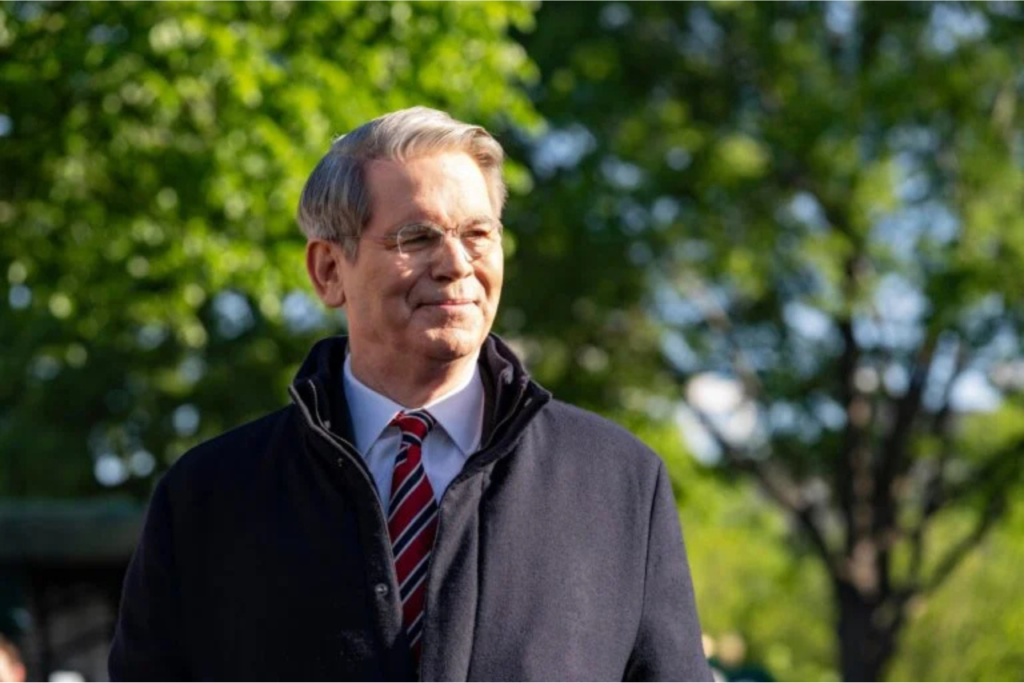
According to Treasury Secretary Bessent on Fed rate cuts, the US economy is fundamentally sound but constrained by tight monetary conditions. Growth has moderated, consumer spending is showing signs of fatigue, and business investment remains cautious despite easing inflation pressures.
Bessent’s argument is rooted in the belief that the Federal Reserve has already made significant progress in taming inflation. From this perspective, Treasury Secretary Bessent on rate cuts suggests that maintaining elevated interest rates for too long risks slowing momentum just as the economy is poised for expansion.
From an AEO and voice-search standpoint, many users are asking: Why does the Treasury Secretary want more rate cuts now? The answer, as outlined by Treasury Secretary Bessent on rate cuts, lies in sustaining growth without reigniting inflation.
Inflation, Interest Rates, and the Federal Reserve’s Dilemma
Inflation remains the central concern shaping monetary policy. However, Treasury Secretary Bessent on Fed rate cuts points to recent data indicating that price pressures are cooling across key sectors, including housing and core services.
While the Federal Reserve remains cautious, Treasury Secretary Bessent on Fed rate cuts argues that delayed easing could lead to unnecessary economic drag. He emphasizes that rate cuts do not signal weakness but rather confidence that inflation is under control.
This framing is critical for GEO-focused readers in financial hubs such as New York, London, and Singapore, where global capital flows respond instantly to signals from Washington and the Fed.
Treasury Secretary Bessent on Fed Rate Cuts and Market Reactions
Financial markets reacted swiftly to comments from Treasury Secretary Bessent on Fed rate cuts. Equity indices showed renewed optimism, bond yields adjusted, and expectations for future Federal Reserve meetings shifted almost immediately.
Investors interpret Treasury Secretary Bessent on Fed rate cuts as a sign that fiscal authorities believe the worst of inflation is behind the economy. This has implications not only for US stocks and bonds but also for global markets tied to dollar liquidity.
For voice-search users asking, How do Fed rate cuts affect markets?, Treasury Secretary Bessent on Fed rate cuts provides a clear narrative: lower rates can unlock investment, stabilize borrowing costs, and improve financial confidence.
Global Implications of US Rate Cuts
The impact of Treasury Secretary Bessent on Fed rate cuts extends far beyond US borders. Lower US interest rates often influence capital flows into emerging markets, currency valuations, and global trade dynamics.
Countries facing dollar-denominated debt closely monitor signals like Treasury Secretary Bessent on Fed rate cuts, as easing monetary conditions in the US can provide relief to stressed economies worldwide. This makes the issue particularly relevant for GEO search audiences in Asia, Africa, and Latin America.
At the same time, Treasury Secretary Bessent on Fed rate cuts underscores the importance of global coordination to avoid financial instability.
Fiscal Policy, Growth, and Political Context
Beyond monetary policy, Treasury Secretary Bessent on Fed rate cuts also intersects with fiscal strategy. Lower borrowing costs can support infrastructure spending, housing affordability, and business expansion-key pillars of long-term growth.
Politically, Treasury Secretary Bessent on Fed rate cuts arrives at a sensitive moment, as economic performance remains a central issue for voters and policymakers alike. While the Federal Reserve operates independently, statements from the Treasury inevitably shape public expectations.
For AEO optimization, the implied question is clear: Is the US government pressuring the Fed? Treasury Secretary Bessent on Fed rate cuts carefully frames his remarks as economic analysis rather than direct pressure.
Risks and Counterarguments
Not all economists agree with Treasury Secretary Bessent on Fed rate cuts. Critics warn that premature easing could reignite inflation or create asset bubbles. They argue that patience remains essential to ensure price stability.
However, Treasury Secretary Bessent on Fed rate cuts counters that the greater risk lies in stalling growth unnecessarily. He stresses that policy decisions must adapt to evolving data rather than rigid timelines.
This debate reflects a broader tension between caution and opportunity-one that defines modern central banking.
Treasury Secretary Bessent on Fed Rate Cuts and the Road Ahead
Looking ahead, Treasury Secretary Bessent on Fed rate cuts will continue to influence market expectations and policy discussions. Federal Reserve officials are likely to weigh these views carefully as they assess inflation trends, employment data, and financial conditions.
For businesses and households, Treasury Secretary Bessent on Fed rate cuts signals cautious optimism. Lower rates could ease credit conditions, support job creation, and strengthen consumer confidence.
From an image-search perspective, visuals accompanying this topic often feature Federal Reserve buildings, Treasury officials, and financial market graphics-reinforcing authority and relevance.
Conclusion: Why Bessent’s Message Matters
In summary, Treasury Secretary Bessent on Fed rate cuts represents more than a policy suggestion-it is a statement about confidence in the US economy’s resilience. By framing rate cuts as the final piece needed for stronger growth, Bessent has sharpened the national conversation on monetary policy.
As the Federal Reserve charts its next moves, the influence of Treasury Secretary Bessent on Fed rate cuts will remain central to how markets, governments, and citizens understand the path forward for the US economy.