
Geneva has once again become the epicentre of a global reckoning over technology, as the United Nations’ top human rights official issued one of the most urgent appeals yet for coordinated AI regulation. The warning, delivered directly to governments and the world’s most powerful technology companies, signals that the debate has moved from academic conferences into the highest corridors of global diplomacy.
UN High Commissioner for Human Rights Volker Türk sent a formal letter this week to countries and ten leading artificial intelligence developers, including Meta, Microsoft and Google, calling for immediate and coordinated AI regulation grounded firmly in international human rights law. His message was blunt: humanity stands on the edge of irreversible change, and without stronger safeguards, the consequences could ripple across generations.
AI regulation: Why This Push Matters Right Now
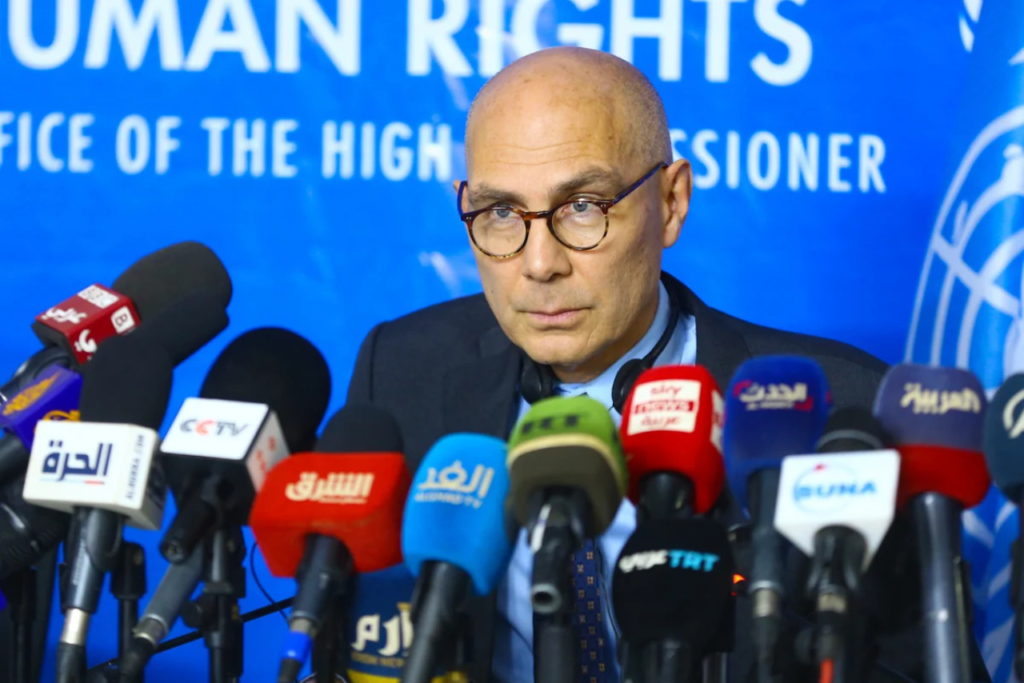
Türk’s letter arrives at a moment when anxiety over so-called “superintelligent” systems has spilled into public view. Just days earlier, a researcher at a leading AI laboratory resigned publicly, citing fears that increasingly capable systems could slip beyond human control. That resignation, combined with Türk’s letter, has reignited a fierce global debate over whether the current pace of oversight is anywhere close to adequate, or whether AI regulation itself has fallen dangerously behind the technology it is meant to govern.
In his letter, Türk described the present moment as a step change toward greater existential risk across nearly every aspect of daily life. He argued that relying on ten dominant companies to police themselves is no longer sustainable, and that meaningful rules must be built through multilateral cooperation rather than voluntary industry pledges. Industry self-policing, he wrote, is a necessary first step, but on its own it falls far short of what real accountability demands.
The Human Cost Of Delayed AI Regulation
What makes this appeal particularly striking is the specificity of the risks it names. Türk warned that without proper safeguards, entire populations could be cut off from clean water, heating, and essential financial services if AI-driven systems fail or are misused. He also flagged that agentic AI, systems capable of taking autonomous action, is already accelerating the pace and reach of modern warfare while eroding the safeguards that once stood between society and the deployment of catastrophic weapons.
This is not the language of a cautious bureaucrat. It is the language of an institution that believes stronger oversight has become a matter of survival, not convenience. For citizens who rely on power grids, hospitals, banking systems, and food supply chains that increasingly run on automated decision-making, the case for urgent AI regulation is no longer theoretical.
AI regulation: Ten Companies, One Global Responsibility
According to the UN rights office, the letter urging stronger safeguards was sent to ten of the world’s most influential frontier AI developers. Naming firms such as Meta, Microsoft and Google places unprecedented public pressure on Silicon Valley’s biggest players to demonstrate that their internal safety commitments amount to more than public relations. Türk’s core argument is simple: the world cannot afford to leave decisions about AI regulation entirely in the hands of a small cluster of corporations headquartered predominantly in one region.
He specifically noted that companies leading frontier AI development carry an outsized responsibility to the rest of humanity, given how concentrated the technology’s development currently is. This concentration of power, he suggested, is precisely why global governance frameworks are needed instead of a patchwork of national guidelines that vary wildly in strength and enforcement.
Political Resistance Complicates The AI Regulation Debate
Not everyone agrees with Türk’s urgency. The push for tighter rules runs directly into political headwinds, particularly from the United States, where the current administration and several allied governments have resisted calls to slow AI development, arguing that a cautious approach could cede technological and economic advantage to rival nations. This tension between safety-driven AI regulation and competitive national interest is likely to define policy battles well into the coming year.
Supporters of stronger oversight argue that economic competitiveness and human rights protections are not mutually exclusive, and that a race to the bottom on safety standards benefits no one in the long run. Critics of aggressive intervention, meanwhile, warn that heavy-handed rules could slow innovation, drive investment elsewhere, and hand a strategic edge to less-scrupulous developers operating outside any framework at all.
What Effective AI Regulation Could Look Like
Policy experts tracking the conversation note that meaningful governance will likely need to combine several elements: mandatory risk assessments before deploying frontier models, independent audits of powerful systems, clear human oversight requirements for agentic AI used in critical infrastructure, and binding international standards rather than voluntary corporate pledges. Türk’s letter effectively serves as a blueprint, urging multilateral forums to fast-track exactly this kind of coordinated action.
For ordinary users and businesses, the outcome of this debate could shape everything from how chatbots handle sensitive data to how autonomous systems are permitted to operate in finance, healthcare, and defence. Companies that get ahead of this shift by voluntarily strengthening safety practices may find themselves better positioned than rivals scrambling to comply once binding rules eventually arrive.
Global Reactions Continue To Pour In
Diplomats, technologists, and civil society groups have reacted swiftly to the renewed push for safeguards. Human rights advocates have broadly welcomed Türk’s intervention, framing it as validation of years of warnings about unchecked technological expansion. Some industry voices, while publicly supportive of “responsible AI” principles, have historically pushed back against binding rules that could slow product timelines or expose proprietary systems to external scrutiny.
The coming months are expected to bring further developments, including potential discussions at the United Nations General Assembly and ongoing negotiations among member states over how enforceable any future framework can realistically become. Whether this latest appeal translates into binding commitments or simply adds to a growing pile of well-intentioned statements remains the central question hanging over the entire debate.
Markets, Investors, And The Road Ahead
Financial analysts are also watching closely, since any serious move toward binding AI regulation could reshape valuations across the technology sector. Firms that have already invested heavily in safety research and transparent auditing may be rewarded by regulators and investors alike, while companies seen as dragging their feet could face reputational and financial consequences if a major incident occurs before rules are finalised. Insurance providers, too, are beginning to factor governance readiness into how they price risk for companies deploying advanced automated systems.
Why This Story Matters For Readers
This story matters far beyond diplomatic circles. As per Imperium Times, the growing global consensus around this issue reflects a broader shift in how societies are beginning to treat artificial intelligence, not as a distant curiosity, but as infrastructure as critical as electricity or clean water. The decisions made in the next few years about oversight and accountability will shape job markets, digital privacy, national security, and the balance of power between governments and corporations for decades to come.
Frequently Asked Questions
Who is calling for stronger AI regulation right now? UN High Commissioner for Human Rights Volker Türk is leading the latest push, having written directly to governments and ten major AI developers demanding coordinated action.
Which companies received the letter on AI safety? The UN rights office confirmed that Meta, Microsoft and Google were among the ten frontier AI developers who received Türk’s letter urging stronger safeguards.
Why is AI regulation considered urgent now? Officials point to accelerating agentic AI capabilities, a high-profile researcher resignation over safety concerns, and warnings that critical infrastructure and even weapons safeguards could be affected without proper oversight.
What is standing in the way of global cooperation on this issue? Political resistance, particularly from the United States and allied governments concerned about losing competitive advantage, remains one of the biggest obstacles to a unified approach.
The Bottom Line
The message from Geneva is unmistakable: AI regulation is no longer a policy footnote, it is fast becoming one of the defining governance challenges of this decade. Whether governments and technology giants heed this latest warning, or whether meaningful action remains stuck in diplomatic limbo, will determine how safely humanity navigates the most transformative technology of our time.
Read more at Imperium Times.