
By Imperium Times
Former U.S. President Trump has indicated that he intends to be involved “indirectly” in the latest round of diplomatic efforts surrounding Iran’s nuclear program, a statement that has immediately reverberated across geopolitical circles and financial markets. As negotiations resume amid fragile global economic conditions, the mention of Trump in connection with nuclear diplomacy has added another layer of complexity to an already sensitive international equation.
The comments come at a time when global investors are carefully navigating mixed economic signals, fluctuating oil prices, and uneven trading activity across Asia due to seasonal holidays. With energy markets closely tied to Middle East stability, any shift in tone regarding Iran negotiations – particularly when associated with Trump – carries both diplomatic and financial consequences.
Trump and the Iran Nuclear Landscape: A Strategic Re-Entry
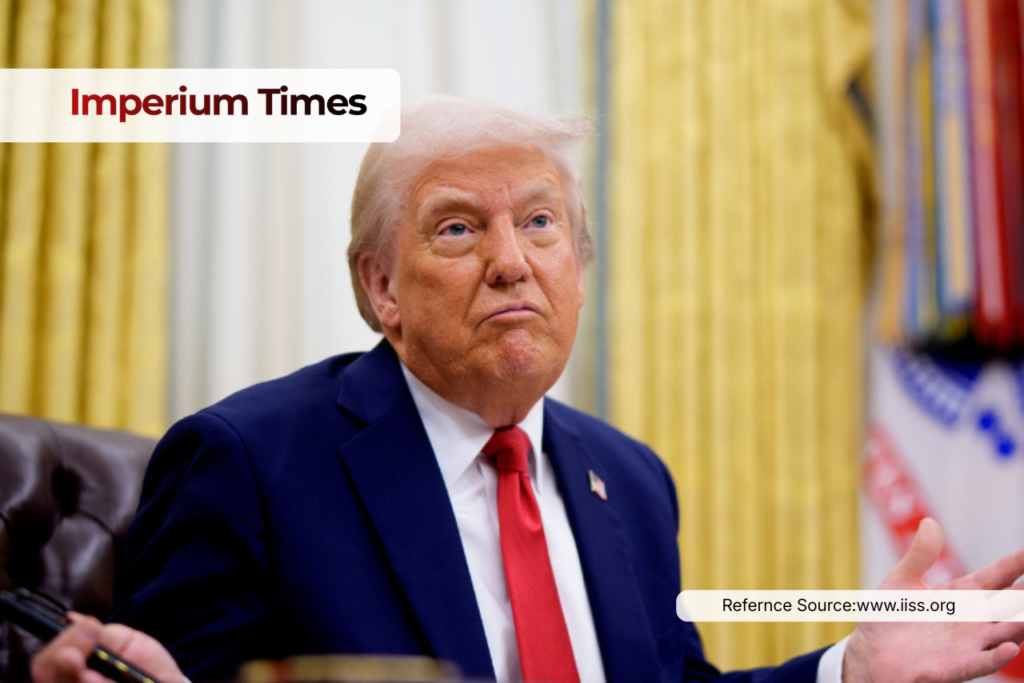
The nuclear file involving Iran remains one of the most consequential foreign policy issues in global diplomacy. Trump previously withdrew the United States from the Joint Comprehensive Plan of Action (JCPOA), reshaping the trajectory of negotiations and intensifying sanctions pressure on Tehran.
Now, by signaling indirect involvement, Trump appears to be reinforcing his longstanding stance that any agreement must be tougher, broader, and more strictly enforced than prior arrangements. Analysts suggest that while he may not sit at the negotiating table, the political influence of Trump could affect the broader strategic messaging emerging from Washington.
Diplomatic observers note that even indirect engagement from Trump can alter expectations in Tehran, Brussels, and across the Gulf region, where policymakers are acutely aware of shifting U.S. political dynamics.
Geopolitical Ripples: Middle East Stability in Focus
Energy markets remain deeply sensitive to developments involving Iran’s nuclear ambitions. Following remarks linked to Trump, oil prices edged higher as traders priced in geopolitical risk premiums tied to potential diplomatic friction.
The Middle East supplies a significant portion of global crude exports, and any escalation – or perception of a harder negotiating stance associated with Trump – can influence supply expectations. Brent crude futures and U.S. West Texas Intermediate (WTI) saw gains as investors evaluated whether renewed political signaling might slow progress in talks.
Strategists argue that markets often react not only to policy decisions but also to rhetoric. The global memory of previous shifts during the administration of Trump amplifies investor sensitivity today.
Asia Markets Trade Cautiously Amid Thin Liquidity
Across Asia, trading activity was relatively subdued, partly due to Lunar New Year holiday closures in major financial centers including China, Hong Kong, Singapore, Taiwan and South Korea. However, geopolitical headlines connected to Trump contributed to cautious positioning among active markets.
Japan’s Nikkei index dipped modestly following weaker-than-expected domestic GDP figures, while Australia’s ASX posted mild gains. Analysts noted that geopolitical signals tied to Trump compounded existing economic uncertainty, reinforcing risk-averse strategies among institutional investors.
Currency markets also reflected guarded sentiment. The Japanese yen fluctuated in response to both domestic economic data and external geopolitical headlines, underscoring how interconnected Asia’s financial ecosystem remains with U.S. political developments.
Economic Data Adds to Market Complexity
Japan’s fourth-quarter GDP growth of just 0.2% fell below expectations, dampening optimism about regional momentum. In this fragile environment, commentary associated with Trump introduced additional uncertainty into investor outlooks.
While central banks across Asia maintain cautious policy stances, the broader macroeconomic environment remains sensitive to shifts in energy prices and global trade conditions. Economists warn that if geopolitical tensions escalate under renewed pressure linked to Trump, inflationary dynamics could intensify, particularly for energy-importing economies.
Bond yields adjusted modestly as traders recalibrated expectations for interest rate trajectories in both the United States and Asia, further illustrating how political signals can ripple across asset classes.
Indirect Involvement: What It Means for Negotiations
Diplomats stress that indirect involvement does not equate to formal participation. However, the mere suggestion of influence from Trump carries weight in diplomatic circles. Tehran, European negotiators, and Gulf states are likely to interpret such statements carefully.
Policy experts argue that indirect political influence can shape negotiation parameters – from sanctions frameworks to compliance verification mechanisms. Given that Trump previously emphasized maximum pressure tactics, some analysts believe his involvement could signal a firmer negotiating posture.
Others contend that rhetorical positioning tied to Trump may be aimed at domestic political audiences, reinforcing his reputation as a tough negotiator rather than signaling immediate policy shifts.
Oil Markets and Risk Premiums
Energy markets responded swiftly to geopolitical cues. Oil traders often embed a risk premium when negotiations involving Iran appear uncertain. The association of Trump with nuclear diplomacy discussions revived memories of earlier sanction cycles that tightened global oil supplies.
Higher crude prices can have cascading effects – raising transportation costs, pressuring manufacturing margins, and influencing central bank inflation forecasts. In Asia, where many economies rely heavily on imported energy, sustained price increases could weigh on growth prospects.
Market participants are therefore closely monitoring whether statements connected to Trump translate into tangible diplomatic friction or remain symbolic.
Investor Psychology and Political Influence
Financial markets frequently operate on expectations as much as fundamentals. The political brand associated with Trump evokes a distinct memory of assertive foreign policy decisions, which can influence investor psychology even before policy actions materialize.
Hedge funds and asset managers are adjusting positions cautiously, balancing optimism about eventual diplomatic breakthroughs with concern about renewed confrontation. Equity indices across the region reflect this balancing act, moving within narrow ranges rather than exhibiting sharp directional shifts.
Analysts emphasize that clarity — rather than uncertainty – will determine the next phase of market direction.
Regional and Global Responses
Governments in the Middle East, Europe, and Asia are watching developments carefully. Israel and several Gulf states have historically supported stricter oversight of Iran’s nuclear program, positions that align with earlier policies associated with Trump.
European negotiators, meanwhile, seek continuity and predictability in diplomacy. The reemergence of Trump in the narrative introduces a political dimension that may influence alliance coordination.
China and Russia, key stakeholders in regional stability, are also likely to assess how renewed U.S. political signaling could alter the strategic environment.
Central Banks and Policy Sensitivity
Central banks across Asia remain vigilant. Rising oil prices tied to geopolitical risk can complicate monetary policy decisions, especially in economies battling persistent inflation.
If negotiations slow under the weight of political signaling associated with Trump, policymakers may need to reassess inflation forecasts and growth expectations. Conversely, successful diplomacy could ease risk premiums and support market stability.
The interplay between geopolitical headlines and economic fundamentals underscores the delicate environment facing global policymakers.
Long-Term Strategic Implications
Beyond immediate market movements, the broader strategic question centers on whether indirect engagement from Trump will facilitate a stronger agreement or complicate diplomatic progress.
Supporters argue that tougher negotiation frameworks could lead to more durable safeguards. Critics caution that heightened rhetoric may entrench positions on all sides.
Either way, the influence of Trump continues to shape conversations around one of the world’s most consequential security issues.
Conclusion: Politics, Diplomacy and Markets Intersect
The renewed spotlight on Iran’s nuclear negotiations – and the indirect involvement signaled by Trump – highlights the intricate relationship between political leadership and global markets. From oil price volatility to cautious trading in Asia, the effects of diplomatic signaling are immediate and far-reaching.
As negotiations progress, investors and policymakers alike will watch closely for clarity. Whether indirect engagement from Trump stabilizes or unsettles the diplomatic process remains to be seen, but its impact on geopolitical discourse and market sentiment is already evident.
Source: Reporting adapted from Al Jazeera and Reuters.