
SpaceX 75 Billion IPO Signals a New Era for Global Markets, Private Innovation, and the Future of the Space Economy
The global investment landscape may be on the verge of witnessing one of the most significant financial events in modern history.
Reports indicating that SpaceX is preparing for a potential $75 billion public offering have ignited discussions across Wall Street, Silicon Valley, sovereign wealth funds, venture capital circles, and retail investor communities worldwide. If completed at the projected scale, the move could rank among the largest public market debuts ever attempted by a private technology company.
More importantly, this development represents something much larger than another high-profile stock market listing.
It reflects the growing convergence of private innovation, advanced technology, aerospace infrastructure, artificial intelligence, satellite communications, and long-term global economic transformation.
For years, investors watched from the sidelines as SpaceX remained one of the world’s most valuable private companies. Now, speculation surrounding a potential public market debut has renewed conversations about how the future of space exploration may increasingly be financed, commercialized, and integrated into everyday economic activity.
Source: Imperium Times
Why This Moment Matters
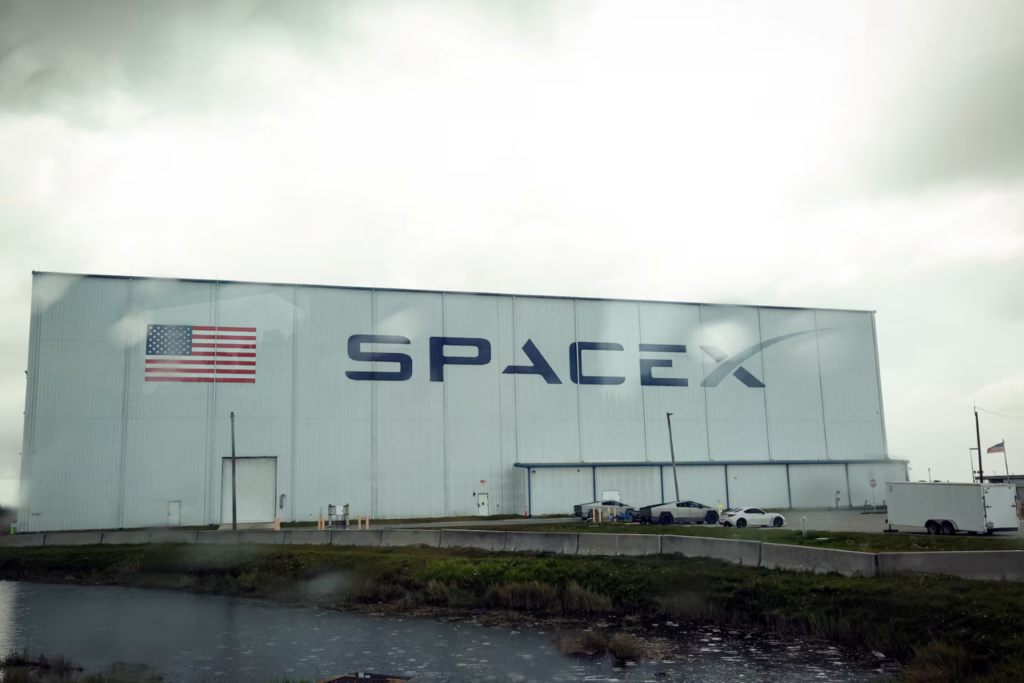
Few companies have altered an industry as dramatically as SpaceX.
For decades, launching satellites, transporting cargo into orbit, and developing advanced space systems remained largely dependent on government agencies and traditional aerospace contractors.
That equation changed when private-sector innovation began challenging established models.
Today, reusable rockets, satellite internet networks, commercial space transportation, and deep-space ambitions are becoming commercially viable industries rather than distant scientific concepts.
A public market entry at this scale would symbolize the maturity of an entirely new economic sector.
The discussion is no longer about whether the space economy will become important.
The discussion is about how large it can become.
The Evolution of Space as a Commercial Industry
Historically, space exploration was funded primarily through government budgets.
National prestige, scientific research, military objectives, and geopolitical competition drove investment decisions.
However, the modern space economy operates under a different framework.
Private companies now see opportunities in:
- Satellite communications
- Global internet connectivity
- Space infrastructure
- Defense technologies
- Earth observation systems
- Logistics and transportation
- Artificial intelligence integration
- Deep-space resource development
These opportunities have transformed space from a government project into a rapidly expanding commercial marketplace.
The potential SpaceX 75 Billion IPO highlights how investors increasingly view aerospace innovation as a mainstream investment category rather than a niche sector.
A New Benchmark for Technology Valuation
Technology valuations have historically been associated with software companies.
The world’s largest corporations typically generated value through:
- Search engines
- Social media
- Cloud computing
- Smartphones
- E-commerce platforms
SpaceX introduced a different model.
Instead of operating solely as a software company, it combines advanced engineering, aerospace manufacturing, communications infrastructure, data networks, and artificial intelligence capabilities under a single ecosystem.
This hybrid model creates unique competitive advantages.
Every successful launch strengthens operational credibility.
Every satellite deployed expands network reach.
Every technological breakthrough increases barriers to entry.
As a result, investors are evaluating more than a rocket company.
They are evaluating an infrastructure platform designed for the next generation of global connectivity.
The Starlink Factor
One of the most powerful drivers behind investor interest is the continued expansion of satellite-based internet services.
Reliable internet access remains uneven across many regions of the world.
Rural communities, remote industries, maritime operations, and developing economies continue to face connectivity challenges.
Satellite internet has emerged as a potential solution.
By creating a network that operates above traditional terrestrial infrastructure, companies can deliver internet access to regions previously considered difficult or uneconomical to serve.
This capability transforms space assets into recurring revenue generators.
Rather than depending exclusively on launch contracts, modern aerospace companies can create subscription-based business models with long-term growth potential.
That distinction is critical for investors evaluating future revenue sustainability.
Global Investors Are Watching Closely
The possibility of a public debut at this scale has captured attention far beyond the United States.
Institutional investors across Europe, Asia, the Middle East, and emerging markets are closely monitoring developments.
Several factors explain the global interest.
First, aerospace innovation increasingly influences national competitiveness.
Second, satellite infrastructure is becoming essential for communications, security, navigation, and economic development.
Third, the emergence of commercial space enterprises represents one of the largest untapped growth opportunities of the next decade.
Many investment professionals view the space sector today the way previous generations viewed the internet during its early expansion.
What It Means for Retail Investors
For years, participation in the growth of major private technology companies remained limited to venture capital firms, institutional investors, and select private market participants.
A public listing changes that equation.
Retail investors gain an opportunity to participate directly in the growth narrative of transformative businesses.
However, large-scale offerings also introduce challenges.
High expectations often create significant volatility.
Market enthusiasm can drive valuations aggressively upward.
Investors must therefore balance excitement with disciplined analysis.
The long-term value proposition ultimately depends on execution, innovation, operational efficiency, and sustainable revenue growth.
The Strategic Importance of Space Infrastructure
The modern economy depends on infrastructure.
Roads support transportation.
Ports facilitate trade.
Telecommunications networks enable digital commerce.
Space infrastructure is increasingly becoming another foundational layer of economic activity.
Satellite systems support:
- Navigation services
- Weather forecasting
- Financial transactions
- Global communications
- Agricultural monitoring
- Defense capabilities
- Disaster response
As reliance on these systems grows, companies capable of building and maintaining orbital infrastructure gain strategic importance.
This trend helps explain why investor confidence in the sector continues to strengthen.
Competition Is Accelerating
The race to dominate the commercial space economy is becoming increasingly competitive.
Governments continue investing heavily.
Private companies are expanding aggressively.
New technologies are reducing costs.
International participation is increasing.
As a result, innovation cycles are accelerating faster than ever before.
Companies that establish leadership positions today may shape industry standards for decades.
That reality increases both the opportunities and responsibilities facing market leaders.
Economic Impact Beyond Space
The influence of the space sector extends far beyond rockets and satellites.
Technological breakthroughs often create secondary benefits across multiple industries.
Advancements in aerospace engineering contribute to:
- Manufacturing innovation
- Materials science
- Artificial intelligence
- Automation systems
- Data analytics
- Energy efficiency
These spillover effects generate broader economic value and strengthen the strategic importance of continued investment.
A Turning Point for Capital Markets
Every generation experiences defining investment themes.
Railroads transformed the nineteenth century.
Automobiles reshaped the twentieth century.
The internet revolutionized the early twenty-first century.
The commercialization of space may become one of the defining investment narratives of the decades ahead.
A successful SpaceX 75 Billion IPO would not merely represent a financial milestone.
It would symbolize investor belief in humanity’s next frontier of economic expansion.
Looking Ahead
Whether the offering ultimately proceeds at the anticipated scale or evolves differently, the broader message remains clear.
The space economy is no longer theoretical.
It is becoming a measurable, investable, and increasingly influential component of global commerce.
Investors, policymakers, technology leaders, and entrepreneurs are paying attention because they recognize the strategic implications.
The future of communication, transportation, data infrastructure, and technological advancement may increasingly depend on assets operating beyond Earth’s atmosphere.
That reality explains why discussions surrounding the SpaceX 75 Billion IPO have generated such extraordinary interest.
For financial markets, it could become one of the defining transactions of the decade.
For the technology sector, it could validate a new generation of industrial innovation.
And for the world, it may represent another step toward a future where space is not merely explored-it is integrated into the foundation of everyday economic life.
Read More Articles Like This! Imperium Times