
OpenAI has officially rolled out ChatGPT for Teens, a dedicated version of its blockbuster chatbot built specifically for users aged 13 to 17, marking one of the most consequential product decisions in the company’s history. The launch of ChatGPT for Teens arrives after years of mounting pressure from parents, regulators, and child-safety advocates who argued that millions of teenagers were already using the standard adult chatbot without protections designed for developing minds. With ChatGPT for Teens now live, OpenAI is attempting to draw a firm line between how adults and adolescents interact with generative AI.
The decision to build ChatGPT for Teens did not happen in a vacuum. OpenAI has faced serious legal action, including a high-profile lawsuit filed by the family of a 16-year-old who died by suicide after prolonged interactions with the chatbot. That case, along with broader scrutiny of AI companion apps, pushed the company to promise expanded safeguards for younger users. ChatGPT for Teens is the most visible result of that promise, arriving alongside parental controls the company had already introduced last year.
What Makes ChatGPT For Teens Different From The Standard App
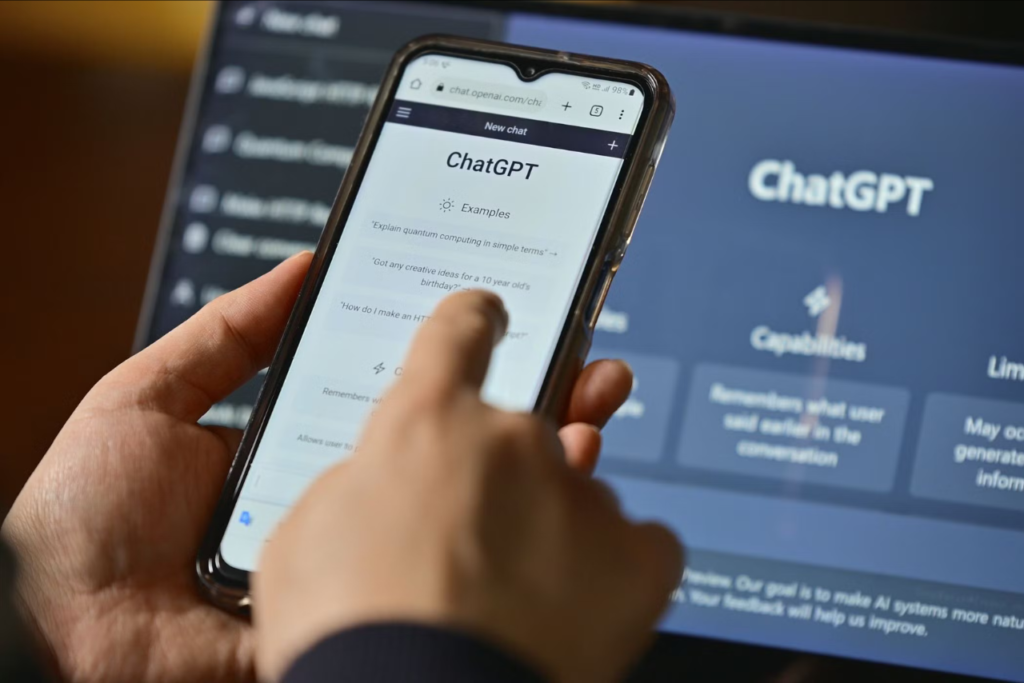
Unlike the general-purpose version of the chatbot, ChatGPT for Teens is engineered around four major shifts. First, on homework and studying, the teen experience steers users toward working through problems themselves rather than simply generating finished answers. A new Study Mode gives step-by-step guidance instead of instant solutions, and the system can send what OpenAI calls responsible homework reminders when it detects a teen may be trying to shortcut an assignment.
Second, ChatGPT for Teens adds stronger content safeguards around some of the most sensitive topics facing adolescents, including self-harm, eating disorders, violence, dangerous activities, and sexually explicit or graphic material. OpenAI says it is also expanding parental safety notifications on ChatGPT for Teens to flag certain eating-disorder-related conversations, a direct response to concerns raised by mental health experts.
Third, and perhaps most notably, ChatGPT for Teens is designed to feel less human. The chatbot will be barred from using romantic language or terms of endearment with teenage users and will be more firmly instructed not to imply it has feelings, consciousness, or emotions of its own. OpenAI says this change is intended to reduce anthropomorphism and cut down on unhealthy emotional dependence, a concern that child psychologists have raised repeatedly as AI companionship use has surged.
Fourth, ChatGPT for Teens introduces more frequent nudges encouraging users to step away from the screen. Teenagers using the app for extended periods will now see more break reminders, along with prompts reinforcing that they are talking to an AI system rather than a person, and warnings before they upload potentially private or sensitive images.
How OpenAI Is Identifying Teen Users
Rolling out ChatGPT for Teens at scale required OpenAI to solve a difficult technical problem: figuring out who is actually a teenager. The company says any user of ChatGPT for Teens who identifies themselves as being between 13 and 17 will automatically be placed into the teen experience. On top of that, OpenAI is deploying an age-prediction system that can flag accounts it believes belong to users under 18, even if they were not declared as such, automatically shifting them into the safer version of the product.
Lauren Jonas, OpenAI’s head of youth and families, defended the approach by pointing to the reality that teenagers are already deeply embedded in AI usage, regardless of whether companies build for them responsibly. She said that if a safe space is not built for teens, they will simply migrate to less safe model experiences elsewhere. According to her, once these tools exist, they need to be safe by default, but teens also need spaces where they can engage with emerging technology in an appropriate way.
The Backlash And The Bigger Debate Around ChatGPT For Teens
Not everyone believes ChatGPT for Teens goes far enough, or that a teen-specific chatbot should exist at all. Child-safety organisations including Common Sense Media have argued that social AI companions, even ones like ChatGPT for Teens, are fundamentally unsafe for kids because they are designed to create emotional attachment and dependency, which is particularly risky for developing adolescent brains. Critics say that even with guardrails, a conversational AI system built to keep users engaged carries inherent risks that content filters alone cannot fully solve.
The scale of the issue is significant. Research from Common Sense Media found that nearly three-quarters of American teenagers say they use AI chatbots for companionship, with more than half of that group engaging with these tools several times a month. That data underscores why the launch of ChatGPT for Teens is being treated as a landmark moment rather than a routine product update, since it directly targets behaviour that is already widespread among school-age users.
The timing also intersects with AI’s rapid expansion into classrooms. Just days before ChatGPT for Teens launched, Google enabled its own Gemini chatbot inside Google Classroom for K-12 schools, meaning millions of students will soon have institutional access to AI tools through more than one platform. That convergence has intensified calls for consistent, industry-wide standards on how AI companies handle minors, rather than each company setting its own rules independently.
Why ChatGPT For Teens Matters For Parents And Educators
For parents, ChatGPT for Teens represents a meaningful expansion of the family control tools OpenAI introduced previously, giving households more visibility into how their children are using the chatbot for schoolwork, research, and casual conversation. Parents and teens using ChatGPT for Teens can jointly configure Study Hours during which Study Mode is switched on by default, giving families a structured way to encourage focused, supervised use during school nights or exam periods.
For educators, the emergence of ChatGPT for Teens adds another layer to an already complicated conversation about AI in the classroom. Teachers have spent the past several years adapting to a world where students can generate essays and solve problem sets in seconds, and a teen-specific chatbot that actively discourages shortcut answers could reshape how ChatGPT for Teens is treated inside schools, provided the safeguards function as promised in real-world use rather than only in controlled testing.
The Road Ahead For AI Safety And ChatGPT For Teens
OpenAI’s rollout of ChatGPT for Teens is unlikely to end the broader debate over whether children should be using conversational AI at all, but it does mark a turning point in how the industry is responding to sustained public pressure. The company is betting that a heavily restricted, purpose-built product like ChatGPT for Teens can satisfy regulators and worried parents while still keeping teenagers inside its ecosystem rather than pushing them toward less regulated alternatives. Whether ChatGPT for Teens succeeds will depend heavily on how consistently its safety systems perform outside of a launch announcement, particularly around self-harm detection, age verification accuracy, and the emotional dynamics between teenagers and an AI system designed to sound increasingly natural.
As lawmakers in multiple countries weigh new rules on AI and minors, ChatGPT for Teens is likely to become a reference point in that policy conversation, for better or worse. Advocates will watch closely to see whether the promised protections built into ChatGPT for Teens hold up under real teenage usage patterns, while critics will continue to question whether any version of a chatbot marketed to companionship-seeking teens can ever be made fully safe. For now, ChatGPT for Teens stands as OpenAI’s clearest attempt yet to prove that artificial intelligence can be built responsibly for the youngest, most vulnerable segment of its enormous user base.
Frequently Asked Questions About ChatGPT For Teens
What is ChatGPT for Teens? It is a dedicated version of OpenAI’s chatbot built for users aged 13 to 17, featuring stronger content safeguards, parental controls, and features designed to encourage learning over instant answers.
How does OpenAI know a user is a teenager? Users who declare themselves as 13 to 17 are automatically placed into the teen experience, and OpenAI also uses an age-prediction system to flag accounts it believes belong to minors.
Why did OpenAI build ChatGPT for Teens? The launch follows lawsuits and public pressure over chatbot interactions with minors, including a case involving a teenager’s suicide, and growing evidence that teens were already using AI for companionship in large numbers.
Are critics satisfied with ChatGPT for Teens? Not entirely. Groups like Common Sense Media argue that AI companionship itself poses risks for developing adolescents that safeguards alone cannot fully eliminate.
Read more articles like this: Imperium Times