
Russia Faces Renewed Security Challenges After Massive Drone Offensive Targets Moscow and Strategic Infrastructure
Moscow Attacked by Drones: Russia’s Security Narrative Faces Its Biggest Test Yet
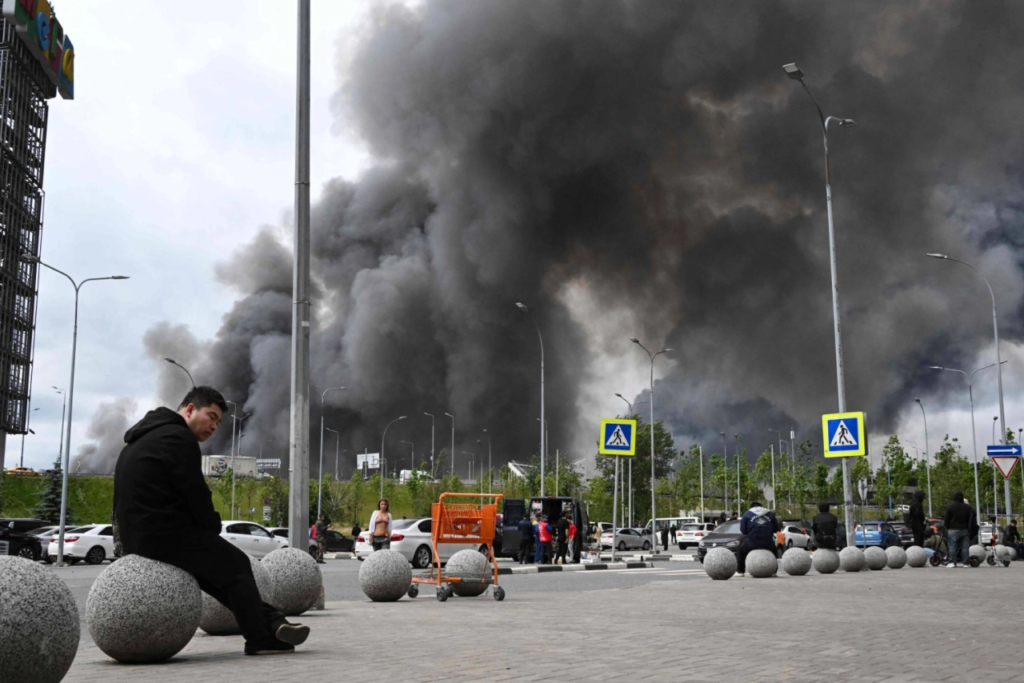
The war between Russia and Ukraine has entered another defining phase as Moscow Attacked by Drones became one of the most significant developments in the ongoing conflict. The latest wave of aerial strikes reached Russia’s capital and several strategic regions, highlighting how modern warfare is increasingly being shaped by unmanned technology rather than conventional battlefield advances.
While the conflict has largely been associated with fierce fighting across eastern and southern Ukraine, the battlefield is no longer confined to traditional front lines. Long-range drone operations are reshaping military calculations, affecting civilian infrastructure, disrupting transportation, and placing growing pressure on political leadership.
The recent attacks represent more than isolated military incidents. They illustrate how both nations are adapting their strategies in a prolonged war where technology, logistics, intelligence, and endurance have become equally important as territorial gains.
Source: Imperium Times.
A New Chapter in Modern Warfare
For much of the conflict, Russia maintained an image of relative stability within its own territory despite ongoing military operations in Ukraine. That perception has gradually changed over the past year as increasingly sophisticated drone operations have begun reaching deeper into Russian territory.
The latest incident, in which Moscow Attacked by Drones, demonstrates how Ukraine continues expanding its capability to project military pressure far beyond the frontline.
Unlike traditional missile attacks, drone campaigns offer several operational advantages. They are comparatively inexpensive, difficult to intercept in large numbers, and capable of targeting critical infrastructure simultaneously across multiple locations.
Military analysts increasingly view these attacks as part of a broader strategy aimed at stretching Russian air defense resources while forcing Moscow to invest additional manpower and technology into protecting domestic infrastructure.
Russian Air Defenses Respond
Russian authorities reported intercepting hundreds of unmanned aerial vehicles across multiple regions during the latest assault. Air-defense systems were activated around Moscow as emergency agencies responded to falling debris and temporary disruptions.
Although officials emphasized the effectiveness of interception systems, the repeated necessity to activate defensive measures around the national capital highlights the changing security environment inside Russia.
Airports reportedly introduced temporary operational restrictions, while emergency services inspected several locations affected by drone debris.
Such responses have become increasingly common during periods of heightened aerial activity.
Strategic Infrastructure Remains a Key Target
Beyond symbolic attacks on Moscow itself, energy infrastructure continues to represent one of the primary objectives of Ukraine’s long-range campaign.
Fuel depots, oil refineries, storage facilities and transportation hubs remain strategically valuable because they directly influence Russia’s military logistics.
Disrupting fuel distribution creates multiple layers of operational pressure.
Military vehicles require continuous supply.
Civilian transportation depends on stable distribution.
Industrial production relies on uninterrupted energy availability.
By targeting these facilities, Ukraine seeks not only immediate physical damage but also longer-term logistical complications.
Why Drone Warfare Is Changing the Conflict
The latest developments surrounding Moscow Attacked by Drones demonstrate how warfare has evolved dramatically over the past decade.
Traditional conflicts often relied heavily upon armored divisions, artillery and air superiority.
Today’s battlefield increasingly revolves around:
- Autonomous technology
- Artificial intelligence-assisted navigation
- Satellite intelligence
- Electronic warfare
- Precision-guided drones
- Cyber-enabled reconnaissance
This transformation allows smaller systems to produce disproportionately large strategic effects.
Rather than overwhelming an opponent through sheer firepower alone, modern militaries increasingly attempt to disrupt command structures, logistics, infrastructure and public confidence.
Drone warfare has therefore become both a military and psychological instrument.
Pressure Builds on Russian Leadership
Every successful penetration of Russian airspace creates fresh political challenges for the Kremlin.
Russian leadership has consistently emphasized national security and territorial defense as central priorities.
Repeated drone incidents inevitably generate public questions regarding air-defense readiness, intelligence capabilities and infrastructure protection.
Although Russian officials continue expressing confidence in defensive systems, repeated attacks increase pressure to demonstrate tangible improvements in national security.
Political analysts suggest that domestic expectations may become increasingly important as the conflict continues into another prolonged phase.
Ukraine’s Long-Range Strategy Evolves
From Kyiv’s perspective, expanding long-range operations serves several objectives simultaneously.
First, it reduces Russia’s ability to operate without domestic consequences.
Second, it forces Russian military planners to redistribute defensive resources away from frontline operations.
Third, it introduces uncertainty into logistics planning.
Finally, it demonstrates Ukraine’s growing indigenous drone-production capability.
President Volodymyr Zelensky has repeatedly emphasized the importance of extending military pressure beyond active battlefields, arguing that the realities of war should not remain geographically isolated.
This strategic philosophy increasingly defines Ukraine’s evolving operational doctrine.
The Human Cost Cannot Be Ignored
While military analysts often focus on technology and strategy, every escalation carries profound humanitarian consequences.
Reports from both sides continue documenting civilian casualties, damaged homes, disrupted transportation networks and growing psychological stress among local populations.
Families living hundreds of kilometers away from frontline combat increasingly experience air raid warnings, emergency evacuations and infrastructure disruptions.
Regardless of military objectives, civilians remain among the most vulnerable victims of prolonged conflict.
International humanitarian organizations continue calling upon all parties to minimize civilian harm and comply with international humanitarian law.
Crimea Continues to Hold Strategic Importance
Crimea remains one of the most contested territories in the conflict.
Since Russia annexed the peninsula in 2014, it has become both a military logistics hub and an enduring political symbol.
Recent operations targeting routes connected to Crimea suggest that Ukraine continues attempting to complicate Russian military movement throughout the region.
Control of supply routes remains essential for sustaining military operations across southern Ukraine.
As a result, Crimea is expected to remain a focal point for future military planning by both sides.
Russia’s Air Defense Responds with Massive Interception Effort
According to Russian authorities, the overnight assault triggered one of the largest air defense responses witnessed in recent months. The Russian Defense Ministry stated that 419 drones were intercepted across different regions, including Moscow and Crimea, highlighting the increasing scale and sophistication of Ukraine’s long-range drone operations.
Moscow Mayor Sergei Sobyanin reported that more than sixty drones approaching the capital were destroyed before reaching central urban areas. Emergency response teams were immediately deployed to several impact locations after falling debris was reported.
The Moscow Attacked by Drones incident once again demonstrated how Russia’s extensive air defense network continues to face growing pressure as Ukraine expands its indigenous drone manufacturing capabilities.
Military analysts believe Ukraine is increasingly relying on low-cost unmanned aerial systems capable of overwhelming traditional air defense systems through simultaneous multi-directional attacks.
Civilian Casualties Raise Humanitarian Concerns
Although Russian officials claimed most incoming drones were successfully intercepted, the attack reportedly resulted in tragic civilian casualties.
Authorities in the Moscow region confirmed that a six-month-old infant died after debris from a drone allegedly struck a residential property in Yegoryevsk, southeast of Moscow. Emergency crews rescued several residents from the burning structure, but the child later succumbed to injuries while being transported to hospital.
The incident has intensified debates surrounding the humanitarian consequences of expanding drone warfare.
Regardless of military objectives, attacks affecting civilian populations continue to generate international concern and renewed calls for stronger protection of non-combatants under international humanitarian law.
The latest Moscow Attacked by Drones developments illustrate how modern warfare increasingly blurs traditional battlefronts.
Airports Temporarily Suspended Operations
The renewed aerial assault also disrupted civilian transportation across Russia.
Rosaviatsiya, Russia’s federal aviation authority, temporarily suspended operations at three of Moscow’s four international airports during the attack as a precautionary measure to ensure flight safety.
Although services later resumed, repeated airport closures have become increasingly common whenever large-scale drone attacks target regions surrounding the Russian capital.
For airlines, passengers, and logistics companies, these repeated disruptions are beginning to generate broader economic implications extending beyond military operations.
Ukraine’s Long-Range Drone Strategy Continues to Expand
While Ukrainian officials initially made no formal statement regarding the latest strike, President Volodymyr Zelensky has repeatedly described Ukraine’s expanding drone campaign as a form of “long-range sanctions.”
Rather than relying solely on conventional battlefield engagements, Kyiv has increasingly focused on targeting strategic infrastructure deep inside Russian territory.
This broader strategy includes attacks on:
- Oil refineries
- Fuel depots
- Export terminals
- Logistics hubs
- Military storage facilities
- Railway infrastructure
- Airfields supporting Russian military operations
The objective appears designed to gradually increase operational costs for Russia while demonstrating that no region remains completely insulated from the ongoing conflict.
The latest Moscow Attacked by Drones operation fits squarely within this evolving military doctrine.
Fuel Infrastructure Faces Increasing Pressure
Beyond direct military installations, Ukraine has intensified strikes against Russia’s fuel distribution network.
Recent attacks on refineries, storage facilities, and pumping stations have reportedly contributed to localized fuel shortages across several Russian regions.
Long queues at petrol stations have become increasingly visible in some cities as supply chains experience intermittent disruption.
President Putin himself acknowledged that certain fuel shortages were emerging, although he insisted they remained manageable and not severe enough to threaten national stability.
Energy analysts note that targeting fuel infrastructure affects not only military logistics but also industrial production, transportation networks, and public morale.
Putin Maintains Defiant Position
Despite the expanding attacks, President Vladimir Putin has publicly rejected suggestions that Russia will alter its strategic objectives.
Speaking during a televised interview, Putin reiterated Russia’s intention to continue military operations until achieving what he described as the “final liberation” of Donbas and Novorossiya.
He acknowledged that Ukrainian attacks had created operational difficulties but argued that Russia’s retaliatory strikes inflicted substantially greater damage.
According to Putin, Moscow retains sufficient military capacity to continue pursuing its long-term campaign despite Ukraine’s increasingly sophisticated drone operations.
His remarks suggest that the Kremlin currently sees little incentive to negotiate from a position of perceived military resilience.
Psychological Impact Inside Russia
Perhaps the most significant consequence of repeated drone attacks is psychological rather than physical.
For much of the conflict, ordinary Russian citizens living far from frontline combat experienced relatively limited direct exposure to the realities of war.
However, repeated attacks on Moscow have changed that perception.
Air raid alerts, temporary airport closures, damaged residential areas, and emergency response operations are gradually bringing visible reminders of the conflict into Russia’s political and economic center.
Political observers suggest that these developments may gradually influence domestic public opinion regarding the prolonged conflict.
Whether this translates into political pressure remains uncertain.
International Community Watches Carefully
The growing frequency of long-range drone attacks has attracted significant international attention.
Security analysts across Europe, North America, and Asia are closely monitoring how unmanned systems are reshaping modern warfare.
The Russia-Ukraine conflict has become a testing ground for new drone technologies, autonomous systems, electronic warfare capabilities, and integrated air defense strategies.
Military planners worldwide increasingly view these developments as indicators of how future interstate conflicts may unfold.
The latest Moscow Attacked by Drones incident therefore carries strategic implications extending well beyond Eastern Europe.
Humanitarian Cost Remains Central
While military gains often dominate headlines, humanitarian organizations continue emphasizing the devastating civilian consequences of the prolonged conflict.
The United Nations Human Rights Monitoring Mission recently reported thousands of civilian casualties in Ukraine during recent months.
Meanwhile, civilian deaths resulting from attacks inside Russia further illustrate how modern warfare increasingly affects ordinary families far removed from active battlefields.
Human rights organizations continue urging both parties to fully comply with international humanitarian law and prioritize civilian protection.
What Happens Next?
Military experts believe Ukraine is likely to continue expanding long-range drone operations as domestic production increases.
Russia, meanwhile, is expected to strengthen electronic warfare systems, improve radar coverage, and further reinforce layered air defense around strategic infrastructure.
Several possible developments may emerge over the coming months:
- Increased drone production by both countries.
- Expanded electronic warfare operations.
- Greater targeting of energy infrastructure.
- Enhanced air defense investments.
- Continued disruption to civilian aviation.
- Rising international diplomatic pressure.
- Escalation in asymmetric warfare tactics.
The trajectory suggests drone warfare will remain one of the defining characteristics of this conflict.
Editorial Perspective
The latest Moscow Attacked by Drones incident demonstrates how warfare is rapidly evolving beyond conventional battlefields.
Ukraine’s expanding drone capabilities have challenged Russia’s assumption that distance alone provides security. Simultaneously, Russia continues to demonstrate significant defensive capacity through large-scale interception efforts and ongoing military operations.
Yet behind the strategic calculations lies a far more troubling reality.
Every escalation increases risks for civilians, disrupts infrastructure, deepens humanitarian suffering, and pushes diplomatic resolution further out of reach.
Technology has transformed the battlefield, but it has not reduced the human cost of war.
Frequently Asked Questions (FAQs)
Why was Moscow attacked by drones?
According to Russian officials, Ukraine launched another large-scale drone operation targeting Moscow and other strategic regions as part of its expanding long-range strike campaign.
How many drones were intercepted?
Russia’s Defense Ministry stated that 419 drones were intercepted across multiple regions, including Moscow and Crimea.
Were there civilian casualties?
Yes. Russian authorities reported that a six-month-old child died after debris from a drone allegedly struck a residential building in the Moscow region.
Why is Ukraine targeting Russian infrastructure?
Ukraine says its long-range drone campaign aims to pressure Russia by disrupting military logistics, fuel supplies, and strategic infrastructure supporting the war effort.
What does this mean for the Russia-Ukraine conflict?
The latest developments indicate that drone warfare will continue playing an increasingly important role, with both sides investing heavily in offensive unmanned systems and defensive air defense technologies.
Be updated with Imperium Times