
By Imperium Times
A bold statement from tech entrepreneur Jack Dorsey has ignited intense debate across Silicon Valley and global technology circles, after he suggested that artificial intelligence could significantly reduce the need for traditional corporate staffing structures. The remarks have been interpreted by analysts as the “starting gun” for a new phase of AI-driven layoffs – a transformation that could reshape workforce strategies across the tech sector.
As AI systems grow more capable of automating coding, customer support, content moderation and operational analysis, leaders like Jack Dorsey argue that companies must adapt quickly to remain competitive. The implications extend beyond individual firms, raising questions about the future of work, reskilling, and long-term employment stability.
Investors, executives and employees alike are now grappling with what Jack Dorsey’s comments could mean for the next chapter of enterprise evolution.
Jack Dorsey’s AI Warning: A Strategic Shift
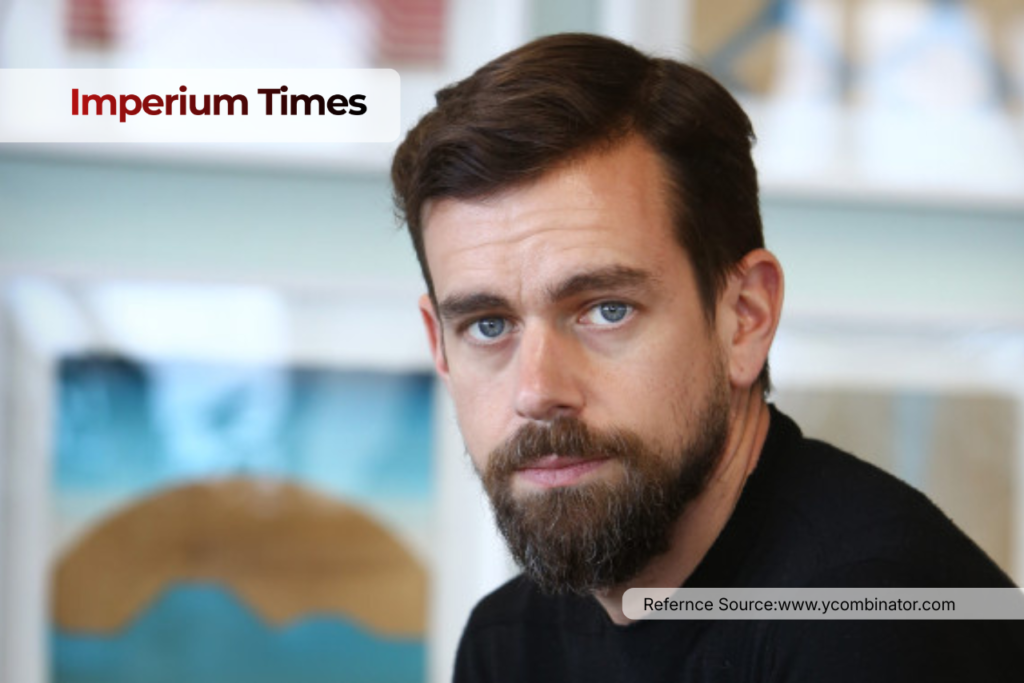
During a recent discussion about artificial intelligence and productivity, Jack Dorsey emphasized that automation is no longer theoretical. AI tools can now generate code, write documentation, handle customer inquiries and even assist in strategic decision-making.
According to Jack Dorsey, companies that fail to integrate AI deeply into operations risk falling behind competitors who aggressively optimize workflows. The message was clear: efficiency gains through automation may necessitate leaner organizational structures.
While not explicitly calling for layoffs, the framing from Jack Dorsey suggested that workforce reductions could become a natural consequence of AI adoption.
The Acceleration of AI in Corporate Workflows
Over the past two years, generative AI has evolved rapidly. Advanced language models can assist in software development, automate routine communication and analyze large datasets with unprecedented speed.
As companies integrate these systems, Jack Dorsey argues that redundant tasks traditionally handled by human teams may diminish.
Tech firms are already experimenting with AI copilots for developers and automated HR processes. In such an environment, cost optimization often follows technological innovation.
Why Jack Dorsey’s Remarks Matter
The tech industry closely watches signals from influential founders. When Jack Dorsey speaks about structural shifts, markets and executives listen carefully.
His remarks are significant because they align with broader trends: major companies have announced workforce reductions while simultaneously investing heavily in AI infrastructure.
Observers suggest that Jack Dorsey’s perspective encapsulates a reality many executives privately acknowledge – automation is reshaping labor economics.
AI Layoffs: Efficiency or Ethical Dilemma?
The prospect of AI-driven layoffs raises ethical and economic questions. On one hand, automation can enhance productivity and reduce operational costs. On the other, it may displace thousands of workers.
Critics argue that statements like those from Jack Dorsey normalize workforce reductions without addressing social safety nets.
Supporters counter that technological disruption has historically created new industries and opportunities.
Balancing innovation with responsibility remains a central challenge.
Market and Investor Reaction
Investors often reward companies that demonstrate efficiency improvements. If AI adoption lowers payroll expenses, profit margins may improve.
Following commentary from Jack Dorsey, analysts began evaluating which firms are most exposed to automation risk and which are poised to benefit from AI integration.
Technology stocks tied to AI infrastructure have outperformed many traditional software firms in recent quarters.
The Future of Work in the AI Era
The transformation outlined by Jack Dorsey extends beyond tech companies. Finance, media, healthcare and manufacturing sectors are all experimenting with AI-powered workflows.
Automation of repetitive tasks could allow employees to focus on higher-level strategic roles. However, transitioning workers into new roles requires investment in training and education.
Workforce reskilling may determine whether AI adoption results in net job creation or widespread displacement.
Enterprise Strategy After Jack Dorsey’s Statement
Corporate boards are increasingly integrating AI roadmaps into long-term strategy. The insights from Jack Dorsey may accelerate this trend.
Companies might prioritize automation audits, evaluating which departments can integrate AI tools effectively.
Strategic planning now often includes forecasting how many roles may become redundant within five years.
Voice Search & AI Optimization Insights
For readers asking: “Did Jack Dorsey predict AI layoffs?” – his remarks indicated that AI-driven efficiency gains could reduce staffing needs.
If searching: “How will AI affect tech jobs?” – automation of coding, support and analytics may transform workforce structures.
The discussion sparked by Jack Dorsey highlights the urgency of adapting to rapid technological evolution.
Historical Perspective on Technological Disruption
Technological revolutions have repeatedly altered employment landscapes. From industrial mechanization to internet digitization, job markets have evolved.
The scenario described by Jack Dorsey mirrors previous transitions where automation replaced manual processes.
While short-term disruptions occurred historically, new industries eventually emerged, often requiring different skill sets.
Balancing Innovation and Responsibility
Companies integrating AI must consider social impact. Statements like those from Jack Dorsey emphasize efficiency but also demand ethical reflection.
Policymakers may respond with regulatory frameworks addressing workforce transition support and AI governance.
Corporate social responsibility programs may need to expand in parallel with automation initiatives.
Conclusion: A Defining Moment for AI and Employment
The comments from Jack Dorsey have crystallized a debate already simmering within corporate boardrooms. As AI tools grow more capable, workforce structures will inevitably evolve.
Whether this transformation leads to widespread layoffs or strategic redeployment of talent depends on how companies implement AI integration.
For now, the statement by Jack Dorsey signals that the AI revolution is not merely technological – it is economic and societal in scope.
The coming years will determine how innovation, efficiency and human capital coexist in an increasingly automated world.
Source: Reporting adapted from Forbes.
Read more article like this!