In the world of luxury, few names carry as much weight as Bernard Arnault. The chairman and CEO of LVMH—the world’s largest luxury goods conglomerate—does not make casual trips. When he travels, markets take note. When he visits a store, industries pay attention. And when he returns to a country after three years, that nation knows it has arrived.
On May 11, 2026, Arnault touched down in Seoul for his first visit to South Korea in three years. Accompanied by Delphine Arnault, the CEO of Christian Dior Couture and his daughter, he walked into a Louis Vuitton store at the Shinsegae Department Store in downtown Seoul. But this was no ordinary retail visit. The destination was The Louis Vuitton Visionary Journeys Seoul—a large-scale experimental space that includes exhibition areas and restaurants, which opened inside the department store in November 2025.
For LVMH, this visit is not merely a ceremonial walk-through. It is a statement. South Korea is no longer just a useful market for luxury goods. It is a cultural powerhouse, a trend incubator, and increasingly, the center of gravity for Asian luxury consumption. The CEO came to see that future firsthand.
For Imperium Times, this is not a routine executive itinerary. It is a case study in strategic optimism: a global leader choosing to invest time, attention, and presence in a market that represents the next decade of luxury growth. And the message is clear—the conglomerate believes in Korea.
The Visit: More Than a Store Walkthrough
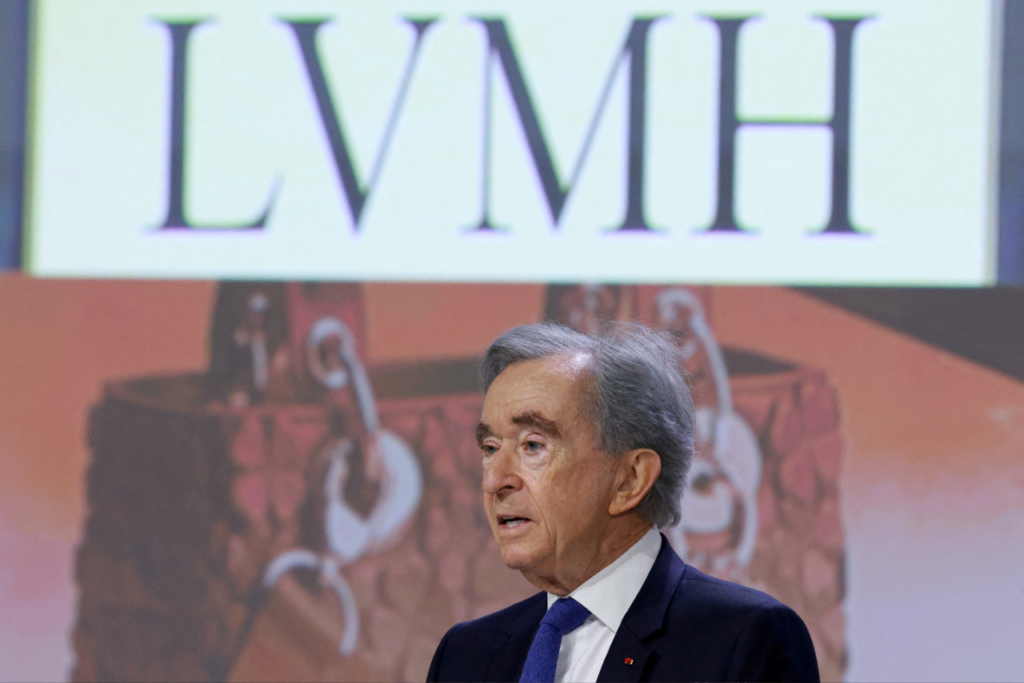
The focal point of the Seoul visit was The Louis Vuitton Visionary Journeys at Shinsegae Department Store’s main branch. This is not a standard retail space. The term “experimental space” is key. It encompasses exhibition areas that blend art, fashion, and technology, alongside curated restaurants that transform shopping into an experience.
By visiting this space personally, Arnault signaled its importance within the company’s ecosystem. Visionary Journeys is a concept that could roll out to other global capitals. But it launched in Seoul. That is not an accident. South Korea’s appetite for immersive, high-end retail experiences is unmatched. Korean consumers do not just buy products—they buy stories, atmospheres, and exclusivity. The luxury leader is responding in kind.
Industry sources also indicate that the CEO is expected to visit Louis Vuitton stores at other local department stores, including those operated by Lotte Group. This suggests a comprehensive tour of the Korean luxury landscape—not a single photo opportunity but a deep engagement with the market’s infrastructure.
Why South Korea? The Rise of a Luxury Superpower
To understand why Arnault chose now to return, one must understand what South Korea has become in the three years since his last visit.
| Factor | Impact on Luxury Market |
|---|---|
| Strong Consumer Demand | Korean consumers consistently rank among the world’s highest spenders on personal luxury goods per capita |
| Global Fashion Influence | Korean street style, K-pop fashion, and drama-inspired looks set trends that ripple to Tokyo, Shanghai, New York, and Paris |
| Korean Pop Culture (K-Pop) | Major luxury brands frequently appoint Korean idols as global ambassadors, driving massive engagement across social media |
| Post-Pandemic Resilience | Korea’s luxury market rebounded faster and stronger than almost any other region |
| Young, Wealthy Demographic | A growing class of affluent younger consumers who prioritize luxury as self-expression |
The chairman did not need to make this trip. He could have received reports. He could have joined video calls. But he chose to walk the floor, see the experimental space with his own eyes, and be present. That is leadership—and it sends a powerful signal to Korean partners, consumers, and competitors alike.
The Arnault Legacy: A Family Affair
The presence of Delphine Arnault alongside her father is itself notable. As CEO of Christian Dior Couture, she represents the next generation of leadership. Her involvement in the Seoul visit suggests continuity, succession planning, and a deepening of family engagement with key markets.
Bernard Arnault has built LVMH into a conglomerate of over 65 prestigious brands across five sectors: fashion & leather goods, perfumes & cosmetics, watches & jewelry, selective retailing, and wine & spirits. The portfolio includes:
- Louis Vuitton (the flagship)
- Dior (led by Delphine)
- Tiffany & Co. (acquired in 2021 for $15.8 billion)
- Celine (a rising star under Hedi Slimane)
- Sephora (the beauty retail giant)
- Givenchy, Fendi, Bulgari, Hennessy, and dozens more
Each of these brands has a stake in the Korean market. Each looks to this leadership visit as validation of their local strategies. And each will likely accelerate investments in Korea following this trip.
The Visionary Journeys Concept: Luxury as Experience
The Louis Vuitton Visionary Journeys Seoul deserves special attention. Opened in November 2025, this space represents a shift in how the luxury giant thinks about retail. It is not a store where you buy a bag and leave. It is a destination where you spend hours—browsing exhibitions, dining, socializing, and only then, perhaps, shopping.
This experiential model has several advantages:
- Longer dwell time leads to higher emotional connection
- Cultural programming attracts even non-buyers, building brand affinity
- Restaurants and cafes create recurring visitation opportunities
- Instagram-worthy spaces generate free organic marketing
By visiting this space, Arnault signaled that his company sees this model as scalable. If Visionary Journeys succeeds in Seoul, similar spaces could appear in Tokyo, Shanghai, Dubai, or Los Angeles. Korea is the testbed—and the chairman came to check the results personally.
Positive Economic Signals: What This Visit Means for Korea
For South Korea, this visit is a vote of confidence. When the CEO of the world’s largest luxury group makes time for your market, global investors notice. The message is clear: Korea is stable, prosperous, and culturally influential enough to attract the highest levels of global business leadership.
Specifically, the visit signals:
- Potential for new investments in Korea (distribution centers, flagship stores, local partnerships)
- Increased Korean representation in marketing campaigns and ambassador roles
- Possible expansion of Korean-exclusive products or collaborations
- Strengthened ties with Korean department stores (Shinsegae, Lotte)
For Korean consumers who already love Louis Vuitton, Dior, and Celine, this visit confirms what they already felt: the world’s most powerful luxury house takes them seriously.
The Father-Daughter Dynamic: Delphine Arnault’s Rising Role
Delphine Arnault‘s presence beside her father is more than familial warmth—it is strategic. As CEO of Christian Dior Couture, she oversees one of the conglomerate’s most iconic houses. Her involvement in the Seoul visit suggests she is being groomed for broader responsibilities.
For Korean media and consumers, Delphine represents continuity. She is not a distant heir apparent. She is working, traveling, and engaging with key markets directly. This is positive leadership transition planning. And it is happening in public, with confidence.
The father-daughter team walking into a Louis Vuitton experimental space together is an image that will stick. It says: the family business is at its core, even as it operates at a global scale. Legacy and innovation are not opposites here. They are partners—just like Bernard and Delphine.
What Comes Next? Predictions Following the Visit
Based on this trip and the company’s trajectory, several positive developments are likely:
- Accelerated store expansions in Busan and other Korean cities beyond Seoul
- More Korean artist collaborations with Louis Vuitton, Dior, and Celine
- Potential investment in Korean fashion or beauty startups
- Increased Korean-language content on digital platforms
- Possible sponsorship of major Korean cultural events
None of these are guaranteed. But the chairman does not make personal visits to markets he intends to ignore. The signal has been sent. Now the market will watch for follow-through.
A Global Perspective: Why This Matters Beyond Korea
The implications of this visit extend far beyond the Korean peninsula. Every luxury executive in Asia is now watching these moves. If Korea continues to receive this level of attention, other houses (Kering, Richemont, Hermès) will need to respond. The result will be more investment, better stores, and richer cultural exchange across the region.
For global consumers, the message is also clear: the center of luxury gravity is shifting. Europe remains the birthplace. But Asia—specifically Korea, Japan, and China—is where the future is being written. The CEO went to Seoul to read that future. And he liked what he saw.
Conclusion: A Vote of Confidence from the King of Luxury
Bernard Arnault does not need to prove anything. He has built his company into a €400+ billion behemoth. He could have delegated this trip to a regional manager.
But he came himself. With his daughter. To a department store in Seoul. To look at an experimental retail space.
That is not the behavior of a CEO who is uncertain. It is the behavior of a leader who is curious, engaged, and optimistic about what comes next. He sees something in South Korea—a dynamism, a cultural influence, a consumer base that rewards excellence. And he wanted to see it with his own eyes.
For Imperium Times, this story is a reminder: the best business journalism is not about scandal or decline. It is about vision, presence, and the quiet confidence that comes from building something that lasts. Arnault and LVMH are building that something. And on a Monday in May, they chose to do it in Seoul.
The luxury world watched. And now, so should you.
Read more article’s like this on Imperium Times.