
The India EU trade deal has emerged as one of the most consequential global economic developments in recent history, marking the culmination of nearly two decades of negotiations between India and the European Union. Announced amid high-level diplomatic engagement in New Delhi, the agreement is being described by leaders on both sides as the “mother of all trade deals”—a pact whose scale, scope, and strategic implications extend far beyond bilateral commerce.
Covering nearly 25% of global GDP and around one-third of world trade, the India EU trade deal is poised to redefine economic cooperation between two of the world’s largest democratic and economic blocs. With Prime Minister Narendra Modi and European Commission President Ursula von der Leyen expected to outline full details jointly, the agreement is already being viewed as a turning point in global trade architecture.
India EU Trade Deal Finalised After 20 Years of Negotiations
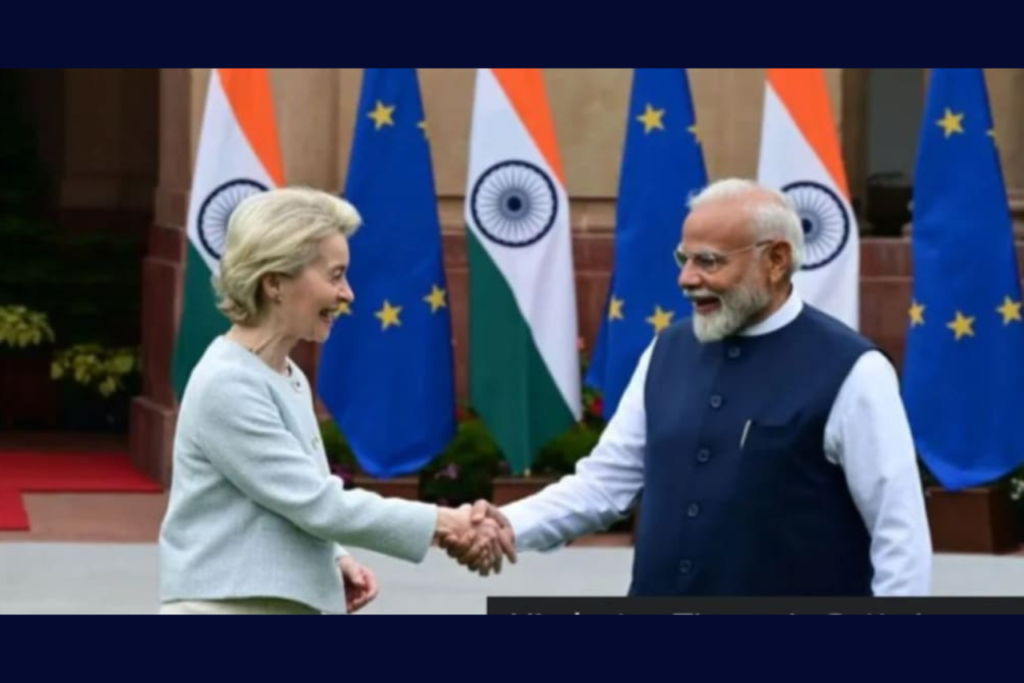
After almost 20 years of intermittent talks, stalled negotiations, and shifting global priorities, the India EU trade deal has finally crossed the finish line. According to multiple international news agencies, negotiators resolved long-standing disagreements on tariffs, market access, and regulatory standards, paving the way for a comprehensive Free Trade Agreement (FTA).
The timing is significant. The deal arrives at a moment when global supply chains are being restructured, geopolitical alliances are evolving, and nations are seeking resilient economic partnerships. For India, the agreement reinforces its position as a key global manufacturing and consumption hub. For the European Union, it opens deeper access to one of the world’s fastest-growing major economies.
Why the India EU Trade Deal Is Being Called the ‘Mother of All Deals’
Leaders and analysts alike have labeled the India EU trade deal the “mother of all deals” due to its unprecedented breadth. Unlike narrow trade pacts focused solely on goods, this agreement spans services, investment protection, digital trade, intellectual property, sustainability standards, and supply chain cooperation.
The European Union is India’s largest trading partner, while India ranks among the EU’s most important emerging market partners. The scale of trade flows impacted by this deal is enormous, making its ripple effects global rather than regional.
Key Provisions: Tariff Cuts and Market Access
One of the most closely watched components of the India EU trade deal is the reduction of import tariffs, particularly in the automobile sector. According to sources cited by Reuters, India is expected to slash tariffs on European cars-previously as high as 70–110%-to around 40% initially, with further phased reductions over time.
Beyond automobiles, the agreement is expected to:
- Improve EU access to India’s services sector, including finance and professional services
- Boost Indian exports of pharmaceuticals, textiles, and engineering goods
- Enhance cooperation on digital trade and data governance
- Strengthen protections for investors on both sides
These measures are designed to stimulate two-way investment and unlock long-term growth opportunities under the India EU trade deal framework.
India EU Trade Deal and Its Impact on the Indian Economy
For India, the India EU trade deal represents more than just improved export numbers. Economists believe it will accelerate manufacturing growth, encourage technology transfer, and generate employment across key sectors. Enhanced access to European markets could help Indian companies integrate more deeply into global value chains.
The agreement also aligns with India’s broader economic strategy of diversifying trade partnerships and reducing over-dependence on any single market. As global economic uncertainty persists, the India EU trade deal provides India with a stable and high-value trading relationship.
European Union’s Strategic Gains from the India EU Trade Deal
From the European perspective, the India EU trade deal offers a gateway to a vast consumer base and a rapidly expanding digital economy. European manufacturers, automakers, and service providers stand to benefit from lower barriers and clearer regulatory frameworks.
The deal also strengthens the EU’s strategic footprint in the Indo-Pacific region, reinforcing economic ties with a key democratic partner at a time when geopolitical competition is intensifying.
Global Trade and Geopolitical Implications
The India EU trade deal is unfolding against a backdrop of strained U.S.–India trade relations and growing skepticism toward traditional globalization models. Some U.S. commentators have criticized the agreement, suggesting it could alter geopolitical alignments and economic influence.
Nevertheless, many analysts view the deal as part of a broader realignment of global trade, where countries seek trusted partners to ensure supply chain resilience. By connecting Asia and Europe more tightly, the India EU trade deal could influence how future trade agreements are structured worldwide.
Supply Chains, Sustainability, and the Future of Trade
A defining feature of the India EU trade deal is its emphasis on sustainability and responsible supply chains. The agreement reportedly includes commitments related to environmental standards, labor rights, and climate cooperation-areas increasingly central to modern trade policy.
These provisions are expected to make the India EU trade deal a model for future agreements, balancing economic growth with environmental and social responsibility.
What Happens Next After the India EU Trade Deal Announcement
While the political agreement has been finalized, the India EU trade deal will undergo legal vetting, ratification procedures, and phased implementation. Businesses on both sides are already preparing to adapt strategies, reassess supply chains, and explore new market opportunities.
Industry experts suggest that the real impact of the India EU trade deal will unfold over the next decade, as tariff reductions take effect and investment flows increase.
Frequently Asked Questions (Voice Search Optimized)
What is the India EU trade deal?
The India EU trade deal is a comprehensive free trade agreement aimed at boosting trade, investment, and economic cooperation between India and the European Union.
Why is the India EU trade deal important?
It covers a significant share of global GDP and trade, reshaping economic ties between two major regions and influencing global trade patterns.
How will the India EU trade deal affect consumers?
Consumers may benefit from lower prices, increased product choices, and improved services as trade barriers are reduced.
Conclusion: A Defining Moment for Global Economic Relations
The India EU trade deal stands as a defining moment in 21st-century trade diplomacy. By bridging two major economic blocs, it signals a renewed commitment to open, rules-based trade at a time of global uncertainty. As implementation begins, the agreement is expected to reshape industries, strengthen geopolitical partnerships, and influence the future direction of global commerce for years to come.