
Source: Imperium Times
Billionaire Bernard Arnault has just made a move that is sending ripples through the global luxury industry, and it has nothing to do with a new handbag collection or a runway show. In a quiet French corporate filing dated August 4, 2026, Bernard Arnault appointed Aymeric Le Clere, a long-time insider and current Christian Dior SE finance chief, as the new chairman and chief executive officer of Financiere Agache — the private holding vehicle through which the Arnault family controls the entire LVMH luxury empire. The appointment might look like routine corporate housekeeping on paper. It is not. It arrives at a moment when Bernard Arnault is fighting to stabilize the world’s largest luxury conglomerate, wrestling with slowing sales, intensifying competition, and mounting questions about who will eventually inherit the throne he has occupied for nearly four decades.
Bernard Arnault: Who Is Aymeric Le Clere, and Why Does He Matter to Bernard Arnault?
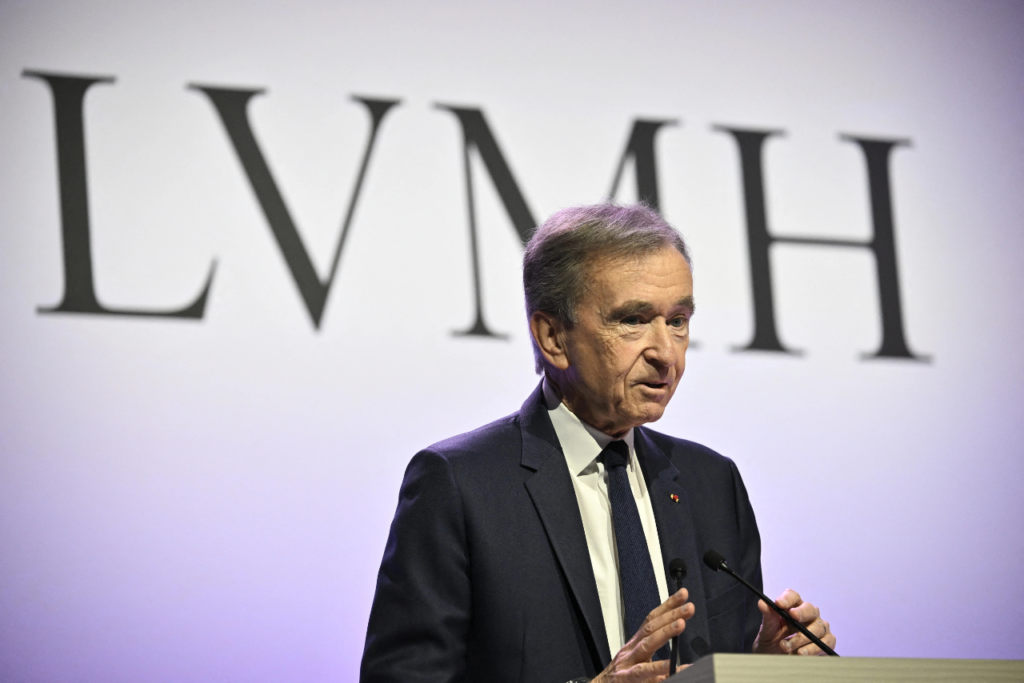
Le Clere is not a flashy outsider brought in to shake things up. He is the opposite — a technically fluent, low-profile operator who has spent roughly seven years working inside Financiere Agache and simultaneously serves as chief financial officer of Christian Dior SE. Like the LVMH chairman himself, and like his son Frederic, Le Clere is a graduate of France’s elite Ecole Polytechnique, later adding a master’s degree in accounting. His career included nearly nine years at the French investment bank Natixis, giving him deep fluency in equity transactions and capital structuring — skills that will prove critical as Bernard Arnault navigates a period of heightened scrutiny over how his fortune, and his succession plan, are structured.
He replaces Florian Ollivier, and the transition officially took effect on August 4, 2026. For outsiders, the name Financiere Agache may not ring a bell the way Louis Vuitton or Dior does. But this obscure entity is arguably the single most important company in the Arnault universe. It holds a 96 percent stake in Christian Dior SE, which in turn controls 42 percent of LVMH. Through this layered structure, the Arnault family commands roughly 48 percent of LVMH’s capital and a commanding 64 percent of its voting rights. In other words, whoever runs Agache effectively runs the machinery that keeps Bernard Arnault and his descendants in the driver’s seat of the world’s largest luxury company.
Bernard Arnault: A Family Business Under Pressure
The timing of this reshuffle is impossible to ignore. The luxury tycoon, now in his late seventies, has spent years quietly preparing the ground for succession, elevating each of his five children into senior roles across the empire. Delphine Arnault runs Christian Dior Couture. Antoine Arnault oversees image and sustainability for the wider group. Alexandre and Frederic sit on the LVMH board, with Frederic doubling as chief executive of the cashmere house Loro Piana while also serving as managing director of Financiere Agache itself. Jean, the youngest, is also being groomed within the group’s ranks. This is a dynasty being built in plain sight, brick by brick, and Le Clere’s appointment adds one more professional pillar to support it.
Yet the backdrop to this announcement is not one of unchecked triumph. Bernard Arnault has openly acknowledged that LVMH is grappling with its toughest stretch in years. Chinese demand for luxury goods has cooled substantially since its pandemic-era peak, American consumers have grown more selective, and rivals such as Hermes and Chanel have, in some quarters, outperformed LVMH’s flagship fashion and leather goods division. Louis Vuitton, the crown jewel of the empire, only recently returned to sales growth after roughly two years of stagnation — a modest silver lining that Bernard Arnault has been eager to highlight to investors and analysts alike.
The Business Case: Consolidating Control Before the Next Chapter
Analysts tracking the move say the appointment is best understood as a governance upgrade rather than a crisis response. By installing a trusted insider with both accounting rigor and intimate knowledge of the family’s holding structure, the billionaire is effectively future-proofing the mechanism of control that keeps LVMH in family hands regardless of who ultimately succeeds him at the very top. Le Clere will work in tandem with Frederic Arnault, and together they will be responsible for managing the capital, financing, and strategic decisions that ripple down into LVMH’s roughly 75 maisons, spanning everything from champagne and cognac to leather goods, jewelry, and hospitality.
For a company generating more than 80 billion euros in annual revenue, the stability of this holding structure is not a side issue — it is existential. Any perception of instability at Agache could spook markets, invite activist pressure, or complicate the eventual, inevitable transfer of power away from Bernard Arnault. By moving now, while he remains firmly in charge, the LVMH patriarch is attempting to remove uncertainty from the equation well before any leadership transition becomes urgent.
Why This Story Matters Beyond the Boardroom
For casual observers, the appointment of a relatively unknown executive to a holding company might seem like a footnote. But the ripple effects are real. Investors watching LVMH stock, luxury sector analysts, fashion industry insiders, and even rival conglomerates such as Kering and Richemont are parsing every signal coming out of the Arnault camp for clues about the future direction of the group. Bernard Arnault built LVMH from a single struggling textile company into a 75-brand empire worth hundreds of billions of dollars, and any structural change at the top invites intense scrutiny from those trying to predict what comes next for the luxury sector’s most dominant player.
There is also a broader cultural dimension. Bernard Arnault remains one of the most recognizable business figures in Europe, frequently ranked among the wealthiest individuals on the planet, and his moves are watched not just by financial analysts but by millions who follow the worlds of fashion, celebrity, and high finance. When the man behind Louis Vuitton, Dior, Tiffany, Sephora, and Moet Hennessy makes a change to his innermost circle of control, it becomes a talking point far beyond the trading floors of Paris and New York.
How Markets and Rivals Are Reading the Signal
Luxury sector watchers on trading floors in Paris, London, and New York spent much of the week parsing the filing for hints about deeper strategic intent. Some equity analysts framed the move as a low-key vote of confidence in continuity, arguing that promoting from within rather than hiring an outside star signals stability rather than panic. Others were quicker to link the reshuffle to the broader malaise gripping the luxury sector, where inflation-weary shoppers in the United States, a sluggish property market in China, and a stronger euro have combined to squeeze margins across nearly every major fashion house. Kering, the owner of Gucci, has faced even steeper declines, while Richemont’s jewelry-heavy portfolio has fared comparatively better, giving the wider industry a mixed and uneven picture heading into the back half of 2026.
Corporate governance specialists note that family-controlled conglomerates of this scale rarely make holding-company leadership changes without a longer-term rationale in mind. Placing a seasoned insider atop the entity that anchors nearly two-thirds of LVMH’s voting power is, in that sense, less about today’s headlines and more about ensuring the next decade of decision-making stays firmly within trusted hands. Whether that reading proves correct will depend heavily on what unfolds inside Agache’s boardroom over the coming quarters.
What Happens Next for the Arnault Empire
The coming months will likely bring further clarity on how Le Clere intends to operate within Financiere Agache, and whether his appointment is a precursor to additional structural moves within the family’s sprawling web of holding companies. Observers will also be watching closely to see whether Bernard Arnault makes any further announcements regarding formal succession planning, particularly given his age and the scrutiny already building around this question from shareholders and governance experts alike.
For now, the message from Bernard Arnault is one of controlled continuity: bring in a proven insider, keep the family’s grip on the empire airtight, and continue steering LVMH through a challenging global luxury environment without ceding an inch of control. Whether this quiet reshuffle proves to be a masterstroke of long-term planning or simply one more chapter in an increasingly complex succession saga will become clearer only with time. What is certain is that Bernard Arnault continues to treat the architecture of his empire with the same meticulous attention he has famously applied to building it — brand by brand, boardroom by boardroom, for nearly forty years.
Read More Articles like this just at Imperium Times