
Spain’s Political Crisis
Growing Investigations, Mounting Political Pressure, and Public Accountability Put Sánchez at the Center of Spain’s National Debate
Spain has entered another defining chapter in its modern political history as legal investigations, political opposition, and growing public debate place Prime Minister Sánchez under renewed national and international scrutiny. While judicial proceedings continue to follow established legal processes, the broader political implications have already begun reshaping conversations surrounding leadership, transparency, institutional accountability, and democratic governance.
Across Europe, political stability remains one of the most valuable assets for economic confidence, international diplomacy, and investor trust. Whenever allegations surrounding public officials or individuals closely connected to government leadership emerge, attention naturally extends beyond the courtroom into parliament, financial markets, media institutions, and public opinion.
The latest developments have reignited discussions about ethics in public office, the independence of judicial institutions, and the responsibilities carried by elected governments during periods of heightened scrutiny. Although no final judicial conclusions have been reached, the situation has become one of Spain’s most closely watched political developments in recent years.
Political analysts argue that the controversy is no longer solely about legal investigations. Instead, it represents a broader examination of how democratic institutions respond when public confidence is tested.
For Spain, the coming months may prove significant not only for the current administration but also for the country’s political landscape heading into future electoral cycles.
Source: Imperium Times.
A Defining Moment for Spanish Politics
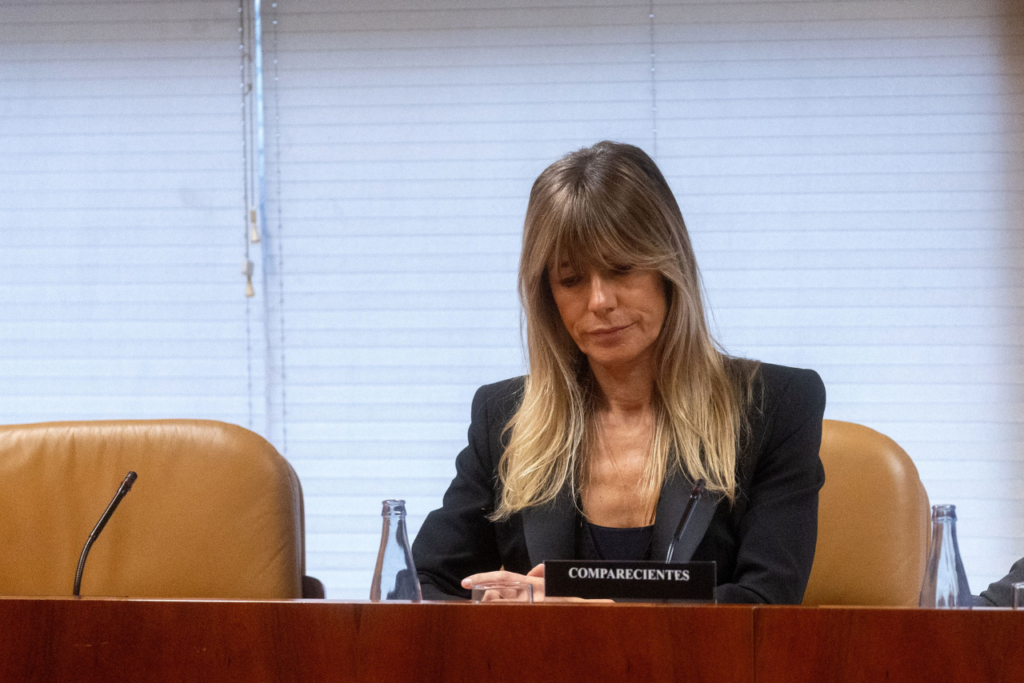
Modern democracies are increasingly shaped by transparency, institutional oversight, and continuous public scrutiny.
Political leaders today operate in an environment where every decision, association, and administrative process receives immediate examination from journalists, legal experts, opposition parties, civil society organizations, and millions of citizens through digital media.
The current focus surrounding Sánchez illustrates how rapidly governance can become intertwined with legal and ethical debates, even before formal judicial outcomes are determined.
For governments across Europe, maintaining public confidence has become almost as important as implementing policy itself.
Public perception now influences political stability, international partnerships, economic optimism, and electoral outcomes.Why the Investigation Has Captured International Attention
Political developments in Spain rarely remain confined within national borders.
As one of Europe’s largest economies and an influential member of the European Union and NATO, Spain plays an important role in regional policymaking, trade, migration, security cooperation, and climate initiatives.
Consequently, any controversy involving senior political leadership attracts widespread international attention.
Governments, investors, diplomatic observers, multinational corporations, and global financial institutions monitor such developments carefully because prolonged political uncertainty can influence economic planning and international cooperation.
The ongoing scrutiny surrounding Sánchez has therefore become a topic extending far beyond domestic Spanish politics.
Politics and Public Trust
Public trust represents one of democracy’s most valuable foundations.
Regardless of political ideology, citizens generally expect transparency, ethical conduct, and accountability from elected representatives.
Whenever investigations involve individuals connected to government leadership, questions naturally emerge regarding institutional integrity, administrative oversight, and political responsibility.
Legal experts frequently emphasize an important distinction.
An investigation does not automatically establish wrongdoing.
Democratic legal systems operate according to principles of due process, independent judicial review, and the presumption of innocence until proven otherwise.
Nevertheless, political consequences often begin long before courts reach final decisions.
Public confidence can shift rapidly as investigations evolve.
The Role of Independent Institutions
One characteristic distinguishing mature democracies is the ability of institutions to function independently of political influence.
Courts.
Investigative authorities.
Parliamentary oversight bodies.
Anti-corruption agencies.
Independent journalism.
Each contributes toward maintaining accountability within democratic systems.
Observers across Europe continue monitoring how these institutions respond throughout the current developments involving Sánchez.
Regardless of political outcomes, confidence in institutional independence remains essential for preserving democratic legitimacy.
Opposition Parties Intensify Their Campaigns
Political controversies inevitably reshape parliamentary dynamics.
Opposition parties frequently view periods of government scrutiny as opportunities to challenge administrative credibility while presenting themselves as alternative leadership options.
Calls for greater transparency, parliamentary inquiries, public explanations, and expanded investigations have become increasingly common during politically sensitive periods.
Spain’s opposition has intensified criticism of the government, arguing that accountability requires comprehensive institutional review wherever public concerns arise.
Meanwhile, government supporters continue emphasizing the importance of respecting ongoing judicial processes without prejudging legal outcomes.
This contrast reflects one of democracy’s defining characteristics—vigorous political competition operating alongside independent legal institutions.
Media Coverage Shapes Public Conversation
The digital age has transformed political communication.
Traditional newspapers now operate alongside television networks, investigative journalists, podcasts, online publications, independent commentators, and social media platforms.
Information spreads globally within minutes.
Every public statement receives immediate analysis.
Political narratives evolve continuously.
The developments surrounding Sánchez demonstrate how modern media ecosystems amplify national political stories into international discussions.
For political leaders, effective communication has become almost as critical as policymaking itself.
Clear messaging, transparency, and timely public engagement increasingly influence how governments navigate challenging situations.
Economic Stability and Investor Confidence
Political certainty often influences investor sentiment.
Financial markets generally prefer stable governance, predictable policymaking, and institutional continuity.
While Spain continues maintaining strong economic fundamentals across several sectors, prolonged political uncertainty can influence business confidence, investment decisions, and market expectations.
International investors frequently monitor governance developments alongside economic indicators such as inflation, employment, fiscal policy, and industrial performance.
Although immediate economic disruption may not occur, sustained political controversy sometimes introduces additional caution into financial planning.
Consequently, developments involving Sánchez are being observed not only by political analysts but also by economists and global investment communities.
communication and responsible leadership.
The debate surrounding Sánchez reflects broader questions about institutional trust rather than individual personalities alone.
Political analysts observe that confidence is earned gradually but can weaken rapidly during periods of uncertainty.
Consequently, governments often face dual responsibilities:
- Managing public administration.
- Maintaining public trust.
Successfully balancing both has become increasingly important in today’s rapidly evolving information environment.
European Democracies Face Similar Challenges
Spain is not alone in confronting political scrutiny.
Across Europe, several governments have experienced investigations involving senior political figures, ministers, or individuals connected to public office.
These developments illustrate a broader trend rather than an isolated national event.
Modern democracies have strengthened institutional oversight mechanisms, anti-corruption frameworks, financial transparency requirements, and investigative procedures.
Although political systems differ between countries, the underlying principles remain remarkably consistent:
- Independent courts.
- Transparent governance.
- Democratic accountability.
- Equal application of the law.
The current situation involving Sánchez therefore contributes to an ongoing European conversation about strengthening democratic institutions rather than weakening them.
International Reputation and Diplomatic Considerations
Spain occupies an influential position within Europe and the broader international community.
Its role extends across trade, security cooperation, climate initiatives, migration policy, NATO coordination, and European Union decision-making.
Political uncertainty within such an important member state naturally attracts international attention.
Diplomatic partners closely observe developments because governmental stability often influences long-term policy continuity.
International investors similarly monitor institutional resilience when evaluating economic opportunities.
Despite heightened political debate, Spain’s democratic institutions continue functioning according to established constitutional frameworks, reinforcing confidence in the country’s institutional maturity.
Leadership Under Pressure
Periods of political scrutiny often reveal leadership qualities that remain less visible during stable times.
Effective leaders must continue governing while responding to public concerns, parliamentary challenges, media examination, and evolving legal developments.
The current situation has placed Sánchez under extraordinary political pressure.
Every public statement, parliamentary appearance, and administrative decision receives heightened analysis from journalists, political observers, opposition leaders, and international commentators.
Such environments require calm communication, procedural respect, and consistent governance.
Whether political fortunes improve or deteriorate frequently depends on how effectively leaders manage these moments of heightened scrutiny.
The Expanding Role of Digital Media
Political communication has changed dramatically over the past decade.
Traditional press conferences now represent only one component of public engagement.
Digital platforms deliver immediate reactions.
Opinion spreads globally within minutes.
Artificial intelligence increasingly influences information discovery.
Voice search technologies summarize breaking developments.
Image-based search introduces visual journalism into broader conversations.
For this reason, the ongoing discussion surrounding Sánchez extends across television broadcasts, newspapers, podcasts, social platforms, online publications, and international news aggregators simultaneously.
Governments today must communicate across multiple channels while ensuring factual accuracy and institutional responsibility.
Possible Political Scenarios Ahead
Although future developments remain uncertain, analysts generally outline several possible pathways.
One possibility involves judicial processes concluding without major political consequences, allowing attention to return toward governance and policy priorities.
Another scenario could involve prolonged investigations generating continued political debate, increasing parliamentary pressure and influencing future electoral dynamics.
Additional political developments may include legislative challenges, intensified opposition campaigns, cabinet adjustments, or renewed public discussions regarding institutional reforms.
At this stage, however, definitive conclusions would be premature.
The evolution of events will depend upon judicial findings, parliamentary developments, public opinion, and broader political circumstances over the coming months.
Why Transparency Matters More Than Ever
Transparency has become one of the defining expectations of modern democratic societies.
Citizens increasingly demand access to information regarding governmental decision-making, ethical standards, financial accountability, and institutional conduct.
Public officials operate under continuous observation.
Independent journalism, parliamentary oversight, civil society organizations, and digital communities collectively contribute toward strengthening democratic accountability.
The developments involving Sánchez reinforce the growing importance of transparent governance within contemporary political systems.
Regardless of individual political affiliations, democratic institutions ultimately benefit when accountability mechanisms function openly and consistently.
Editorial Perspective
Political controversies often become defining moments for democratic institutions rather than individual leaders alone.
Spain’s current political landscape illustrates how governance, judicial independence, media responsibility, and public accountability increasingly intersect within modern democracies.
The investigation itself represents one element of a much broader national conversation concerning transparency, ethical leadership, institutional resilience, and democratic confidence.
As legal proceedings continue according to established constitutional procedures, both supporters and critics of Sánchez share an important responsibility: respecting due process while encouraging institutional accountability.
Healthy democracies thrive not through the absence of scrutiny but through their ability to manage scrutiny fairly, transparently, and according to the rule of law.
Ultimately, the strength of Spain’s democratic institutions may prove to be the most significant outcome of this chapter.
Conclusion
The ongoing political developments surrounding Sánchez have evolved into one of Spain’s most closely followed national debates, extending well beyond legal proceedings into broader discussions about governance, transparency, institutional integrity, and democratic accountability.
While investigations continue within the framework of Spain’s independent judicial system, the political implications are already shaping parliamentary discourse, media coverage, investor sentiment, and public opinion.
Regardless of future legal outcomes, this moment serves as an important reminder that democratic leadership carries responsibilities extending beyond policymaking alone.
Public confidence, institutional credibility, and transparent governance remain essential pillars of every modern democracy.
For Spain, the months ahead may become a defining period that tests not only political leadership but also the resilience of its democratic institutions.
As Europe continues navigating an increasingly complex political landscape, Spain’s experience may offer valuable lessons regarding accountability, constitutional stability, and the enduring importance of public trust.
Frequently Asked Questions (FAQs)
Who is Sánchez?
Sánchez is the Prime Minister of Spain and leader of the Spanish Socialist Workers’ Party (PSOE), serving as one of Europe’s most prominent political leaders.
Why is Sánchez facing increased scrutiny?
The scrutiny relates to ongoing legal and political developments involving individuals connected to his administration, prompting broader public and political debate. Judicial proceedings are ongoing, and no final legal conclusions should be inferred.
Has Sánchez been found guilty of any crime?
No. Investigations and judicial proceedings do not constitute findings of guilt. Any legal conclusions depend on the outcome of independent judicial processes.
Why is this issue attracting international attention?
Spain is one of the European Union’s largest economies and an influential member of several international organizations, making significant political developments relevant to global observers.
What could happen next?
Future developments will depend on judicial proceedings, parliamentary responses, political developments, and public opinion. Multiple outcomes remain possible, and the situation continues to evolve.
Read More Articles like This
Just with Imperium Times