
Rising geopolitical pressure, failed diplomatic momentum, and military posturing are reigniting fears of a broader regional confrontation
The global geopolitical landscape has once again entered a phase of heightened uncertainty as fresh developments surrounding the growing confrontation between the United States and Iran continue dominating international headlines. A new wave of diplomatic friction, military signaling, and strategic rhetoric has intensified concerns about regional instability, with analysts across the world closely monitoring what many now describe as one of the most volatile moments in recent Middle East history.
At the center of the international debate is the latest Trump Warning, a statement that has rapidly intensified discussions around military escalation, nuclear tensions, and the possibility of broader regional conflict. The developments have triggered renewed global attention toward the fragile balance between diplomacy and confrontation in the Middle East, while raising fears about oil markets, global trade stability, energy security, and the future of international peace negotiations.
The current geopolitical environment reflects far more than a temporary diplomatic disagreement. It highlights years of unresolved strategic mistrust, failed negotiations, military posturing, sanctions pressure, proxy conflicts, and competing regional ambitions that have gradually shaped the modern relationship between Washington and Tehran.
As global leaders respond cautiously to the unfolding developments, the world is once again asking a difficult question: could the escalating rhetoric between the United States and Iran evolve into a larger military crisis capable of destabilizing the entire region?
Trump Warning: The Growing Intensity of US-Iran Tension
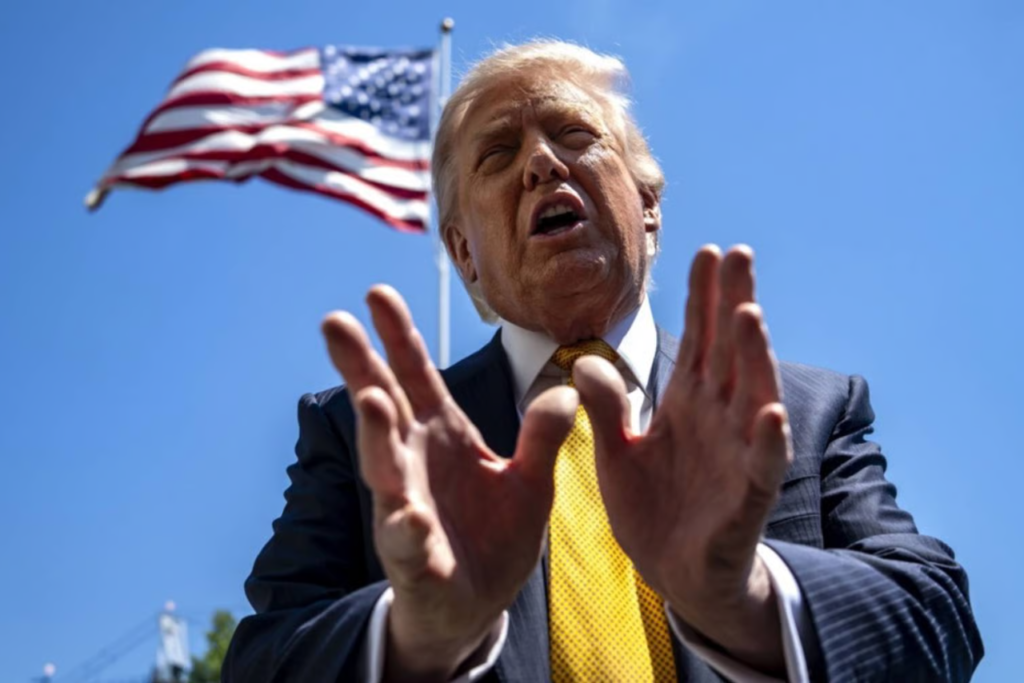
The latest phase of the ongoing US-Iran confrontation did not emerge overnight. The relationship between both nations has remained deeply strained for decades, shaped by ideological differences, regional competition, nuclear concerns, sanctions policies, and strategic military positioning across the Middle East.
However, the recent escalation gained international momentum after sharp statements associated with the latest Trump Warning began circulating across global political and media circles. The rhetoric immediately reignited debates surrounding Iran’s nuclear ambitions, military alliances, and the broader implications for regional security.
Observers believe the situation Trump Warning has become increasingly sensitive because multiple geopolitical flashpoints are now interconnected simultaneously. These include:
- Iran’s regional military influence
- Concerns surrounding nuclear development
- Strategic American military positioning
- Middle East maritime security
- Oil transportation routes
- Proxy conflicts involving allied groups
- Ongoing diplomatic deadlocks
Each of these factors individually carries geopolitical weight. Combined together, they create an environment where even minor developments can rapidly escalate into larger confrontations.
For global investors, diplomats, military strategists, and energy markets, the latest Trump Warning has become symbolic of a broader geopolitical uncertainty currently shaping international affairs.
Why the Middle East Crisis Matters Globally
The modern Middle East remains one of the world’s most strategically significant regions. Beyond politics, the region directly influences global oil supply chains, energy markets, international shipping routes, and military alliances.
Trump Warning any significant escalation involving Iran and the United States could potentially impact:
- Global crude oil prices
- International trade routes
- Inflation levels worldwide
- Aviation and shipping industries
- Financial markets
- Global energy security
- Diplomatic relations across Asia and Europe
This is why the current Middle East crisis is not being viewed as a localized issue alone. Governments worldwide understand that prolonged instability in the Gulf region could trigger economic and political consequences extending far beyond regional borders.
Several analysts believe the renewed attention around the Trump Warning reflects growing fears that diplomatic communication channels between both nations may be weakening rather than improving.
Iran’s Position and Strategic Messaging
Iran has consistently maintained that its actions are defensive in nature and tied to national sovereignty, regional security, and strategic independence. Iranian officials have repeatedly argued that external pressure campaigns and sanctions policies have failed to produce constructive diplomatic outcomes.
At the same time, Iran continues emphasizing that it will not compromise on issues related to national security and regional influence.
This strategic positioning has created a complex diplomatic environment where negotiations often become intertwined with military signaling and political rhetoric.
Global observers note that Iran’s response to the recent Trump Warning reflects a broader attempt to project resilience while simultaneously maintaining leverage during international negotiations.
However, critics argue that increasing military rhetoric from both sides risks narrowing the space for peaceful diplomacy.
Trump Warning: The Nuclear Debate Returns to the Global Spotlight
One of the most significant dimensions of the ongoing crisis revolves around Iran Nuclear News and the future of international nuclear agreements.
For years, Iran’s nuclear program has remained one of the most controversial geopolitical topics globally. Western nations have repeatedly expressed concerns regarding uranium enrichment activities, nuclear transparency, and regional military implications.
Iran, meanwhile, insists that its nuclear activities are intended for peaceful energy and scientific purposes.
The collapse of earlier diplomatic frameworks created additional uncertainty, leading to renewed tensions between Tehran and Washington. Since then, attempts to revive negotiations have faced repeated setbacks.
Now, with fresh geopolitical pressure building across the region, Iran nuclear developments have once again become central to global diplomatic discussions.
Many international analysts believe the latest Trump Warning is closely connected to broader concerns surrounding the future direction of nuclear negotiations and regional deterrence strategies.
Could the Situation Lead to Military Conflict?
One of the most searched global questions currently dominating online discussions is:
“Is war starting between US and Iran?”
While no official declaration of war exists, geopolitical experts caution that prolonged escalation increases the risk of accidental confrontation.
Military analysts note that conflicts in modern geopolitics do not always begin through formal declarations. Instead, they often emerge gradually through:
- Retaliatory strikes
- Maritime incidents
- Cyber warfare
- Proxy conflicts
- Regional military escalation
- Strategic miscalculations
This is precisely why global attention surrounding the recent Trump Warning has intensified so rapidly.
The concern is not only about direct warfare between two nations. It is also about the possibility of wider regional destabilization involving allied actors and neighboring countries.
Several Middle Eastern regions already remain politically sensitive due to ongoing conflicts, ideological rivalries, and security concerns. Any major escalation could potentially draw multiple stakeholders into a broader geopolitical crisis.
Trump Warning: The Economic Impact of Geopolitical Fear
Financial markets historically react strongly to geopolitical instability involving the Middle East.
Following rising tensions linked to the recent Trump Warning, analysts observed renewed discussions surrounding:
- Crude oil volatility
- Energy market uncertainty
- Safe-haven investment movements
- Currency fluctuations
- Global inflation concerns
Investors often interpret geopolitical escalation as a signal of potential economic disruption, particularly when major energy-producing regions are involved.
The Gulf region remains critical to global oil transportation. Any instability affecting shipping routes or energy infrastructure could rapidly influence fuel prices worldwide.
This explains why governments, multinational corporations, and financial institutions are closely monitoring developments connected to the current Iran conflict explained across global media platforms.
Diplomatic Channels Still Remain Open
Despite the aggressive rhetoric dominating international headlines, diplomatic observers emphasize that formal communication channels between multiple stakeholders still exist.
Several global powers continue encouraging de-escalation and renewed negotiations. International organizations are also urging restraint, warning that prolonged hostility could destabilize already fragile regional conditions.
Diplomatic experts argue that peaceful dialogue remains the only sustainable path forward.
However, the challenge lies in rebuilding trust after years of sanctions, military tensions, failed agreements, and strategic hostility.
The latest Trump Warning has complicated those efforts further because strong public rhetoric often creates political pressure domestically as well as internationally.
Still, many analysts believe diplomacy has not entirely collapsed.
The Role of Global Media in the Crisis
The digital age has transformed how geopolitical conflicts are consumed worldwide.
Today, breaking geopolitical developments spread instantly across social media, video platforms, financial news channels, and international publications. As a result, public anxiety surrounding global conflicts escalates much faster than in previous decades.
Search terms such as:
- Trump Iran News
- US Iran Tension
- Iran War
- World War 3
- Breaking Iran News
- Trump latest statement on Iran
have witnessed surging global interest as audiences attempt to understand the rapidly changing geopolitical environment.
This modern information ecosystem means that every public statement, diplomatic comment, or military movement immediately influences public perception, financial markets, and international political narratives.
Why Peace Talks Continue Facing Challenges
Another major concern revolves around the growing belief that US Iran peace talks failed to achieve lasting stability.
Diplomatic negotiations often struggle because both sides operate under fundamentally different strategic priorities.
The United States primarily focuses on:
- Nuclear restrictions
- Regional security concerns
- Military deterrence
- Sanctions enforcement
Iran, meanwhile, emphasizes:
- Sovereignty protection
- Sanctions relief
- Regional influence
- Strategic independence
These competing priorities create negotiation frameworks that are difficult to sustain long-term.
The renewed global attention following the recent Trump Warning reflects the fragile condition of current diplomatic efforts.
How the Crisis Could Shape Global Politics
The implications of the ongoing confrontation extend far beyond the Middle East.
The evolving geopolitical environment may influence:
- Global alliance structures
- Defense policies
- International energy strategies
- Trade relationships
- Security partnerships
- Military spending priorities
Nations across Europe, Asia, and the Gulf region are carefully evaluating how future developments may affect their own economic and security interests.
The crisis is also reshaping conversations around geopolitical risk management in an increasingly interconnected world.
Public Fear Around “World War 3”
One phrase repeatedly surfacing online is “World War 3.”
While experts caution against sensationalism, they acknowledge that global fears are being amplified by the scale of military capabilities involved and the strategic importance of the region.
However, analysts also note that modern geopolitics often involves controlled deterrence rather than unrestricted warfare.
The international community largely understands the catastrophic consequences of direct large-scale conflict between major powers.
Even so, the emotional intensity surrounding the recent Trump Warning demonstrates how quickly public concern can escalate during periods of geopolitical instability.
The Future Remains Uncertain
At this stage, the future direction of the crisis remains unclear.
Much will depend on:
- Diplomatic engagement
- Regional restraint
- Military calculations
- International mediation efforts
- Political developments within both nations
The coming weeks may prove decisive in determining whether tensions gradually de-escalate or continue intensifying.
For now, the world remains watchful.
Source: Imperium Times
Conclusion
The latest geopolitical developments surrounding Iran and the United States have once again placed the Middle East at the center of global attention. As international tensions continue rising, the recent Trump Warning has become one of the defining diplomatic flashpoints shaping global political discussions in 2026.
Whether the situation evolves toward renewed negotiations or deeper confrontation will depend heavily on diplomacy, restraint, and strategic decision-making from all parties involved.
At a time when global stability remains fragile, the world is closely monitoring every statement, movement, and negotiation tied to the evolving US-Iran crisis.
Get updated with real news only at Imperium Times!