
Spain’s transport network has once again been thrust into the global spotlight after a deadly commuter rail accident near Barcelona, raising urgent questions about infrastructure resilience, extreme weather preparedness, and passenger safety. The derailment, which occurred late Tuesday night near Gelida on the outskirts of the Catalan capital, claimed the life of a train driver and injured dozens of passengers, just days after a separate high-speed rail collision in southern Spain left over 40 people dead.
The timing of the incident has amplified national anxiety, as authorities grapple with two major rail disasters within the same week. With heavy rainfall, aging infrastructure, and climate-driven weather volatility emerging as key factors, the tragedy near Barcelona, has become a focal point in Spain’s broader debate over transport safety and emergency readiness.
🚆 What Happened Near Barcelona, on the Night of the Derailment
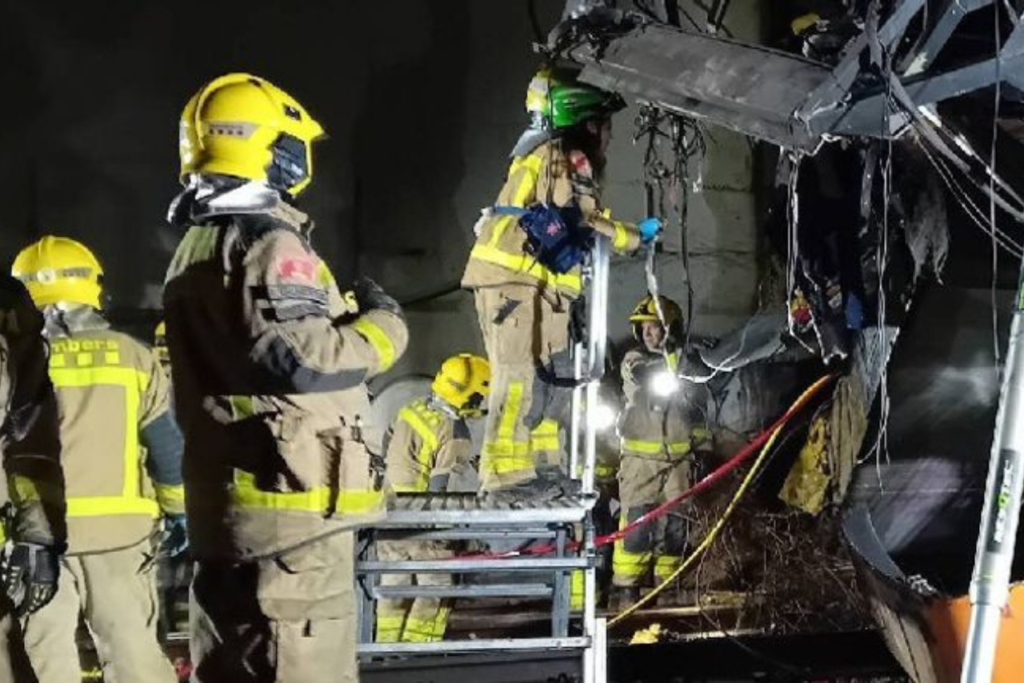
Late Tuesday, a commuter train traveling through the Penedès region derailed after a retaining wall collapsed onto the tracks. According to emergency officials, the collapse was triggered by intense rainfall that weakened the soil structure supporting the wall. As the train approached the affected stretch of track, debris obstructed the rails, causing several carriages to leave the track.
Emergency response units rushed to the scene near Barcelona, deploying ambulances, fire brigades, and civil protection teams within minutes. The train driver was pronounced dead at the site, while 37 passengers sustained injuries. Four of the injured were classified as critical and were transferred to specialized trauma hospitals.
🌧️ Extreme Weather and Infrastructure Stress Around Barcelona,
Meteorological agencies confirmed that the region had experienced unusually heavy rainfall in the hours leading up to the accident. Experts note that climate-driven weather patterns are increasingly placing stress on transport infrastructure, particularly in densely populated regions such as Barcelona, where rail lines often pass through hilly terrain supported by retaining walls and embankments.
Engineers have long warned that older structures may not withstand prolonged exposure to intense rain without significant reinforcement. The collapse near Gelida has renewed scrutiny of maintenance schedules, inspection protocols, and the pace of infrastructure modernization across Spain’s rail network.
🧑✈️ Casualties, Injuries, and Emergency Response
Authorities confirmed that the deceased train driver had several years of operational experience. Passengers described scenes of panic as the train jolted violently before coming to a halt. Emergency responders worked through the night, stabilizing the injured and evacuating passengers from the damaged carriages.
Hospitals across the Barcelona, metropolitan region were placed on high alert. Medical teams coordinated triage efforts to ensure that critically injured passengers received immediate care. Officials later praised the rapid response, noting that the casualty count could have been significantly higher without swift intervention.
⚠️ Spain’s Rail Safety Concerns Intensify After Barcelona,
The derailment has taken on greater significance because it occurred only days after a catastrophic high-speed rail collision in southern Spain that killed at least 42 people. That earlier disaster prompted national mourning and raised alarms about systemic safety gaps.
Together, the two incidents have intensified scrutiny of Spain’s rail oversight mechanisms. Transport unions and safety advocates argue that the incident near Barcelona, underscores the need for comprehensive risk assessments that factor in extreme weather, climate change, and infrastructure fatigue.
🏛️ Government Response and Political Reactions
Spain’s Prime Minister issued a statement expressing condolences to the victims’ families and solidarity with those injured. Senior transport officials confirmed that a full investigation has been launched to determine whether maintenance failures or warning system lapses contributed to the accident near Barcelona,.
The Ministry of Transport has also ordered a review of retaining walls, drainage systems, and vulnerable track sections nationwide. Lawmakers from multiple parties have called for emergency funding to accelerate rail safety upgrades.
🌍 Why Barcelona, Holds Strategic Importance in Spain’s Rail Network
As one of Spain’s largest urban and economic hubs, Barcelona, plays a critical role in regional and national rail connectivity. The city serves as a gateway between Spain and broader European rail corridors, handling millions of commuters and freight movements annually.
Any disruption in this network has ripple effects across trade, tourism, and daily commuting. Analysts note that the derailment has highlighted the vulnerability of high-traffic corridors and the importance of proactive infrastructure investment in strategic cities like Barcelona,.
🔍 Investigation Focus: What Authorities Are Examining
Investigators are currently assessing:
- The structural integrity of the collapsed retaining wall
- Rainfall data and drainage efficiency in the affected zone
- Maintenance records and inspection timelines
- Emergency braking and warning system performance
Officials stressed that while weather played a role, accountability will depend on whether preventive measures were adequate. The findings could shape future rail safety policies, particularly in regions surrounding Barcelona, and other climate-exposed areas.
🧭 Broader Implications for Rail Travel and Public Confidence
Public confidence in rail travel has been shaken following the back-to-back tragedies. Passenger associations are urging transparency and timely publication of investigation findings. Social media platforms have seen an outpouring of concern from commuters in and around Barcelona, many of whom rely on daily train services for work and education.
Transport experts warn that restoring trust will require more than statements—it will demand visible action, infrastructure upgrades, and long-term climate adaptation strategies.
📌 Conclusion: A Turning Point After Barcelona,
The deadly derailment near Barcelona, is more than an isolated accident—it is a stark warning about the intersection of climate stress, infrastructure resilience, and public safety. Coming so soon after another devastating rail disaster, it has forced Spain to confront uncomfortable questions about preparedness and prevention.
As investigations continue and policy responses take shape, the tragedy may ultimately serve as a catalyst for reform. For now, the nation mourns the loss of life while hoping that lessons learned will prevent future disasters on Spain’s railways.