
PM Modi’s attack on the Trinamool Congress (TMC) government in West Bengal has intensified the political climate ahead of crucial electoral battles in the state. Addressing a large public rally in Singur, the Prime Minister accused the ruling party of endangering national security, promoting lawlessness, and allowing illegal infiltration for political gain. His remarks have triggered sharp reactions from the opposition and renewed debates on governance, border security, and democratic accountability in Bengal.
The statements, delivered from a historically symbolic location, were not merely campaign rhetoric but a direct challenge to the credibility and administrative record of the Mamata Banerjee-led government. As PM Modi’s attack continues to dominate headlines, its implications extend beyond state politics into national discourse.
PM Modi’s Attack at Singur: Why the Location Matters
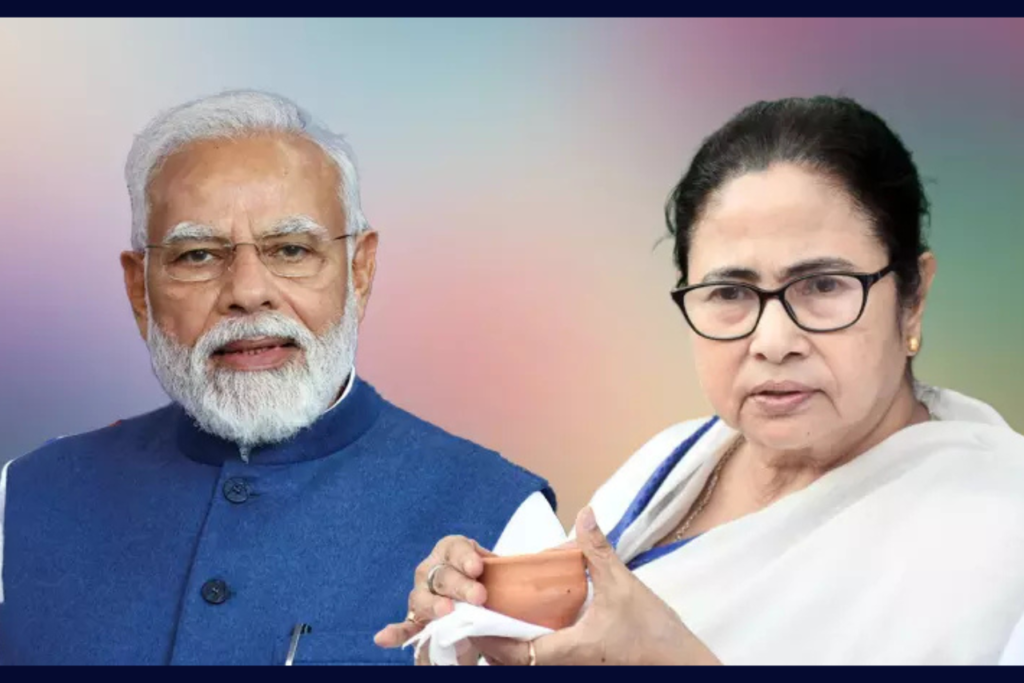
Singur holds a unique place in West Bengal’s political memory. Once at the center of protests that reshaped the state’s political power structure, the town became the backdrop for PM Modi’s attack on the TMC’s 15-year rule. By choosing Singur, the Prime Minister strategically linked past governance failures with present concerns over law, order, and investment confidence.
In his address, he alleged that the state had slipped into what he termed a “maha jungle raj,” asserting that fear, corruption, and administrative paralysis had become routine. According to him, such conditions discourage investment, stall development, and weaken democratic institutions—issues he argued the people of Bengal are eager to change.
National Security at the Core of PM Modi’s Attack
A central theme of PM Modi’s attack was national security. The Prime Minister accused the West Bengal government of failing to cooperate on border fencing and allegedly shielding infiltrators to protect vote-bank politics. He claimed that illegal immigrants using forged documents posed risks not only to the state but to the country as a whole.
These remarks resonate strongly in a state that shares international borders and plays a strategic role in India’s internal security framework. From a voice-search perspective, citizens are increasingly asking questions such as, “Why did PM Modi accuse TMC of endangering national security?”—making this issue a high-intent search topic nationwide.
PM Modi’s attack: Illegal Immigration and Governance Failures Alleged
During his speech, the Prime Minister asserted that illegal immigrants residing in Bengal with fake documentation must be identified and deported. He emphasized that governance should be guided by constitutional duty rather than political convenience. This dimension of PM Modi’s attack reflects the BJP’s broader national stance on border management and internal security.
However, opposition leaders argue that such claims are exaggerated and lack verifiable data. TMC representatives maintain that the Centre is attempting to shift responsibility for border management failures while politicising sensitive security issues during an election season.
Women’s Safety, Education, and Mafia Influence
Beyond security concerns, PM Modi’s attack extended to social and institutional issues. He accused the TMC government of failing to ensure women’s safety and allowing criminal networks to influence education and employment systems. Allegations of corruption in recruitment processes and institutional decay were highlighted as symptoms of what he described as a broken governance model.
Such remarks are particularly impactful in the digital ecosystem, where image search and short-video platforms amplify emotional narratives. Keywords related to women’s safety in Bengal and education corruption are seeing rising traction, adding further visibility to the Prime Minister’s critique.
PM Modi’s attack: ‘Double Engine Government’ Pitch to Bengal Voters
Another key aspect of PM Modi’s attack was his appeal for a “double engine government,” a term used by the BJP to describe political alignment between the Centre and the state. He argued that states governed by the same party as the Centre benefit from faster implementation of welfare schemes, infrastructure projects, and economic reforms.
This message is designed to influence undecided voters by linking governance efficiency with political alignment. From an AEO standpoint, this directly answers user queries like, “What is PM Modi’s double engine government promise?”
TMC’s Response: Political Motivation Alleged
The Trinamool Congress swiftly rejected PM Modi’s attack, calling it politically motivated and misleading. Party leaders questioned the timing of the remarks and accused the Prime Minister of using national platforms for electoral gains. They also challenged the claims on infiltration, arguing that border security is primarily a central responsibility.
TMC leaders reiterated their governance achievements and accused the BJP of attempting to polarize voters. The exchange has further intensified political rhetoric, turning governance debates into a defining theme of the upcoming elections.
Political Implications of PM Modi’s Attack in Bengal
Politically, PM Modi’s attack signals a high-stakes battle for West Bengal. For the BJP, it represents an attempt to consolidate narratives around security, governance, and development. For the TMC, it is a test of resilience against sustained national-level criticism.
Search engine trends indicate growing interest in questions such as, “Will PM Modi’s attack impact Bengal elections?” and “How is TMC responding to Modi’s allegations?”—highlighting the story’s relevance for voice and featured snippet optimization.
National Discourse and Media Impact
Beyond Bengal, PM Modi’s attack has sparked national conversations on federalism, political accountability, and the limits of campaign rhetoric. Media coverage across platforms has amplified both the allegations and the rebuttals, making this a high-authority political topic with sustained engagement.
For image search optimization, visuals from the Singur rally, crowd reactions, and political symbolism are likely to dominate search results, further extending the story’s digital lifespan.
Conclusion: A Defining Political Moment
In essence, PM Modi’s attack on the TMC government marks a defining moment in West Bengal’s political narrative. It blends national security concerns with governance critiques, social issues, and electoral strategy. Whether these allegations translate into political gains remains to be seen, but their impact on public discourse is undeniable.
As voters evaluate competing claims and counterclaims, the focus will remain on accountability, development, and democratic responsibility – issues that will shape Bengal’s political future in the months ahead.
Read more article like this!