
In the evolving landscape of Indian education, Krishna Kumari represents a generation of educators redefining what it means to teach, inspire and create impact beyond the classroom. A Social Science teacher in a private school in New Delhi, she has spent 16 years in education, combining classroom experience with activity-based learning, educational technology, teacher advocacy and digital content creation.
Her journey demonstrates that meaningful educational leadership does not depend on the type of institution where a teacher works. It is measured by the difference that teacher creates in the lives of students.
By Imperium Times Editorial Desk
Source: Imperium Times
Krishna Kumari: 16 Years of Teaching With Purpose and Perspective
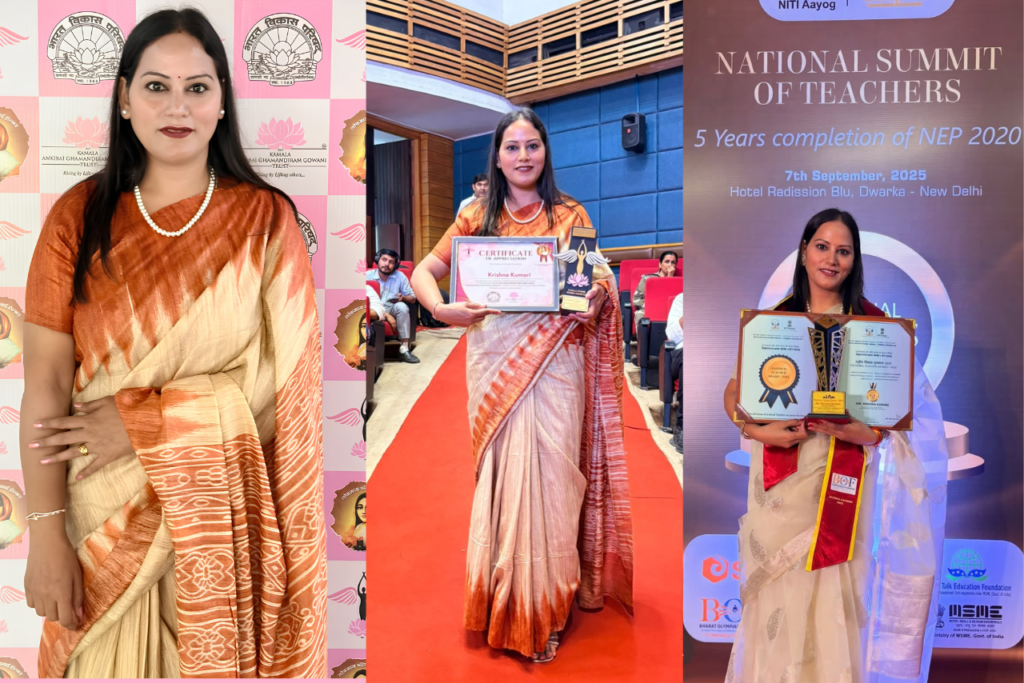
For Krishna Kumari, teaching has never been simply a profession. It has developed into a purpose shaped by curiosity, creativity and an enduring commitment to children and fellow educators.
Since entering the teaching profession in 2011, she has continued to evolve alongside the changing needs of students and classrooms. Her current role involves teaching Social Science to primary-school students, where she focuses on making lessons interactive, experiential and activity-based.
Rather than treating Social Science as a subject limited to textbooks, Krishna Kumari seeks to connect classroom concepts with the world around children.
Activities, field trips, maps, technology, storytelling, teaching-learning materials and digital resources become tools through which students can experience concepts instead of merely memorising them.
This approach reflects an important educational principle: children learn more meaningfully when knowledge becomes connected to experience.
From Classroom Lessons to Experiential Learning
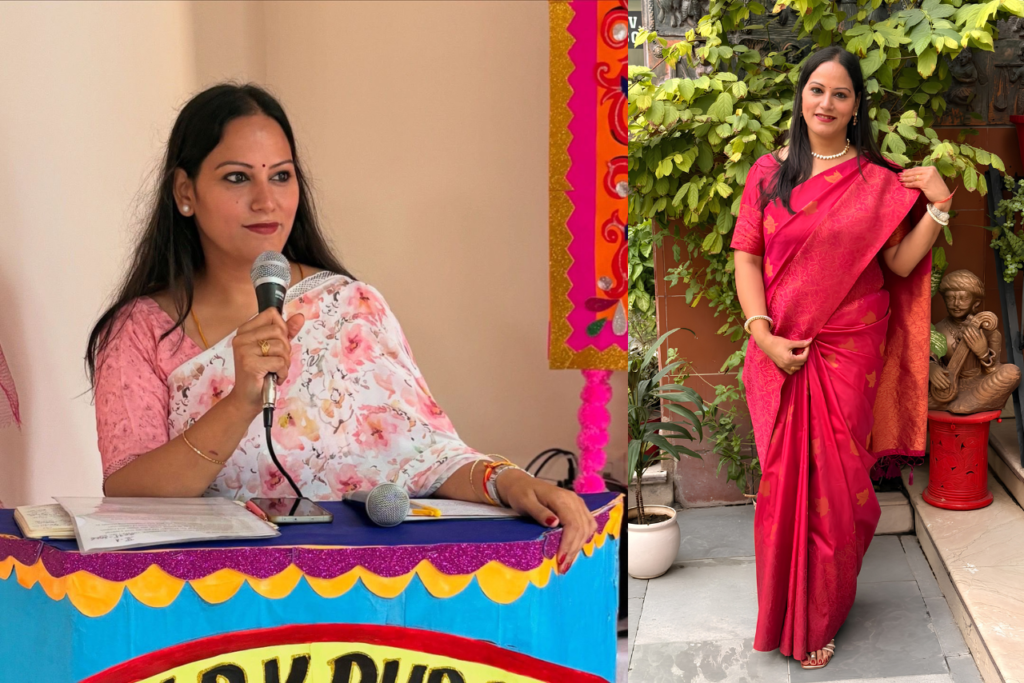
One of the defining characteristics of Krishna Kumari’s teaching philosophy is her belief that learning should extend beyond four classroom walls.
A historical monument can make history tangible.
A museum can turn information into discovery.
A community space can introduce children to social realities.
A field trip can transform an abstract lesson into a memory.
For a Social Science educator, these experiences offer opportunities to connect curriculum with culture, geography, history, citizenship and everyday life.
Krishna Kumari therefore approaches teaching with attention to students’ interests, mood, readiness and individual learning styles.
Her belief that every child learns differently influences the way she approaches lessons.
Instead of expecting every student to respond to one fixed teaching method, she seeks to create multiple pathways toward understanding.
That can mean using a story for one concept, a map for another, an activity for a third and technology for something that benefits from visual or interactive explanation.
“A Happy Teacher Creates a Happy Classroom”
At the centre of Krishna Kumari’s educational philosophy is a simple belief: “A happy teacher creates a happy classroom.”
The statement reflects more than personal positivity.
It points toward the importance of emotional connection in education.
A classroom is not simply a place where information is delivered. It is an environment in which children develop confidence, curiosity and their willingness to participate.
A teacher’s energy can influence that environment.
For Krishna Kumari, understanding students is therefore an important part of teaching effectively.
The objective is not simply to complete a syllabus. It is to make learning enjoyable enough that children want to participate in the process.
This philosophy also explains her interest in creative teaching-learning materials and activity-based education.
When students are encouraged to observe, discuss, create, explore and participate, learning can become an experience rather than an obligation.
Krishna Kumari’s Vision for Social Science Education
Social Science has the potential to help children understand the world in which they live.
History can introduce the past.
Geography can explain places and environments.
Civics can develop an understanding of society and citizenship.
Culture can help children appreciate India’s diversity.
For Krishna Kumari, the opportunity lies in making these areas relatable to young learners.
Her use of experiential methods seeks to move lessons from abstract information toward real-world understanding.
Maps, activities, field experiences, technology and creative resources can help students see relationships between concepts and everyday life.
This approach is particularly significant at the primary level, where early educational experiences can shape how children perceive learning itself.
Her larger professional aspiration is equally personal: she hopes eventually to teach Social Science at the Class 10 level, inspired by the Social Science teacher who influenced her during her own school years.
The ambition reflects the continuity of education across generations.
A teacher who once inspired a student can become the reason that student eventually chooses to inspire others.
From Teacher to Teacher Creator: A Digital Journey Begins
In March 2024, Krishna Kumari began a new chapter by creating educational content on Instagram through @shikshikakrishna.
She did not begin with the intention of becoming an influencer.
Her starting point was much simpler: sharing her classroom experiences and ideas with other educators.
That organic beginning gradually developed into a growing community involving teachers, educators and parents.
Today, her digital content brings together several dimensions of her professional identity.
She shares innovative Social Science teaching ideas, classroom activities, teaching-learning materials, educational technology, AI tools, field-trip experiences, teacher-life content, school activities and motivational perspectives around teaching.
Her content also reflects her personal interests, including sarees, ethnic styling, Indian culture and family-oriented educational moments.
The result is a teacher-creator identity that remains connected to the classroom rather than detached from it.
Krishna Kumari and the Growing Role of AI in Education
Technology is rapidly changing the way educators prepare lessons, access information and develop learning resources.
For Krishna Kumari, AI and digital tools should be viewed as teaching assistants rather than replacements for teachers.
That distinction is important.
Technology can help educators save time, explore ideas, create resources and introduce new possibilities into lesson planning. But the relationship between teacher and child remains fundamentally human.
A digital tool can generate information.
It cannot replace the emotional understanding a teacher develops after observing a child.
It can support preparation.
It cannot independently understand a student’s confidence, hesitation, curiosity or personal circumstances.
Krishna Kumari’s approach therefore places technology within a larger educational framework: use innovation to strengthen teaching while preserving the human connection that gives education its meaning.
Championing the Dignity of Private-School Teachers
One of the strongest messages within Krishna Kumari’s journey is her emphasis on teacher dignity.
She believes being a private-school teacher should never make an educator feel less valued.
Education is not defined by whether a teacher works in a government or private institution. The real measure is the impact created in a child’s life.
This perspective gives her teacher-focused content a broader purpose.
Private-school educators contribute to classrooms, communities and the development of future generations every day. Their work deserves recognition not merely because of institutional affiliation, but because of the responsibility they carry.
Through her digital presence, Krishna Kumari seeks to celebrate teachers and remind educators that their contribution matters.
That message is especially relevant in a profession where dedication can often become invisible amid daily workloads, lesson planning, assessments and classroom responsibilities.
Recognition Across an Evolving Educational Journey
The impact of Krishna Kumari’s work has been accompanied by several recognitions and professional milestones.
Among the highlights of her journey is the National Teachers Award 2025, presented at the National Summit of Teachers.
She has also received the Lokmata Ahilyabai Holkar Mahila Samman 2026 / Kamala Power Women recognition and the Teacher Appreciation Award 2026, presented in honour of Savitribai Phule.
Her recognitions also include the Green Teacher Award 2019 and the Rhythm(s) Group Best Educator Award.
Alongside these honours, her profile includes roles and engagements such as UNESCO Delhi Speaker and British Council International Coordinator, as well as recognition for innovative and activity-based teaching practices.
Each milestone represents a different dimension of her educational journey.
Yet awards are not the foundation of her identity as an educator.
For Krishna Kumari, the greatest reward remains the love of students and the opportunity to watch them grow into confident individuals.
Beyond Awards: The Real Measure of an Educator
Recognition can provide encouragement, but teaching ultimately produces its most meaningful results in ways that cannot always be displayed on a certificate.
A child becoming more confident.
A student discovering curiosity.
A classroom becoming more joyful.
A learner developing the courage to ask questions.
These moments form the deeper rewards of education.
Krishna Kumari continues to place these outcomes at the heart of her work.
Her awards and milestones acknowledge her contribution, but they do not replace the classroom experiences that originally shaped her journey.
This distinction is important because it keeps her digital and professional identity grounded in education rather than visibility alone.
Her evolution into a teacher creator has expanded the audience for her ideas, but the classroom remains the foundation.
Building a Community for Teachers, Parents and Educators
Through @shikshikakrishna, Krishna Kumari has created a digital space where educational ideas and teacher experiences can be shared beyond individual schools.
Her content can serve multiple audiences.
Teachers can discover classroom activities and teaching resources.
Educators can explore technology and AI tools.
Parents can gain insight into school experiences and learning approaches.
Fellow teachers can find relatable content reflecting the realities of the profession.
This community-oriented approach gives content creation a practical purpose.
Instead of presenting education as a purely theoretical subject, Krishna Kumari brings it closer to everyday teaching.
Her posts emerge from the perspective of someone who remains actively connected to students, classrooms and school life.
That authenticity is an important part of the transition from educator to teacher creator.
Indian Culture, Heritage and Education in One Narrative
Outside formal teaching, Krishna Kumari has a strong interest in sarees, Indian culture, heritage, temples and travel.
These interests naturally complement her Social Science background.
Indian textiles can open conversations about regional identity.
Heritage sites can provide context for history.
Temples can introduce students to architecture, traditions and cultural landscapes.
Travel can transform geographical concepts into lived experiences.
For Krishna Kumari, personal interests and professional teaching therefore do not exist in completely separate worlds.
Her appreciation of Indian culture also appears in her digital content through traditional attire and lifestyle themes.
This creates a broader visual identity around education—one that recognises that learning about India can happen through history books, classroom activities, journeys, cultural experiences and everyday observation.
A Teacher, Learner, Creator and Changemaker
The evolution of Krishna Kumari’s career illustrates how the modern educator can occupy multiple roles simultaneously.
She remains a classroom teacher.
She continues learning.
She creates educational content.
She explores AI and digital tools.
She advocates for teacher dignity.
She shares practical ideas with a growing educator community.
This combination reflects the changing nature of education itself.
Teachers today are not limited to a single channel of knowledge exchange. Digital platforms can allow educators to share successful classroom practices with colleagues far beyond their own schools.
For Krishna Kumari, this expanded role has emerged naturally from her desire to share what works.
The journey began with classroom experiences and developed into a wider educational conversation.
Why Teacher Creators Matter in Modern Education
The rise of teacher creators has created new possibilities for professional learning.
Instead of educational innovation remaining inside individual classrooms, educators can now demonstrate activities, resources and strategies to wider communities.
This can make professional exchange more accessible and relatable.
Krishna Kumari’s journey illustrates this potential.
Her content connects classroom practice with digital communication, allowing teachers and parents to see education through the perspective of an active educator.
The significance is not simply the growth of an online platform.
It is the ability to create a bridge between what happens inside classrooms and the wider educational community.
That bridge can encourage teachers to experiment, learn from one another and embrace emerging tools without losing sight of educational fundamentals.
The Road Ahead for Krishna Kumari
The future direction of Krishna Kumari’s journey is closely connected to her continuing evolution as an educator.
Her aspiration to eventually teach Class 10 Social Science reflects a desire to grow academically while remaining connected to the subject that inspired her own educational journey.
At the same time, her teacher-creator platform offers another avenue for impact.
The intersection of education, technology, AI, content creation and teacher empowerment is likely to remain central to her work.
Her message is straightforward but powerful: teachers can be lifelong learners, technology can become an ally, and education can remain deeply human even as classrooms become increasingly digital.
For Krishna Kumari, the future is not about choosing between teaching and creating.
It is about allowing both roles to strengthen one another.
A Positive Vision for the Future of Teaching
The educational journey of Krishna Kumari offers a positive perspective on where teaching can go next.
It begins with the classroom but does not have to end there.
It embraces technology without surrendering human connection.
It celebrates teachers without defining them by their institutions.
It encourages creativity without losing educational purpose.
And it treats learning as a process that extends beyond textbooks.
Her story also highlights an important truth: meaningful change in education often begins with individual teachers who decide to approach familiar challenges differently.
An activity can make a lesson memorable.
A field trip can make history real.
An AI tool can make preparation more efficient.
A supportive digital community can make an educator feel less alone.
A simple message of teacher dignity can remind professionals that their work matters.
These individual changes can collectively contribute to a stronger educational culture.
Editorial Perspective: When Teaching Becomes a Movement
What makes Krishna Kumari’s journey particularly relevant is not simply the number of years she has spent teaching or the recognition she has received.
It is the evolution of her purpose.
She entered education as a teacher.
She developed her practice through experience.
She began sharing her classroom journey online.
She built a community around practical educational ideas.
And she increasingly uses her voice to encourage teachers to embrace technology while protecting the human heart of education.
Her journey demonstrates that an educator does not need to leave the classroom to create influence.
The classroom itself can become the starting point for wider change.
From Social Science activities to AI tools, from field trips to teacher advocacy, Krishna Kumari represents an educational approach rooted in curiosity, creativity and purpose.
Her story also challenges the idea that private-school teachers should be viewed through a lesser lens.
A teacher’s institution may differ, but the responsibility to shape young minds remains significant.
Ultimately, Krishna Kumari believes that the greatest measure of teaching is not where a teacher works, how visible they become or how many awards they receive.
It is the difference they make.
And as her journey continues from classroom educator to teacher creator and educational changemaker, that difference is increasingly reaching beyond the students in front of her to a growing community of educators, parents and learners.
Frequently Asked Questions About Krishna Kumari
Who is Krishna Kumari?
Krishna Kumari is a Social Science teacher and educator based in New Delhi who has been in the teaching profession since 2011. She also creates educational content through Instagram.
What does Krishna Kumari teach?
Krishna Kumari currently teaches Social Science to primary-school students and focuses on interactive, experiential and activity-based learning.
When did Krishna Kumari start her educational content journey?
Krishna Kumari began creating educational content on Instagram in March 2024 through her platform @shikshikakrishna.
What is Krishna Kumari’s teaching philosophy?
Her teaching philosophy centres on the belief that “A happy teacher creates a happy classroom.” She focuses on understanding students and using activities, storytelling, technology, maps, field trips and creative teaching-learning materials.
What does Krishna Kumari believe about AI in education?
Krishna Kumari views AI and digital technology as teaching assistants that can support educators while preserving the essential human relationship between teacher and child.
What awards has Krishna Kumari received?
Her recognitions include the National Teachers Award 2025, Lokmata Ahilyabai Holkar Mahila Samman 2026 / Kamala Power Women recognition, Teacher Appreciation Award 2026, Green Teacher Award 2019 and Rhythm(s) Group Best Educator Award, among others.
What is Krishna Kumari’s message for private-school teachers?
She believes private-school teachers should never feel less valued because of the type of institution in which they work. The true measure of a teacher is the impact they create in students’ lives.
What is Krishna Kumari’s Instagram platform?
Her educational and teacher-focused content is available through Instagram at @shikshikakrishna, where she shares classroom ideas, educational technology, teacher-life content, school activities, lifestyle and inspirational material.
Read More Articles like this at Imperium Times.