
President Orders Probe as National Outrage Follows South Korea’s Early Elimination
South Korean football entered one of its most turbulent moments after Hong Myung-bo resigned as head coach following the national team’s disappointing exit from the FIFA World Cup group stage. The resignation came amid widespread criticism, public anger, political intervention, and growing concerns regarding leadership, team management, and the future of Korean football.
The early elimination shocked millions of supporters who had expected South Korea to progress into the knockout stages, especially considering the presence of experienced players and one of Asia’s strongest football programs. Instead, the campaign ended in frustration, criticism, and demands for accountability.
As pressure mounted from fans, media, and political leaders, the resignation of Hong marked the beginning of a larger debate surrounding football administration, coaching appointments, player management, and the future direction of the national team.
Source: Imperium Times.
Hong Myung-bo: A World Cup Campaign That Ended in Disappointment
South Korea entered the tournament carrying significant expectations.
Led by captain Son Heung-min and several internationally experienced players, the team hoped to continue its tradition of competing strongly on the global stage. However, the tournament quickly became a difficult campaign.
The team recorded:
- One victory.
- Two defeats.
- Third place in Group A.
South Korea finished behind Mexico and South Africa, both of whom managed stronger performances during the group stage.
While the expanded 48-team World Cup format offered additional qualification opportunities through the best third-placed teams, the results from other groups eventually eliminated South Korea from contention.
For supporters, the elimination represented not merely a sporting defeat but a failure to capitalize on a favorable tournament structure.
Hong Myung-bo Accepts Responsibility
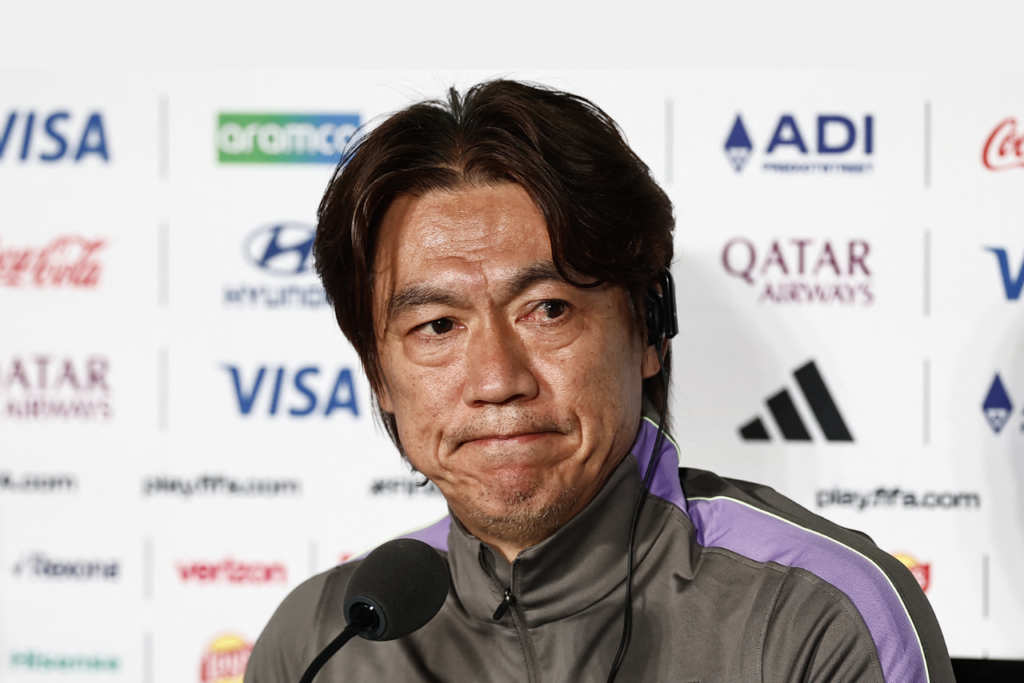
During a press conference following the team’s elimination, Hong accepted full responsibility.
Hong Myung-bo stated that the team had failed to deliver the results expected by supporters and emphasized that the responsibility rested entirely upon him as head coach.
His resignation was viewed by many observers as an effort to protect players from additional criticism while accepting accountability for the disappointing campaign.
The decision also reflected the enormous pressure facing national team managers in football-obsessed countries where World Cup performance carries significant emotional and cultural importance.
The Weight of Expectations
South Korean football has historically been among Asia’s strongest programs.
The country’s memorable 2002 World Cup campaign, which saw the team reach the semifinals, remains one of the greatest achievements in Asian football history.
Ironically, Hong himself captained that historic team.
Hong Myung-bo’s status as a national hero made his appointment popular among some supporters. However, others questioned whether his previous coaching record justified another opportunity.
The contrast between his success as a player and his struggles as a coach has become a major discussion point following the latest World Cup disappointment.
Hong Myung-bo: Controversial Appointment Revisited
The appointment of Hong Myung-bo in 2024 generated considerable debate.
Critics argued that several international candidates had undergone extensive evaluation processes only for the Korean Football Association to appoint a familiar domestic figure.
Many supporters believed the decision reflected traditional power structures within Korean football rather than a merit-based selection process.
Those concerns have resurfaced following the team’s elimination.
Questions now include:
- Was the appointment process transparent?
- Were better candidates overlooked?
- Did football politics influence decision-making?
- Was adequate long-term planning missing?
These concerns have intensified demands for reform.
President Lee Calls for Investigation
The crisis moved beyond sports after President Lee Jae Myung publicly called for an investigation.
The president expressed disappointment and described the results as a potential failure of organization and personnel management.
His comments suggested that leadership decisions within Korean football require examination.
The involvement of the country’s highest political office demonstrates how deeply football influences national identity and public sentiment in South Korea.
Government interest in the issue may place additional pressure on football authorities to conduct internal reviews and implement reforms.
Fans Express Their Anger
Supporters reacted strongly following the elimination.
Online criticism intensified after South Korea’s defeat against South Africa, which ultimately proved decisive.
Several fan groups demanded major changes within the football association and coaching staff.
The official supporters’ group, Red Devils, publicly called for accountability, reflecting widespread frustration among the fan base.
For many supporters, the issue extended beyond results.
They questioned:
- Tactical decisions.
- Team selection.
- Leadership approaches.
- Communication from officials.
- Overall football governance.
The emotional reaction highlights the immense expectations placed upon the national team.
Security Concerns Add Another Dimension
Following the resignation announcement, authorities reportedly increased security monitoring after online threats emerged against the former coach.
Police monitored airports and public locations ahead of Hong’s return.
While criticism is common in professional sports, threats against coaches or players represent a concerning escalation.
This situation has renewed discussions regarding athlete and coach safety, responsible online behavior, and the impact of social media on public figures.
Sports experts emphasize that criticism should remain focused on professional performance rather than personal attacks.
The Legacy of Hong Myung-bo
Despite recent criticism, the legacy of Hong Myung-bo cannot be separated from Korean football history.
As captain of the 2002 national team, he played a central role in one of the country’s greatest sporting achievements.
His leadership on the field inspired millions and helped elevate Asian football globally.
However, coaching success often requires different skills than playing success.
His previous coaching tenure in 2014 also ended in disappointment after South Korea failed to progress beyond the group stage.
The latest resignation therefore raises difficult questions regarding whether legendary players automatically become successful managers.
Tactical Questions and Performance Issues
Football analysts have identified several issues during the World Cup campaign.
These include:
Defensive Instability
The team struggled to maintain consistency against organized attacks.
Lack of Creativity
Midfield transitions frequently lacked effectiveness.
Finishing Problems
South Korea created opportunities but failed to convert enough chances.
Tactical Flexibility
Some observers believe the team was slow to adjust during difficult matches.
These factors combined to produce disappointing results despite the squad’s talent.
Son Heung-min and Player Expectations
Captain Son Heung-min entered the tournament as the team’s biggest star.
As one of Asia’s most recognized footballers, expectations surrounding his performances were enormous.
However, football remains a team sport, and many analysts argue that the burden placed upon Son became excessive.
The elimination highlights the importance of developing broader squad depth rather than relying heavily on individual stars.
Future success may depend on creating stronger supporting structures around experienced players.
Korean Football at a Crossroads
The resignation of Hong Myung-bo represents more than a coaching change.
It symbolizes a larger turning point.
Key questions facing Korean football include:
- How should coaches be selected?
- What role should foreign expertise play?
- How can youth development improve?
- How can administration become more transparent?
- How should player development evolve?
Addressing these issues may determine the future competitiveness of the national team.
Lessons for Asian Football
The South Korean experience offers lessons for other football nations.
Modern football increasingly requires:
- Data-driven decision-making.
- Long-term planning.
- Transparent leadership.
- Professional administration.
- Continuous tactical innovation.
Countries that adapt quickly often achieve sustained success.
Those relying solely on historical reputation may struggle in increasingly competitive international tournaments.
Rebuilding Trust
The immediate challenge now involves rebuilding trust between supporters and football authorities.
Fans want:
- Accountability.
- Transparency.
- Honest evaluations.
- Better planning.
- Improved communication.
Trust may only return through meaningful reforms rather than symbolic changes.
Football organizations around the world increasingly recognize that strong governance directly influences sporting performance.
The Road Ahead
South Korea possesses substantial football resources:
- Strong domestic leagues.
- Successful youth programs.
- International players.
- Passionate supporters.
- Advanced infrastructure.
These strengths provide reasons for optimism.
The next coaching appointment will likely become one of the most important decisions in recent Korean football history.
Authorities must balance experience, innovation, leadership qualities, and long-term vision.
Conclusion
The resignation of Hong Myung-bo closes another difficult chapter in South Korean football.
While the World Cup exit brought disappointment, criticism, and political attention, it also created an opportunity for reflection and reform.
The former captain leaves his coaching position accepting responsibility for the team’s results, but the broader challenges facing Korean football extend beyond one individual.
For supporters, administrators, and players alike, the coming months will determine whether this setback becomes merely another disappointment or the starting point for meaningful transformation.
As South Korea prepares for the future, the lessons from this World Cup campaign may ultimately prove more important than the tournament itself.
FAQs
Why did Hong Myung-bo resign?
He resigned after South Korea failed to qualify for the World Cup knockout stage and accepted responsibility for the team’s disappointing performance.
What was South Korea’s World Cup record?
The team recorded one victory and two defeats, finishing third in their group.
Why was Hong’s appointment controversial?
Many fans believed the Korean Football Association overlooked other candidates and favored a familiar figure.
What did President Lee say?
President Lee called for an investigation into the team’s poor performance and criticized possible failures in leadership and organization.
What happens next?
The Korean Football Association is expected to begin searching for a new head coach while evaluating the team’s overall structure and future strategy.
Read more articles like this at Imperium Times