
Former Federal Reserve Chief Signals Concern as Political Pressure Raises Questions About the Future of Monetary Policy
In a development that has captured the attention of economists, investors, policymakers, and global financial institutions, former Federal Reserve Chair Jerome Powell has issued a strong public defense of central bank autonomy, reigniting international discussions about the importance of institutional independence in modern economies.
The remarks come at a time when political tensions surrounding monetary policy in the United States continue to intensify. Powell’s comments have fueled a broader debate about whether governments should exert greater influence over central banks or whether independent institutions remain essential for maintaining economic stability, investor confidence, and long-term growth.
At the center of this discussion lies a critical principle that economists have defended for decades: Fed Independence.
For financial markets, policymakers, and businesses around the world, the issue extends far beyond one individual or one administration. It touches the foundation of how monetary policy is designed, how inflation is managed, and how trust is maintained in the global financial system.
Source: Imperium Times
Why This Story Matters Beyond Washington
The Federal Reserve is not merely America’s central bank. Its decisions influence global capital flows, currency markets, international trade, commodity pricing, investment strategies, and economic confidence across continents.
Whenever questions arise about Fed Independence, investors and institutions closely monitor developments because confidence in monetary policy often determines confidence in the broader economy.
Historically, independent central banks have been viewed as a safeguard against politically motivated economic decisions. Their role is to focus on inflation control, employment objectives, financial stability, and economic sustainability rather than short-term political goals.
This latest controversy has therefore become much more than a domestic American issue. It is now a global economic conversation.
Jerome Powell’s Message to Policymakers on Fed Independence
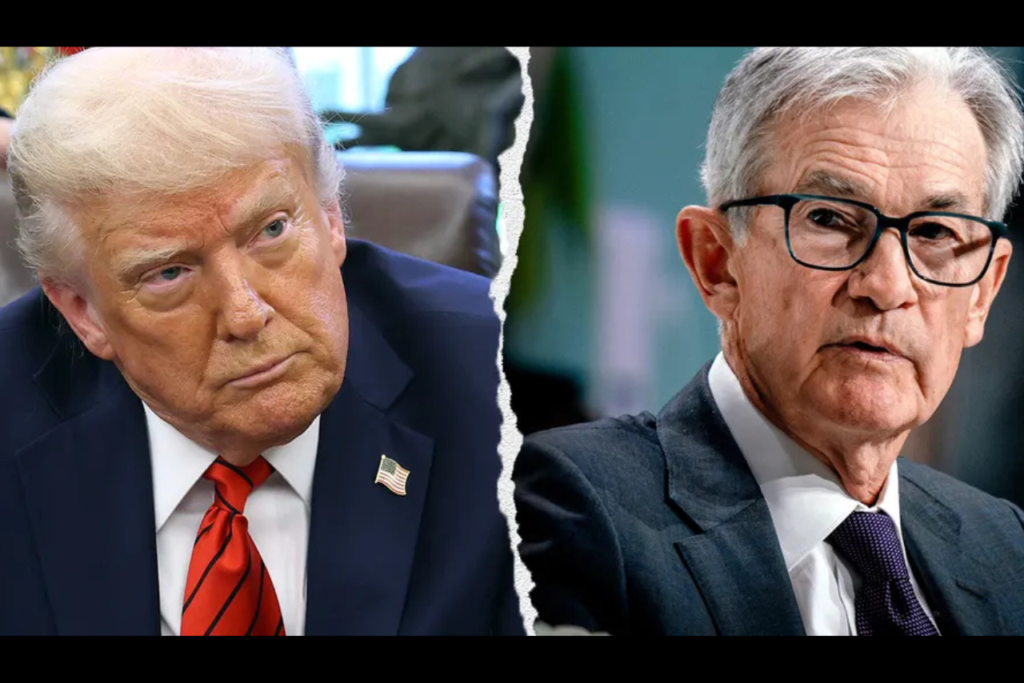
Speaking during a public event where he received the John F. Kennedy Profile in Courage Award, Powell warned that democratic institutions require protection from excessive political influence. He emphasized that credibility, once lost, can be extremely difficult to rebuild.
Although he did not directly name political figures during portions of his remarks, the context of ongoing tensions between the Federal Reserve and President Donald Trump was widely understood by observers and financial analysts.
Powell argued that allowing governments to remove central bank officials over policy disagreements could weaken public trust and damage the credibility that monetary institutions have built over decades.
For many economists, this warning highlights one of the most important economic principles of modern governance: central banks function most effectively when policy decisions are based on economic evidence rather than political preferences.
Understanding the Importance of Fed Independence
To understand why these comments generated worldwide attention, it is important to understand the concept itself.
The Federal Reserve was designed to operate independently from day-to-day political influence.
While elected leaders appoint key officials and Congress establishes the institution’s framework, monetary policy decisions are intended to remain insulated from political cycles.
This structure exists for a practical reason.
Governments naturally face pressure to stimulate economic growth before elections, reduce borrowing costs, or encourage spending during politically sensitive periods.
Fed Independence: An independent central bank can instead focus on longer-term objectives, including:
- Controlling inflation
- Maintaining price stability
- Supporting employment
- Preserving financial confidence
- Protecting economic credibility
Supporters argue that Fed Independence helps prevent short-term political incentives from creating long-term economic instability.
Trump’s Criticism of the Federal Reserve
The debate intensified during Donald Trump’s presidency and has continued into his current administration.
Trump has repeatedly criticized Federal Reserve leadership over interest-rate decisions, arguing that monetary policy should better support economic expansion and competitiveness.
Throughout multiple years of political discourse, disagreements between the White House and the central bank have become increasingly visible.
The tensions have included:
- Public criticism of interest-rate policies
- Calls for more aggressive rate reductions
- Questions regarding Federal Reserve governance
- Efforts involving Federal Reserve officials and appointments
Fed Independence have prompted economists and market observers to closely monitor the evolving relationship between the executive branch and the nation’s monetary authority.
Fed Independence: Why Investors Are Watching Closely
Financial markets dislike uncertainty.
Whenever there are concerns about political interference in monetary policy, investors often reassess risks associated with inflation, interest rates, and currency stability.
The credibility of a central bank affects:
- Bond yields
- Stock valuations
- Currency exchange rates
- International investment flows
- Consumer confidence
- Corporate borrowing costs
A perception that monetary decisions are becoming politicized can increase volatility across multiple asset classes.
This explains why Powell’s comments immediately attracted attention from financial media, institutional investors, economists, and international policymakers.
Fed Independence: Historical Lessons from Around the World
The debate over central bank Fed Independence is not unique to the United States.
Fed Independence: Numerous countries have faced challenges when governments exerted excessive influence over monetary institutions.
Economic history provides examples where weakened central bank autonomy contributed to:
- Persistent inflation
- Currency instability
- Reduced investor confidence
- Capital flight
- Slower economic growth
Conversely, nations with strong independent monetary institutions often experience greater economic predictability and stronger investor trust.
These historical lessons help explain why many economists continue to view independent central banks as a cornerstone of stable economic governance.
Fed Independence: A Broader Debate About Democratic Institutions
Powell’s speech extended beyond monetary policy.
He suggested that democratic societies rely on strong institutions that operate according to established rules rather than political pressure.
His comments referenced broader concerns regarding:
- Rule of law
- Institutional trust
- Public service integrity
- Long-term governance stability
According to Powell, institutions require years or even decades to build but can be weakened much more quickly if public confidence begins to erode.
This perspective resonates with many scholars who argue that strong institutions create the foundation for economic prosperity and democratic resilience.
How the Markets Could React Going Forward
For now, financial markets remain focused on economic fundamentals such as inflation, employment data, consumer spending, and global growth trends.
However, if tensions between political leaders and monetary authorities continue escalating, several scenarios could emerge:
Greater Market Volatility
Investors may become more sensitive to policy announcements and leadership disputes.
Increased Focus on Inflation Risks
Questions about political influence could affect expectations regarding future inflation management.
Higher Importance of Institutional Credibility
Credit rating agencies, global investors, and multinational corporations often assess institutional strength when making investment decisions.
International Attention
Because the U.S. dollar remains the world’s dominant reserve currency, developments affecting Federal Reserve credibility attract global scrutiny.
What This Means for Businesses
Business leaders should pay close attention to these developments because monetary policy influences nearly every aspect of commerce.
Interest-rate decisions affect:
- Business financing costs
- Corporate expansion plans
- Consumer borrowing
- Housing markets
- Capital investment
- International trade
Strong institutional credibility helps businesses plan for the future with greater confidence.
That is why discussions surrounding Fed Independence matter not only to economists but also to entrepreneurs, investors, corporations, and households.
The Global Perspective
Central bank independence has become a defining issue for modern economies.
Around the world, policymakers continue to balance two competing realities:
- Governments want flexibility to respond quickly to economic challenges.
- Financial markets demand confidence that monetary decisions remain objective.
Finding the right balance is increasingly important as economies face inflation concerns, geopolitical tensions, technological transformation, and shifting global trade patterns.
The outcome of this debate in the United States could influence conversations among central banks and governments worldwide.
The Future of Monetary Policy and Institutional Trust
The current moment represents more than a disagreement between political leaders and economic officials.
It reflects a larger question about how democratic societies manage economic power.
Can monetary institutions remain insulated from political pressure?
Will public trust continue supporting independent central banking?
How should governments balance accountability with institutional autonomy?
These questions are likely to remain at the center of economic discussions throughout 2026 and beyond.
Powell’s warning has ensured that the debate over Fed Independence will remain one of the most closely watched financial and political stories in the world.
As investors, policymakers, and citizens assess the future of economic governance, one reality remains clear: credibility is among the most valuable assets any financial institution can possess. And once credibility is questioned, rebuilding it can take generations.
Read more Latest News like this!
Just at Imperium Times