
The global conversation around Artificial Intelligence has changed dramatically over the last decade. What began as experimentation inside innovation labs has now evolved into a strategic priority discussed in boardrooms. According to Microsoft CEO Satya Nadella, the year 2026 will mark a decisive turning point in how businesses adopt and operationalise Artificial Intelligence at scale.
For years, enterprises tested models, launched pilots, and explored automation without always achieving measurable impact. That phase, Nadella believes, is ending. As organizations prepare for the next business cycle, Artificial Intelligence is shifting from exploration to execution—fundamentally altering how companies operate, compete, and create long-term value.
Satya Nadella on the Shift From AI Experiments to Enterprise Strategy
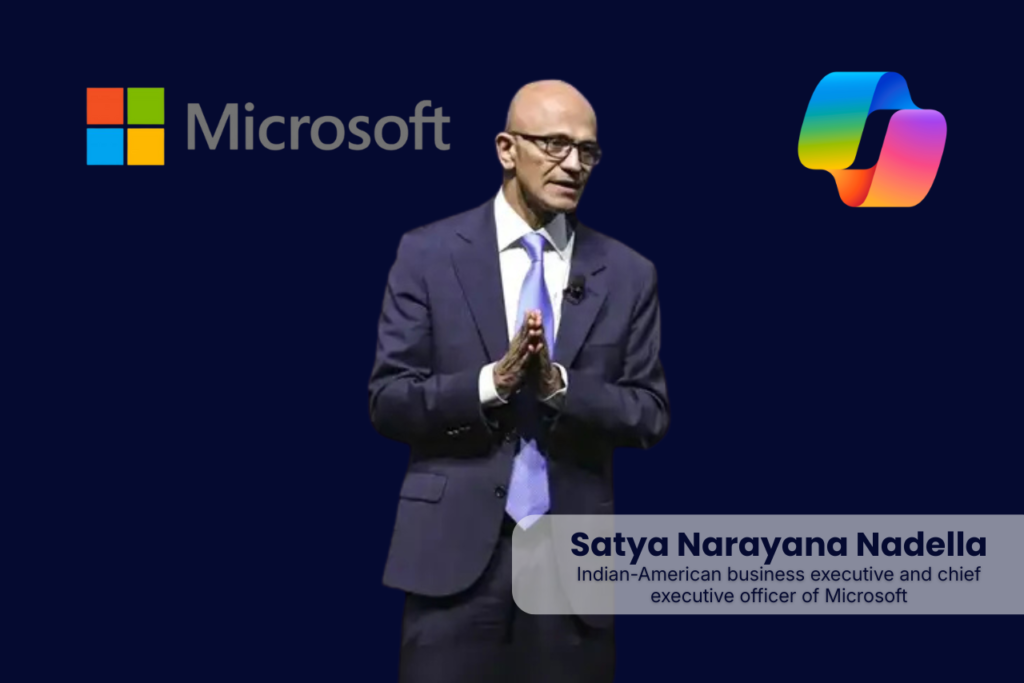
In multiple leadership forums, Satya Nadella has emphasized that the real transformation will not come from isolated tools but from system-level integration. Businesses are no longer asking whether AI is useful. Instead, they are asking how quickly it can be embedded into their core workflows.
This transition is driven by several factors:
- Enterprise-grade cloud infrastructure
- Maturing governance and security standards
- Improved access to high-quality data
- Clearer links between Artificial Intelligence investments and ROI
According to Satya Nadella, organizations entering 2026 will treat AI as foundational infrastructure rather than optional innovation.
Why 2026 Is a Defining Year for Artificial Intelligence Adoption
Several structural changes are converging to make 2026 a defining moment for Artificial Intelligence in business.
First, AI systems are becoming operational by design. They are now built to integrate directly into finance platforms, supply chains, HR systems, and customer experience tools. This eliminates friction and accelerates adoption.
Second, leadership readiness has improved. Executives today understand how AI connects to productivity, margins, and competitive advantage. As Satya has noted, AI literacy at the leadership level is no longer rare—it is expected.
Third, competitive pressure is intensifying. Early adopters of AI are already gaining efficiency, speed, and decision-making advantages that others cannot ignore.
Artificial Intelligence Moves From Tools to Workflows
The next phase of adoption will look very different from earlier cycles. Businesses will stop treating AI as a collection of tools and start designing AI-first workflows.
This includes:
- Intelligent automation across departments
- Embedded decision support within enterprise software
- Real-time insights replacing delayed reporting
- Knowledge work augmentation, not just task automation
According to Satya, this shift is where real value is unlocked—when AI becomes invisible yet indispensable.
Generative Artificial Intelligence and the Productivity Transformation
One of the most powerful accelerators of this shift is generative Artificial Intelligence. These systems are redefining productivity across roles, from developers and analysts to marketers and customer service teams.
By 2026, enterprises are expected to use AI as:
- A daily copilot for employees
- A research and analysis assistant
- A software development accelerator
- A personalization engine for customers
However, Satya has consistently warned that access alone is not enough. Responsible deployment, governance, and alignment with business goals will determine success.
Leadership Will Decide the Fate of Artificial Intelligence Initiatives
A recurring theme in Nadella’s outlook is that Artificial Intelligence adoption is fundamentally a leadership challenge.
Organizations that succeed will demonstrate:
- Executive ownership of AI strategy
- Close collaboration between business and technology teams
- Clear performance metrics tied to AI outcomes
- Strong ethical and security frameworks
AI will not replace leadership. Instead, it will amplify decision-making quality—for better or worse.
Industry-Wide Impact of Artificial Intelligence at Scale
The influence of AI will extend far beyond technology companies.
- Finance: Risk assessment, compliance, and forecasting
- Healthcare: Operational efficiency and diagnostic support
- Manufacturing: Predictive maintenance and supply chain intelligence
- Retail: Demand forecasting and personalized engagement
- Professional Services: Research, analysis, and client delivery
As Nadella has highlighted, AI is becoming a baseline capability across industries, not a competitive novelty.
What Businesses Must Do Before 2026
The message from Satya Nadella is clear: preparation must begin now.
Organizations that delay AI planning risk falling behind as adoption accelerates. Preparation does not mean rushing into every solution. It means building durable foundations.
Key steps include:
- Defining a clear Artificial Intelligence roadmap
- Strengthening data quality and governance
- Establishing cross-functional oversight
- Upskilling teams for AI-enabled work
AI readiness in 2025 will determine competitiveness in 2026.
Economic Impact of Widespread Artificial Intelligence Adoption
As AI becomes embedded across enterprises, its economic implications will be profound. Productivity gains will reshape cost structures. Faster decisions will compress market cycles. Entire business models will evolve.
From a macro perspective, Satya views this as the beginning of a new AI-driven growth phase—one where value creation depends on how intelligently organizations deploy technology.
A Defining Moment for Modern Enterprises
The claim that 2026 will redefine Artificial Intelligence adoption is not hype. It reflects real changes in infrastructure, leadership capability, and market behavior.
Businesses are moving from pilots to platforms, from curiosity to confidence. According to Satya, the organizations that win will be those that treat AI as a long-term capability, not a short-term experiment.
Final Thought
As enterprises move toward 2026, Artificial Intelligence will become a quiet but powerful foundation of modern business—deeply integrated, carefully governed, and continuously optimized.
Those who prepare early will shape the next era of global commerce. Those who wait may find the transformation already underway.
Read more articles like this!